The Chest Pain OSCE Station: What Examiners Mark

A chest pain OSCE station is a focused, timed cardiac history. You triage likely acute coronary syndrome against common mimics, surface red flags safely, and show you can explain next steps clearly while addressing the patient's ideas, concerns, and expectations. In a voice or history-only station, no physical examination is performed.
A chest pain station rewards crisp data gathering and risk signposting. If you’re considering digital rehearsal, see AI OSCE simulators compared for voice features, station types, and what’s commonly scored.
This post spells out what examiners actually score, then walks through a worked example of a chest pain OSCE station from first hello to safe close. If you’re revising alone, you can still get meaningful reps by practising OSCE stations solo. We’ll stay at history level and observation. No management plans here.
We’ll annotate the transcript with the markable moves: open questions, symptom analysis, red flags, cardiovascular risk, past history, drug and allergy check, ICE, signposting, summary, and a clear explanation of what happens next. You’ll see the timing trade offs and the phrases that buy marks. And, honestly, the 30 seconds people waste, every time.
How to take the history: SOCRATES and cardiac risk
Start with SOCRATES, but ask it like a conversation, not a script. With the AI patient Trevor Walsh, a 58-year-old man with sudden central chest pain, your wording and his answers do most of the work.
Where exactly is the pain, can you point with one finger. Trevor presses the centre of his chest, retrosternal.
When did it start, and what were you doing. He says about an hour ago, sudden onset at rest while watching TV.
What does it feel like, in your own words. He calls it crushing central pressure, like someone sitting on him. That, plus radiation, sweat, nausea and breathlessness, maps to typical heart-attack features described by the British Heart Foundation on heart attack symptoms.
Does it go anywhere. He says it spreads to his jaw and down his left arm.
Any other symptoms with it, such as breathlessness, sweating, feeling sick or light-headed. He broke out in a cold sweat and felt sick. He's short of breath.
Is it constant or does it come and go, and how long does each episode last. He reports continuous pain for about an hour so far.
What brings it on or makes it worse, and has anything helped. He blames last night’s curry, tried antacids, no relief. That points away from simple dyspepsia.
How bad is it on a scale from 0 to 10. Get a number. It anchors the story if you need to revisit severity later.
Cardiac risk: have you ever had heart trouble, diabetes, high blood pressure or high cholesterol. Do you smoke. He has type 2 diabetes and high cholesterol, smokes with a 30-pack-year history, still smoking.
Family history: any close relatives with heart disease at a young age. His father had a heart attack at 60.
What do you think is going on, and what worries you most. He wants to be told it is indigestion so he can go home, but he is frightened it is his heart like his dad. Name that worry. Features like ongoing central pressure at rest with radiation and diaphoresis are red flags for when chest pain is an emergency.
Red flags and the differential examiners want
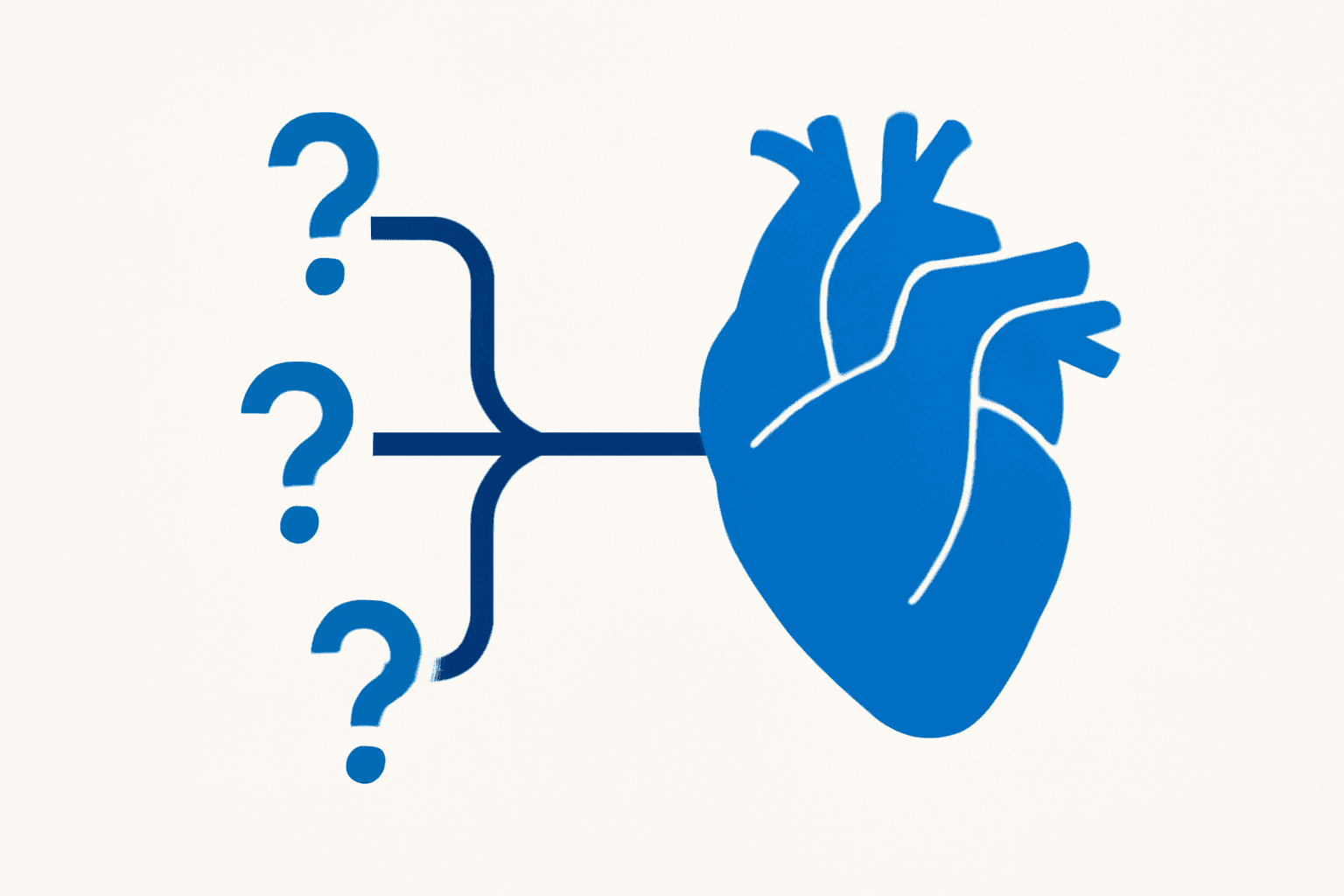
Red-flag features that push you toward acute coronary syndrome: crushing or pressure chest pain, radiation to the jaw or arm, sweating with nausea, breathlessness, pain at rest, and any haemodynamic upset. Say what you see, then say why it worries you.
Diabetics and older patients can be atypical. If the story is soft, name the uncertainty rather than assuming low risk.
Say your differential out loud. Top of the list is acute coronary syndrome, see NICE guidance on acute coronary syndromes.
Add the must-not-miss mimics: aortic dissection and pulmonary embolism. You are being marked on whether you keep life-threatening causes in play until the evidence says otherwise.
Then pericarditis, reflux or indigestion, and musculoskeletal chest wall pain. Do not anchor on the patient's "it’s just indigestion" framing, however confident they sound.
A safe way to voice it: based on central crushing pain with radiation and sweating, I’m most concerned about acute coronary syndrome. I’d also consider aortic dissection and pulmonary embolism. Pericarditis, reflux, and musculoskeletal pain are possible but less likely on the current features.
From what I can tell, examiners reward explicit safety-first reasoning. Tie each feature to a diagnosis, and say what would make you upgrade or downgrade each as you gather more history and observations.
That upgrade-and-downgrade habit is the transferable bit. Working a dysphagia history asks for the same move on a different symptom, with the features that shift the ranking arriving in a different order.
Practise this exact station Take the chest pain history from an AI patient and get marked on it. Start a case free
What examiners actually mark
They reward coverage, justification, and safety. You score for a targeted history that hits the high-yield chest pain items and explicit red flags, then a differential that fits the data. Miss the red flags, you leak marks fast.
Your differential needs to be stated and ranked, with acute coronary syndrome first given the story. Not waved away as reflux because the pain eased with an antacid once. Tie ACS to risk, character, radiation, trigger, associated symptoms, and why the alternatives sit lower.
Communication is not small talk. It is naming what the AI patient is thinking, checking understanding, and cutting through minimisation without frightening him. With Trevor, say you have heard that he is scared it is his heart like his father, and that he is downplaying it because he does not want to make a fuss. Then translate the medical risk into plain language.
Safety gets marked. You need to show you recognise this could be time-critical, based on onset, associated symptoms, and risk factors, and that your next steps would reflect that urgency. No drama, no false reassurance.
A scored practice encounter maps to that scoring. You get marked on history coverage, your differential, and your communication, then you see what you did and what you missed. Diagnosica’s scorecard marks the encounter and gives feedback. The same pattern repeats in other stations, see the jaundice history station.
One practical tip. Practise a one sentence ACS-first differential out loud, with one clause of evidence for and one against. Then build the rest around it.

How to practise this station on your own
Rehearse out loud. Do the opener, set the agenda, then run a focused SOCRATES history. Time yourself. Speak as if the examiner is there, not into your notebook.
Run SOCRATES from memory. Close your notes, write the letters on a scrap of paper, then fill them from recall. Miss one, repeat. Sounds basic. Works.
Record yourself on your phone. Watch for leading questions, double-barrelled prompts, and waffle. Count silent seconds after open questions. You’ll hear bad habits you didn’t know you had.
Use a study partner. Trade roles for 10 minutes each, then swap. The listener tracks SOCRATES and red-flags, and calls out anything you didn’t ask, with one example answer the AI patient could have given.
Use an AI patient that answers back and marks you, so you’re not just reading a checklist. Speaking to something that pushes back changes your pacing and follow-up questions. That is the point.
Solo practice won’t replace real supervised feedback, but it gets the reps in. Apply the same routine to other presentations, for example the shortness of breath station. Then do three timed runs. Compare your own notes, line by line.
If you're sitting PACES rather than finals, the same drills apply: see preparing for MRCP PACES at home. One station is a slice of the sitting, so keep it inside the rest of finals prep rather than letting it eat the week.
The ranking you do in this station is a general skill. We wrote up how to build a differential diagnosis as a method you can reuse anywhere.
Frequently asked questions
What is a chest pain OSCE station?
A chest pain OSCE station is a timed history-taking station with a simulated patient who has chest pain. Your job is to take a focused cardiac history, separate acute coronary syndrome from common mimics, and demonstrate clear coverage, a reasoned differential, and safe communication under time pressure.
You’re assessed on what you ask, what you hear, and how you organise it. No investigations. No management. Clean, structured questioning, a concise summary, and a sensible differential are what get you marks. On the wards it flips, and the harder judgement is ordering tests when unsure.
If you want a safe rehearsal, Diagnosica lets you practise this exact encounter: free to start with no card, an anonymous 3-minute demo, and a voice or text AI patient. It’s early-stage and honest. Educational only, not a diagnostic system.
What are the red flags in a chest pain history?
Red flags in a chest pain history include crushing or pressure-like pain, radiation to the jaw or arm, sweating and nausea, breathlessness, and onset at rest. These observation-level features should be handled as acute coronary syndrome in the OSCE context until proven otherwise.
You can’t confirm a diagnosis from history alone, but you can recognise a high-risk pattern. So surface these features early, state your concern clearly, and show that your differential starts with acute coronary syndrome before considering mimics. That reasoning is what the examiner is listening for.
Rehearse it before the real thing Run a chest pain case tonight, then get a scorecard with teaching points. Start free