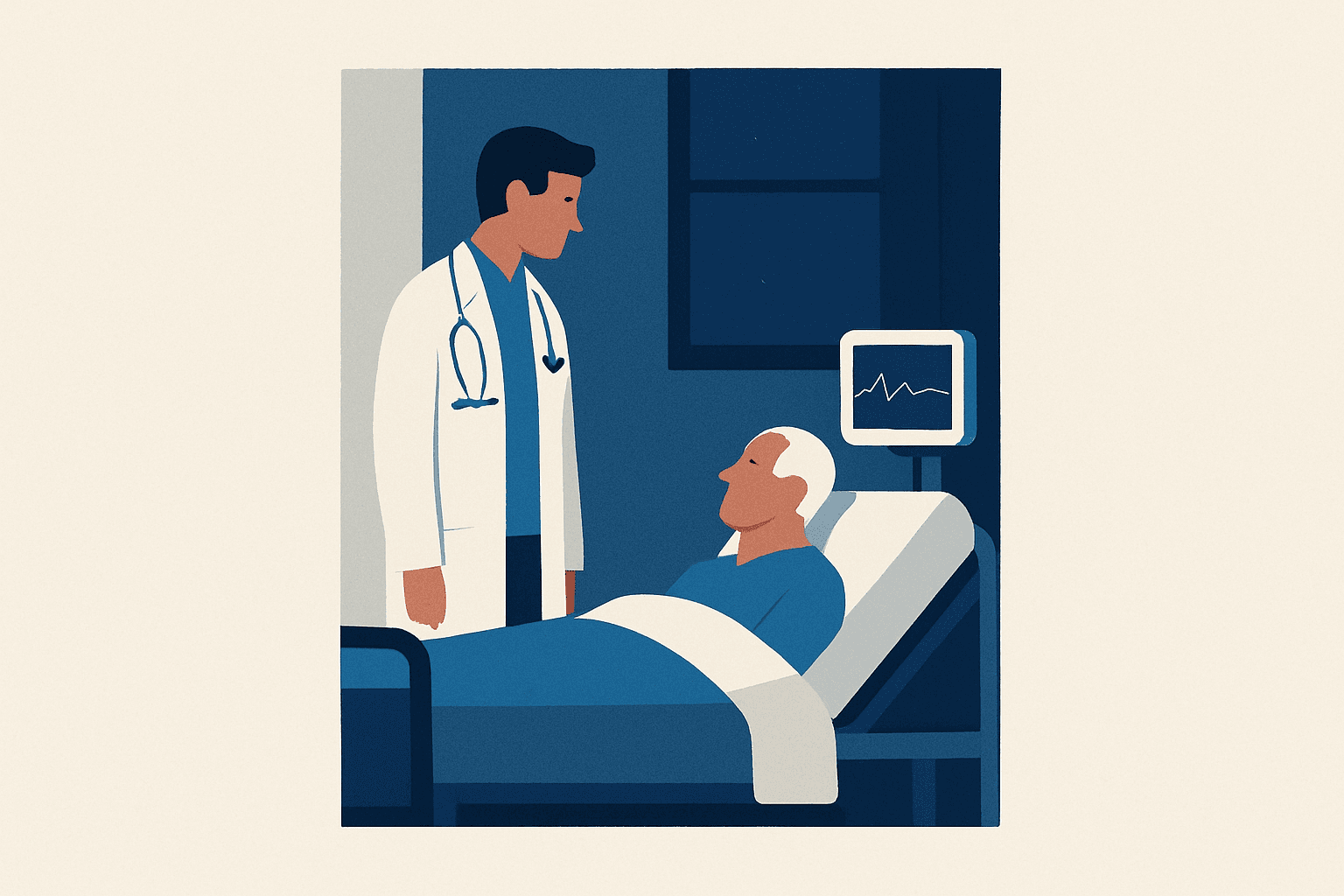
How to Survive FY1: A First-Year Survival Guide
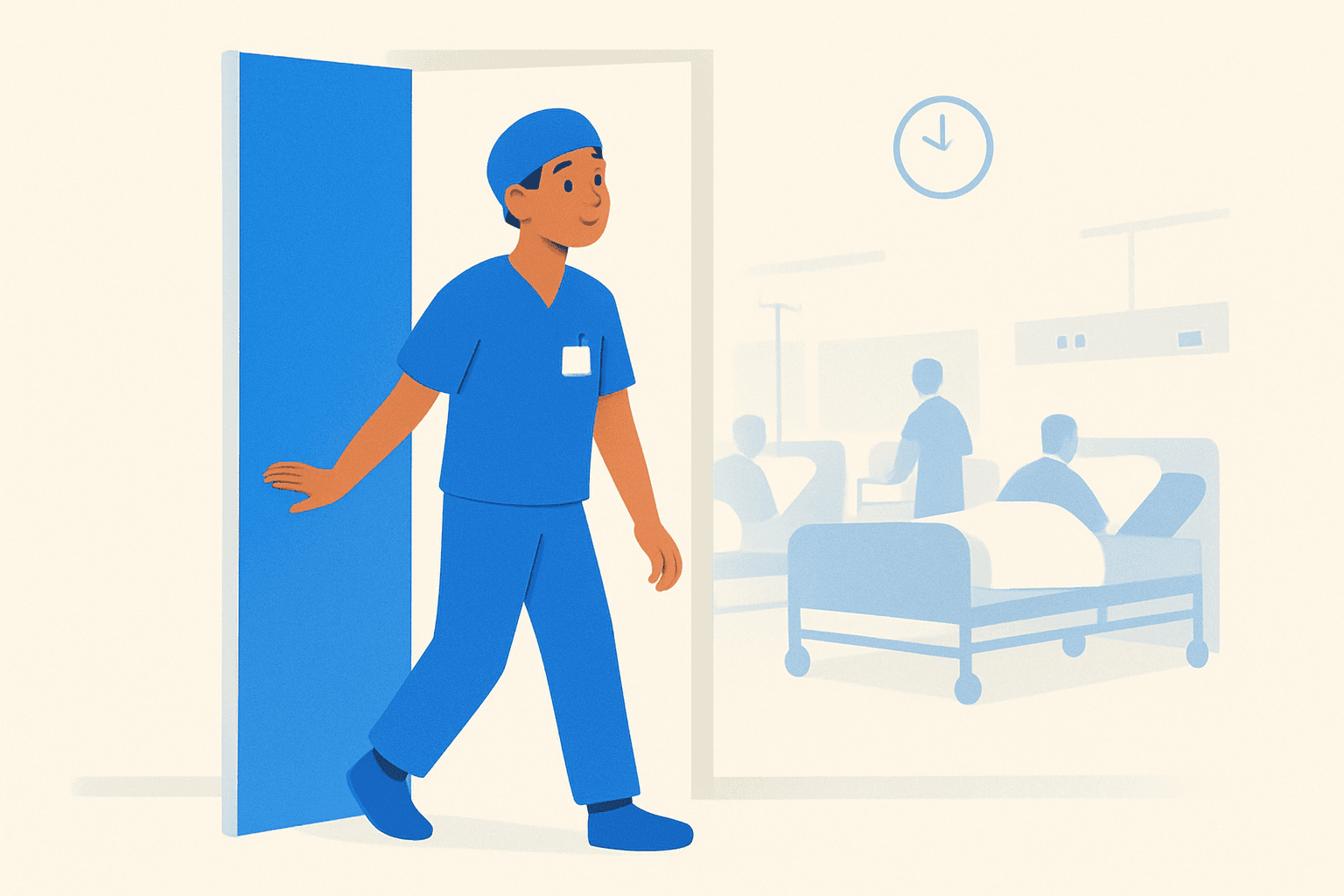
Finals are behind you, the badge is coming, and your first FY1 shift is a few weeks away. Quietly, you’re worried you won’t cope. That you’ll miss something, freeze on the bleep, or fall apart on nights. Everyone else looks ready. You don’t. That feeling’s common, and fixable. I remember that quiet dread.
Surviving FY1’s mostly process. Stay organised, keep lists, and use checklists. Ask for help early, every time the picture is unclear. Lean on ward systems instead of heroics. Protect sleep and food like kit on a ward round. Knowledge matters, but patterning your day and your handover matters more.
When things slip despite your systems, here’s what to do when you make a mistake, hour one.
Think of this guide as your map. Short, specific, and tied to what you’ll actually face. It links to nights, the bleep, the apps that save clicks, and reasoning practice you can run on the bus. Start with your first nights on call, then pick off bleep etiquette, jobs list hygiene, and a few worked examples. Keep it open on day one. Matching into a US programme instead? The same first year over there is intern year in the States, and the student years before it start with seeing patients alone on placement.
The first few weeks: what actually catches you out
Passing finals proves you can think. Functioning on a ward asks if you can find the right login, the right cupboard, and the right order set. Logins, where things are, how to order things, the jobs list, bleep etiquette, discharge summaries. Systems are the bottleneck in week one. Alongside logins and order sets, the other week-one job is clerking a patient on take.
Have the tools your seniors actually use, and know where they live on hospital computers. Install the apps FY1s actually use, save the intranet shortcuts, and keep a physical notebook for bleep numbers, printer names, and odd ward workflows.
Prioritising the jobs list is non-negotiable. Sick patients and time-critical tasks come first, ward admin later. After a post-take ward round the list often balloons, for example 12 tasks to 40 in under an hour, so batch the quick wins, park discharge summaries, and clear anything with a fixed deadline. If you have never watched a round run, here is what happens on the round.
For a repeatable template covering triage after the round, batching results, and handing over unfinished tasks, see managing your jobs list.
Practical prep before day one pays off. Sort ID, passwords, smartcard certificates, a pen torch, and a charged power bank. Skim your trust induction pack, learn where pathology drop-offs and imaging request points are, and read Mind The Bleep's preparing-for-FY1 guide for a sensible checklist you can tick off this week.
Bleep etiquette is simple: respond promptly, say when you’ll arrive, and call back if you’re delayed. Map out daily cut-offs, for example phlebotomy collections and imaging request deadlines, and write them at the top of your list. It saves you twice a day.
Surviving on-call and the bleep
The bleep is the thing everyone dreads. Your core job is triage down the phone: is this patient sick or not sick, and how quickly do you need to be at the bedside.
When a nurse bleeps about a patient you’ve never met, get the facts fast and in the same order every time. Honestly, this is the bit people skip.
- Name, location, and bed.
- Current observations and the NEWS2 early-warning score.
- What changed and when.
- What they’re worried about.
- Who senior already knows.
Ask for numbers, not labels. “Breathing looks a bit worse” becomes respiratory rate, oxygen flow, SpO2 now and 30 minutes ago. Same for heart rate and blood pressure. If they have the chart in front of them, get the trend.
Keep your tone slow and calm. Repeat back the key points so you both hear the same story. Then state what you’ll do next and the time-frame: phone review now, bedside in 10 minutes, or routine review after handover. Say what to do if things change before you arrive.
Decide urgency on the call. Sick now, you go now. Might be sick soon, you go soon. Not sick, you still see them, but you can sequence safely. If you’re unsure, say so and escalate early. No one complains that you called too soon.
If you want a fuller framework you can keep in your pocket, use what to do when you're bleeped.
Rehearse the sick-patient review Practise deciding sick or not sick on an AI patient before your first on-call. Start a case free
Recognising the sick patient (the skill that matters most)
The single highest-value FY1 skill is spotting the unwell patient early and escalating. Err on the side of calling. Escalating early is a strength, not a weakness. No one remembers the doctor who called for help too soon.
Start with ABCDE. Airway: any snoring, gurgling, stridor, or inability to speak in full sentences. Breathing: rate you counted, oxygen saturation trend, accessory muscle use, cyanosis. Circulation: pulse rate and character, blood pressure, capillary refill, skin temperature, new chest pain. Disability: GCS or AVPU, pupils, glucose if available. Exposure: fever, rash, bleeding, new swelling.
Take a focused history while you look. Onset and time course, what it felt like at its worst, baseline function, key comorbidities, recent procedures, drugs and allergies. One or two sentences, then stop and reassess. Honestly, this is the bit people skip.
Make the call with a clear structure. Use SBAR: situation, background, assessment, recommendation. Lead with your concern and data: I think this patient is sick because X. I want you to review now. Then give the one-line background and your ABCDE findings.
You get good at this by doing it many times in a safe setting before the real bleep. What you are training there is ward reasoning under time pressure. Build the habit with apps that train clinical reasoning. Rehearse scored encounters on an AI patient, decide sick or not sick, and get a mark at the end. Diagnosica lets you do that with a voice or text AI patient, any hour, on early-stage cases.
Looking after yourself, not just your patients
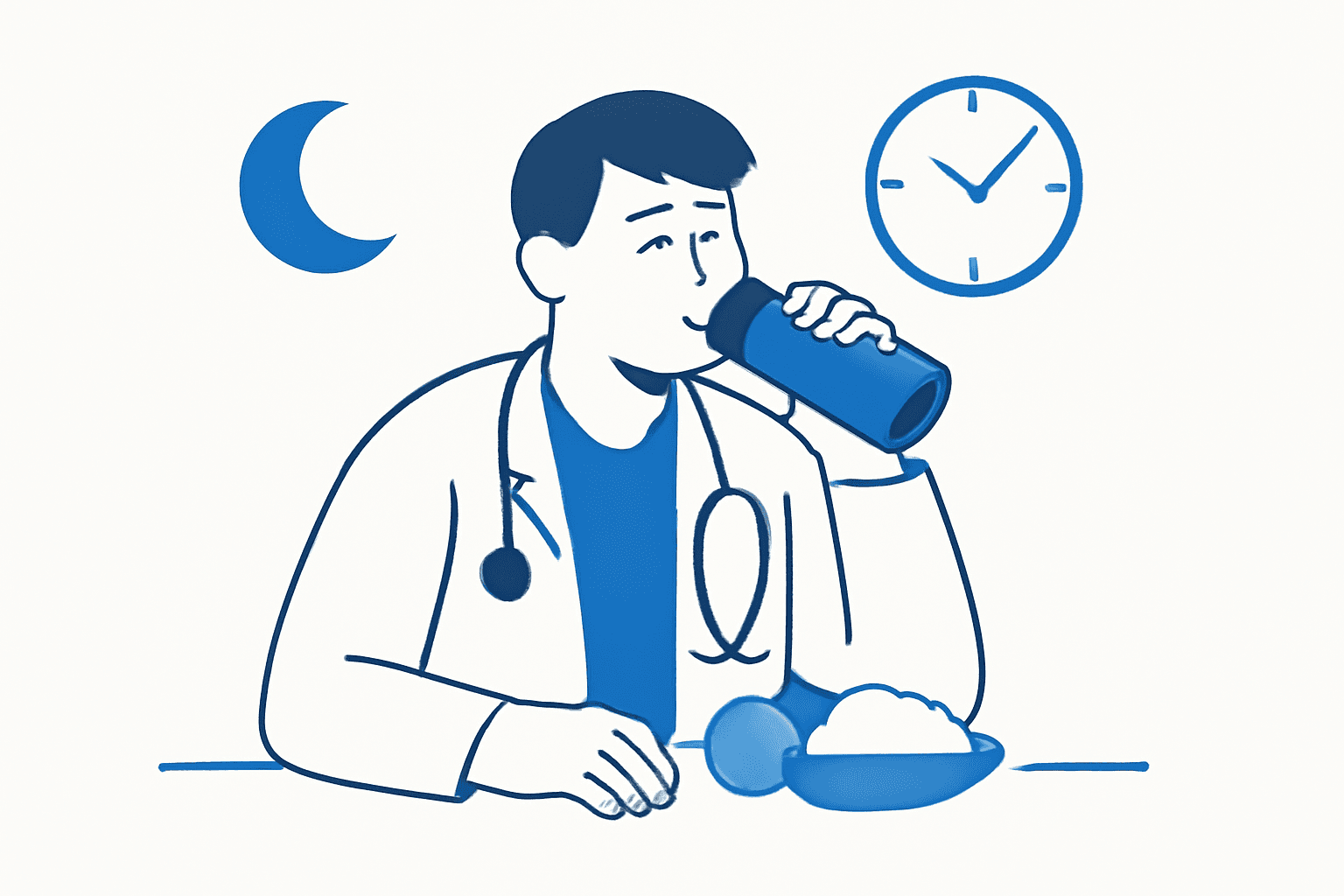
Nights, missed meals, and a rota that sometimes feels like it is set against you. Survival is boring and practical: protect a fixed sleep window around nights, use bright light on waking, stop caffeine well before planned sleep, and eat something before the first night. Carry pocket food that survives a 12-hour shift, think slow-release rather than a glucose spike. Keep a water bottle and actually drink it. Take your breaks, ask a buddy to cover, and leave the ward for ten minutes if you can.
If your rota sends you to A&E, bookmark A&E as an FY1, which covers the first five minutes with an undifferentiated patient, worst-first thinking, and presenting to the A&E registrar.
The emotional bit is real. Imposter feeling in FY1 is near universal and it fades as your pattern recognition improves and you find your peer group. Less-than-full-time routes and support exist, and rota plus curriculum support is not pretend. Use the UK Foundation Programme materials and your local foundation team early, not after a wobble.
One honest aside: the first couple of months can feel heavy, like every task hides three more. Then it clicks. You know who to bleep, how to prioritise at 17:30, and where equipment actually lives. When the year ends the questions change shape again, which is what changes as an SHO. Book leave early, and protect one hobby that is not medicine every week.
Frequently asked questions
How do I survive my first year as an FY1?
Stay organised, escalate early, and lean on ward systems and seniors. Protect sleep and food ruthlessly. Competence builds fast once bleep traffic and paperwork patterns click. Most stress is process, not knowledge. If you show up, communicate, and close the loop, you will be fine.
Triage your to-do list by safety, time-criticality, and how long each thing actually takes. Ten discharge TTOs before a cannula that needs doing now is a trap. Flip it. Test requests pile onto the list as well, and over-ordering as a junior has its own guide.
Then write something a GP can act on, and see writing a discharge summary for structure and focus.
Use the tools. EPR task lists, handover sheets, SBAR on the phone. Flag deteriorations early with clear observations and a one-line ask.
Keep a pocket list and timestamp calls you’ve made. Chase once, then escalate. People forgive gaps in knowledge. They don’t forgive silence.
Food, water, toilets. Non-negotiable. Short breaks protect judgement. Your future self at 03:00 will thank you.
What should I do before my first FY1 shift?
Sort your logistics and kit, read your trust induction, and rehearse a sick-patient review plus common on-call calls so the first real one isn’t your first. You can rehearse with Diagnosica, free to start with no card, and an anonymous 3-minute demo, voice or text AI patient. Educational only, not diagnostic or patient advice.
Practicalities first: ID badge, smartcard, logins, bleep, locker, parking or bike storage, scrubs access, rota, payroll. Confirm where to collect keys and where to report at 08:00. Tiny frictions compound.
Pack light but useful. Pens, small notebook, snack, water bottle, phone charger, hand moisturiser. Label everything, things walk.
Skim your induction pack, especially escalation policies, handover times, referral routes, and how to request scans or interpreters. Know who holds the acute phone.
Rehearse your opening lines for sick-patient reviews and typical calls. Example prompts to practise: chest pain on the ward, post-op fever, low urine output, “can you prescribe laxatives”. Have one or two focused questions and a clear ask ready. The same discipline applies out loud on the round: see how to present a patient.
Walk in having done it once Sign up free and run a case tonight, so the first real bleep is not the first time. Start free