AI OSCE Simulator: Practise Stations with a Real Voice
What an AI OSCE simulator is, how a station runs, and which six platforms offer it with prices as of October 2026.
Last updated 19 October 2026
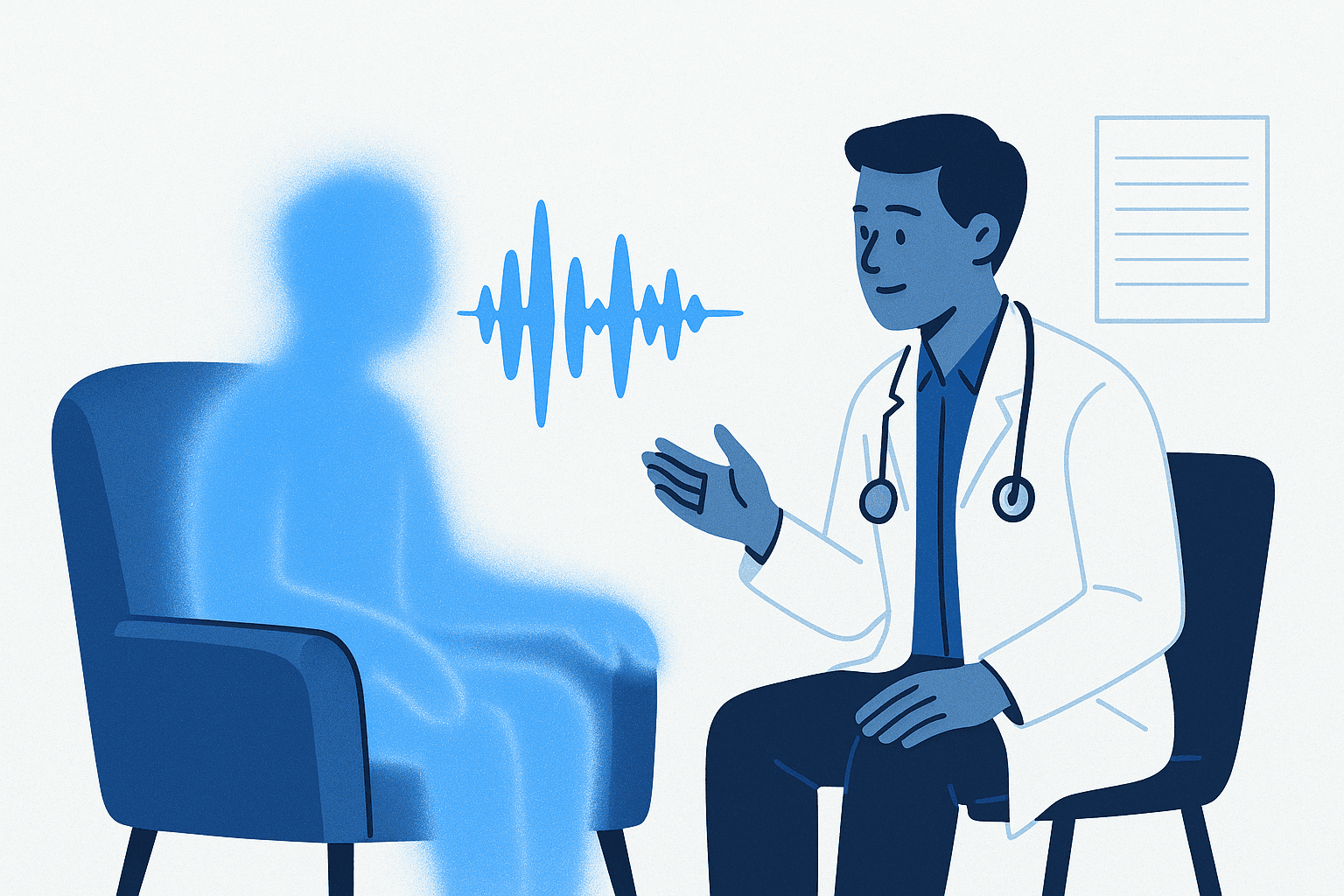
An AI OSCE simulator plays the patient in a station, you take the history by voice or text, it answers in character, and you're marked at the end, so you can rehearse core communication and data gathering without a partner on your phone, tablet or laptop. As of October 2026, the main options are Geeky Medics, Quesmed OSCE-AI, TalkOSCE, Diagnosica, Neural Consult and Full Code. None of these simulators can rehearse physical examination technique or hands-on skills.
We build Diagnosica, one of the simulators below, so read the comparison with that in mind. Diagnosica is an AI clinical simulator for medical students and junior doctors: you take a history from an AI patient by voice or text, order labs and imaging, commit to a diagnosis and management plan, and get a competency scorecard. Competitor facts were read off each vendor's own page between 13 and 19 October 2026 and are linked.
AI OSCE simulators compared
The table compares six AI OSCE simulators as of October 2026.
Simulator | What you talk to | How you're marked | Platforms | Free option | Price (as of October 2026) |
|---|---|---|---|---|---|
Geeky Medics | AI patient, voice or text | AI examiner checklist with feedback | Web and mobile app | Free plan, some AI patients | £49.99/yr or £29.99/mo (Clinical Skills) |
Quesmed OSCE-AI | AI patient, voice or text | AI examiner, station mark scheme, written feedback | Web and offline apps | Demo station, no free plan | £39.99/yr (OSCE and MLA CPSA) |
TalkOSCE | Voice-only AI patient | Checklist, five domains, follow-up questions | Web | Free, 10 minutes a month | £12.99 or £29.99/mo |
Diagnosica | Video AI patient, voice or text | Competency scorecard with teaching points | Web, iPhone, Android | Free tier, no card | Paid Standard plan, price on diagnosica.com |
Neural Consult | AI patient, voice or text | Case score, feedback | Web | Free Starter, limited uses | $19.99/mo or $160/yr (US price) |
Full Code | AI patient, voice or text | Score per case | Desktop, iOS, Android | Free plan, 4 cases | $11.99/mo or $71.99/yr (Pro) |
How we compared them. The comparison covers what you talk to, how you're marked, platforms, whether there's a free way in, and a public price, all taken from vendors' pages as of October 2026, not tests we ran. Quesmed OSCE-AI lists three different station totals on one page. For a ranked shortlist and context, see best AI tools for OSCE.
What does an AI OSCE session look like?
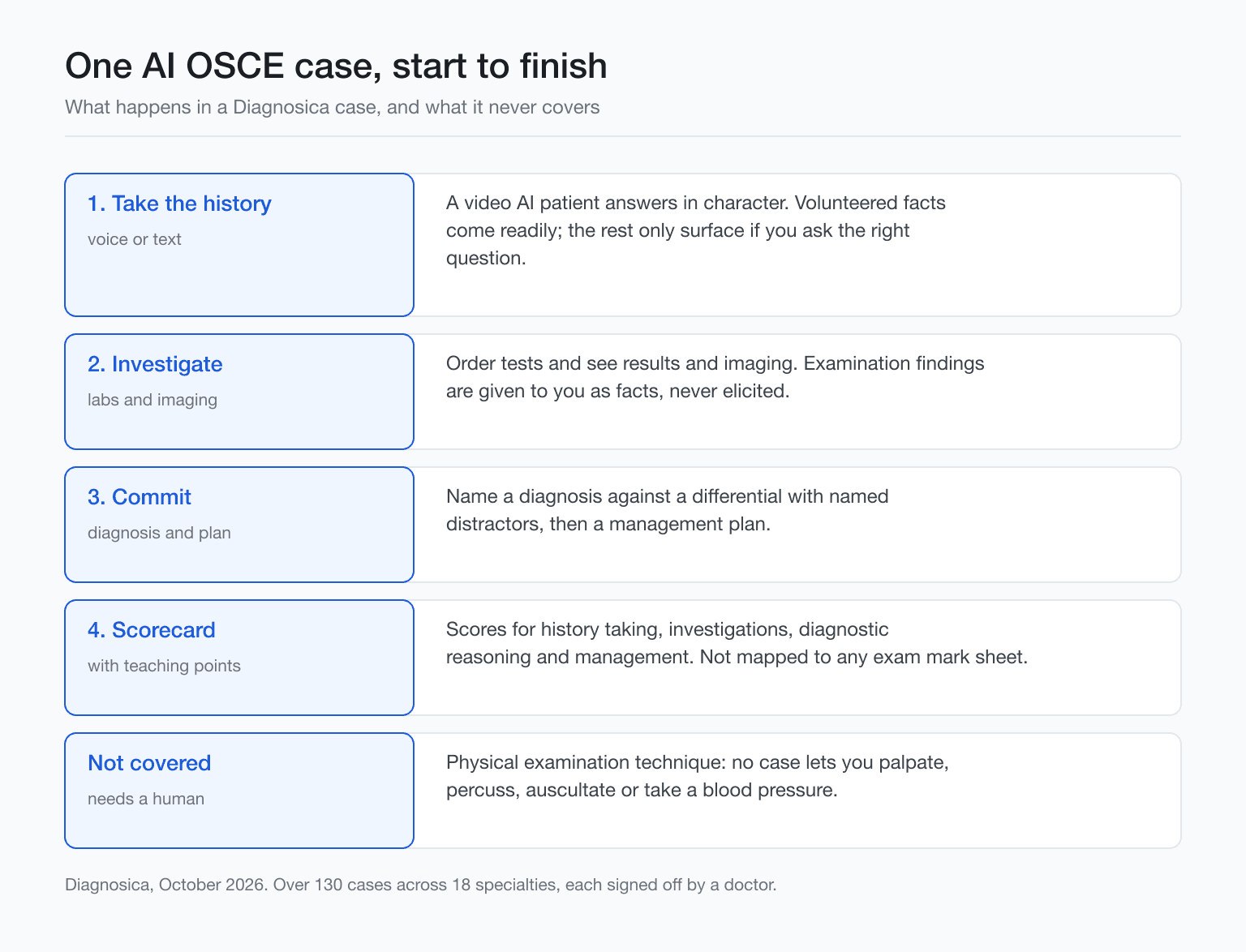
In Diagnosica, you open a cardiology station and meet Brian Watts, 72, a fictional AI patient. He says, "I've been getting out of breath on hills and stairs for the last few months." Vitals on screen: heart rate 72, blood pressure 128/96, oxygen saturation 97%, respiratory rate 18, temperature 36.7.
Brian Watts volunteers breathlessness on exertion, a tight feeling in the middle of his chest on hills that eases with rest, and two blackouts while active with no warning.
Targeted questions bring out information that only surfaces if you ask, including being told years ago he has a heart murmur and has never had a heart scan, the breathlessness getting worse, and no racing or fluttering heart before the blackouts. Your questions decide the data you collect.
Diagnosica then lets you order investigations and view results and imaging, before you commit to a working diagnosis. The decision sits against named distractors such as hypertrophic cardiomyopathy, stable angina, mitral regurgitation and postural hypotension.
Diagnosica's scorecard grades history, investigations, diagnostic reasoning and management, and deducts 10 if you don't arrange an echocardiogram. There is no examination, so you can't listen for the murmur yourself, and you won't practise physical signs here.
What does an AI OSCE simulator mark, and what can't it?
AI OSCE simulators mark the talking half of a station. They judge how complete and well ordered your history was, which red flags you chased, and in some products, your tests, diagnosis and plan. None can mark examination technique or how you palpate and percuss.
Geeky Medics, Quesmed OSCE-AI, and TalkOSCE use an AI examiner that scores you against a station checklist or mark scheme, as of October 2026. Vendor pages describe tailored feedback, per-station checklists, five examiner follow-up questions in TalkOSCE, and a global impression grade in Quesmed.
Diagnosica and Neural Consult provide a score after a full case, while Full Code gives a score per case, as of October 2026. Diagnosica’s scorecard covers history taking, investigations, diagnostic reasoning and management, and it isn’t mapped to any exam’s mark sheet.
OSCE examiner mark schemes and global ratings are unpacked in how a station is actually marked.
AI patient, study partner or paid role-play: which is best?
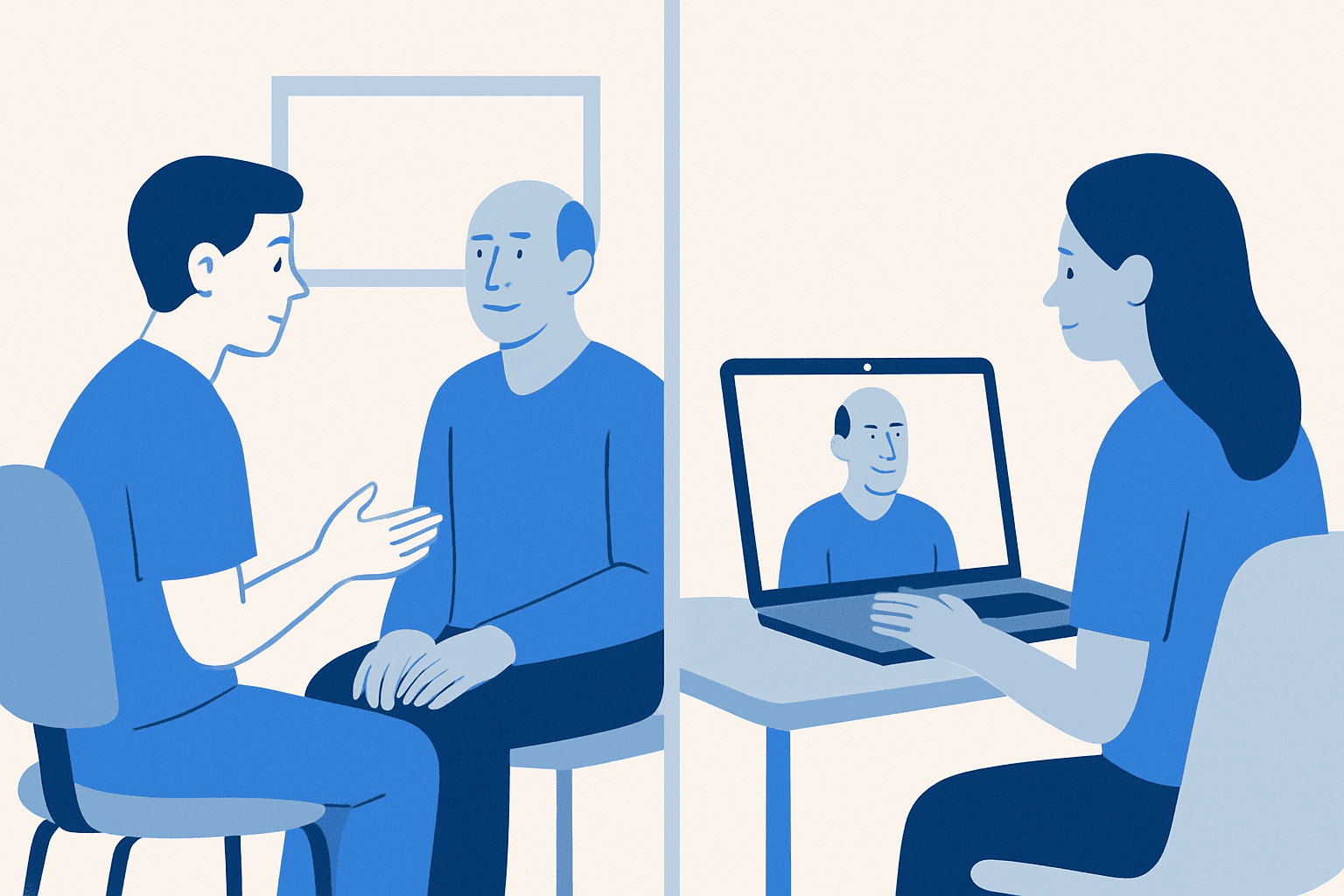
Use all three in a stack. An AI patient gives you sheer volume and availability at any hour. A study partner gives you human reactions and the social pressure of being watched. Paid role-play with trained actors gives the highest realism, saved for the final stretch before the exam.
AI patient. Any hour, no booking, with voice or text. Speaking out loud exposes filler words and shaky question order, while typing still trains structure when you can't talk, and there is no physical examination practice, you reason from stated findings rather than elicit signs.
Study partner. Free if you can match two rotas, but cancellations and night shifts break momentum. Peers do help with rapport, though most won't mark to a sheet or keep time strictly, so your data and feedback are patchy.
Paid role-play. Fixed dates and the highest cost, but trained actors recreate pressure, subtext and curveball answers that feel close to exam day.
Solo practice stays on track with how to practise stations without a partner.
Diagnosica as an AI OSCE simulator
Diagnosica is an AI clinical simulator for medical students and junior doctors: you take a history from an AI patient by voice or text, order labs and imaging, commit to a diagnosis and management plan, and get a competency scorecard.
Diagnosica gives you a video patient you speak to, or type to, on the web, iPhone and Android. Diagnosica is used in the UK and abroad, including the US, Canada, Australia and Ireland, and there is a free tier with no card; paid Standard details sit on the current pricing page.
Diagnosica has over 130 cases across 18 specialties in Foundation, Intermediate and Advanced bands, with every case reviewed and signed off by a doctor. Diagnosica includes transcript export, leaderboards by specialty and country, and cases are available any hour without booking; the no-signup demo runs in about 3 minutes. Diagnosica does not offer physical examination practice, and as of October 2026 its bank is smaller than Geeky Medics or Quesmed, so treat it as an AI OSCE simulator for history, investigations and reasoning. You can run a full OSCE case free.
Is there a free AI OSCE simulator?
Yes. As of October 2026, TalkOSCE offers a free 10 minute monthly allowance. Geeky Medics has a free plan with 50 OSCE stations and a selection of AI virtual patients. Diagnosica has a free tier with no card and a no signup demo. Neural Consult has a free Starter plan. Full Code has a free plan with 4 cases. Quesmed OSCE-AI offers a demo station only.
The free simulators compared guide summarises those options.
Does an AI OSCE simulator work for PLAB 2 or PACES?
An AI OSCE simulator helps with the conversation half of PLAB 2 or PACES. Candidates can rehearse spoken history taking, counselling and presenting, any hour. Examination technique still needs people and kit. Diagnosica scoring is competency based across history, investigations, diagnostic reasoning and management, and is not calibrated to either exam's mark sheet.
More detail sits in AI tools for PLAB 2 and AI tools for PACES.
Is Diagnosica on iPhone and Android?
Diagnosica is on iPhone and Android, and it runs in a desktop browser. Learners can use the apps or the web app to speak or type to AI patients, order tests, and get a scorecard after each case. Diagnosica has a free tier with no card.
Does Diagnosica work outside the UK?
Diagnosica works outside the UK and is used by learners in the US, Canada, Australia, Ireland and elsewhere. Diagnosica scoring is competency based, not tied to one country's exam, so the history taking, investigations, diagnostic reasoning and management prompts make sense across curricula.
Can an AI OSCE simulator examine me on auscultation?
An AI OSCE simulator cannot examine you on auscultation. No voice or text tool can hear you place a stethoscope, judge your technique, or grade a murmur. You can rehearse explaining what you would examine and how you would present findings. Diagnosica presents examination findings as facts you can reason from, not skills it can assess.
Diagnosica is free to start, no card. Take a history from a video AI patient by voice or text, then commit to a diagnosis and see your competency scorecard. Available on web, iPhone and Android. Start practising now