How to Prepare for Medical Finals
Last updated 4 October 2026
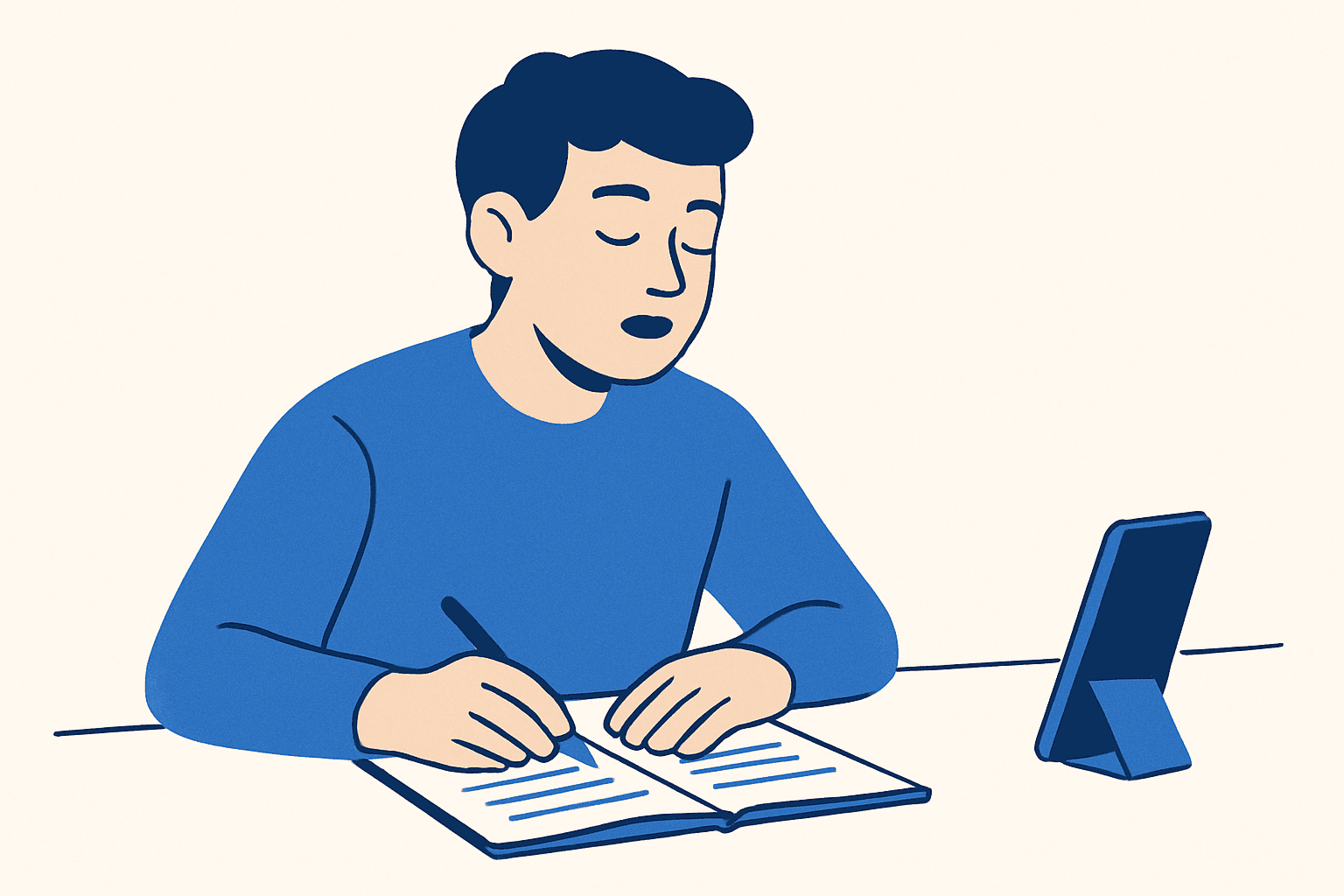

Your exam date is circled in the calendar, your desktop is a thicket of PDFs, question banks, and flashcards, and you're still not sure where the remaining hours should actually go. It feels busy, not targeted.
Finals are two different exams wearing one name: written papers that reward recall and pattern recognition, and a clinical that rewards structure and fluency under a clock, and most revision plans only serve the first.
This page sets priorities across both halves of how to prepare for medical finals, not a timetable and no promises about results. There's a part of the clinical half no software rehearses, and this post says so later rather than pretending otherwise.
What finals actually test
Finals are two assessments under one label. The written paper rewards recall, pattern spotting and triage of flags across vignettes, where recognition of presentations matters more than narrative detail, and where consistent heuristics beat ad hoc reasoning. The clinical exam rewards structure, timing and fluent, safe communication under a clock. They share a syllabus but need different kinds of practice.
The UK licensing assessment mirrors that split. The Medical Licensing Assessment is a two-part assessment made up of an Applied Knowledge Test (AKT) and a Clinical and Professional Skills Assessment (CPSA), and a student's own medical school administers the assessment.
If you want the method for the clinical half, it sits in our guide to rehearsing stations by yourself. This page takes the whole-exam view of how to prepare for medical finals, so we keep the split in mind, sketch the differences once, and focus on planning the right practice rather than rehashing station technique.
Why most revision plans fail the clinical half
The trap is boring and real. A question bank is there at 11 pm in your dressing gown, it asks for nobody else, no booking, you open the laptop and start, all on your own. A station needs a person, a room, and a slot in someone else's week.
So the plan drifts toward the thing with no friction, and the hours land where they were always going to land. This isn't laziness, it's activation cost doing what activation cost does.
The tell is painful. You recognise the diagnosis instantly on a written stem, then still open the station badly because you've never said the words out loud with someone timing you and a clock chewing through minutes.
The clinical half is scored against a written scheme, and most people haven't read what the examiner is ticking before they walk in.
Fluency under a clock is a different skill to recall. It is structure, signposting, and tight prompts for key differentials and first investigations, delivered out loud while you manage silence, interruption, and your own heartbeat.
You can't get that from silent banks at midnight. You only get it by speaking, to a person, against a clock.

The written half: what works
For the written half, the playbook is settled. Do questions, space the repetitions, and keep a small errors deck you actually revisit, because recall and pattern spotting sit at the core of these papers.
Doing questions beats reading about them. In Dunlosky and colleagues' 2013 review, practice testing and spacing were both rated high utility in the top tier, because they help learners across different ages and abilities.
Spacing works in medicine. In a 2026 meta-analysis, Maye and Hurley concluded "Spaced repetition is an effective study method in medical education", while asking for better research on optimal design and longer term performance.
Condense what keeps tripping you into an errors deck you actually see again. Keep it bite sized, prune it often, and focus on prompts that fix your specific misses.
The tooling question, which apps and which AI to use, is covered elsewhere, and I'm not going to relist them here: which AI tools help.
The clinical half: the practice problem
The clinical half needs someone who talks back. If you're thinking about how to prepare for medical finals, that trips people, because the rest you can do alone. Timetables drift, placements split, the group thins when you need it most.
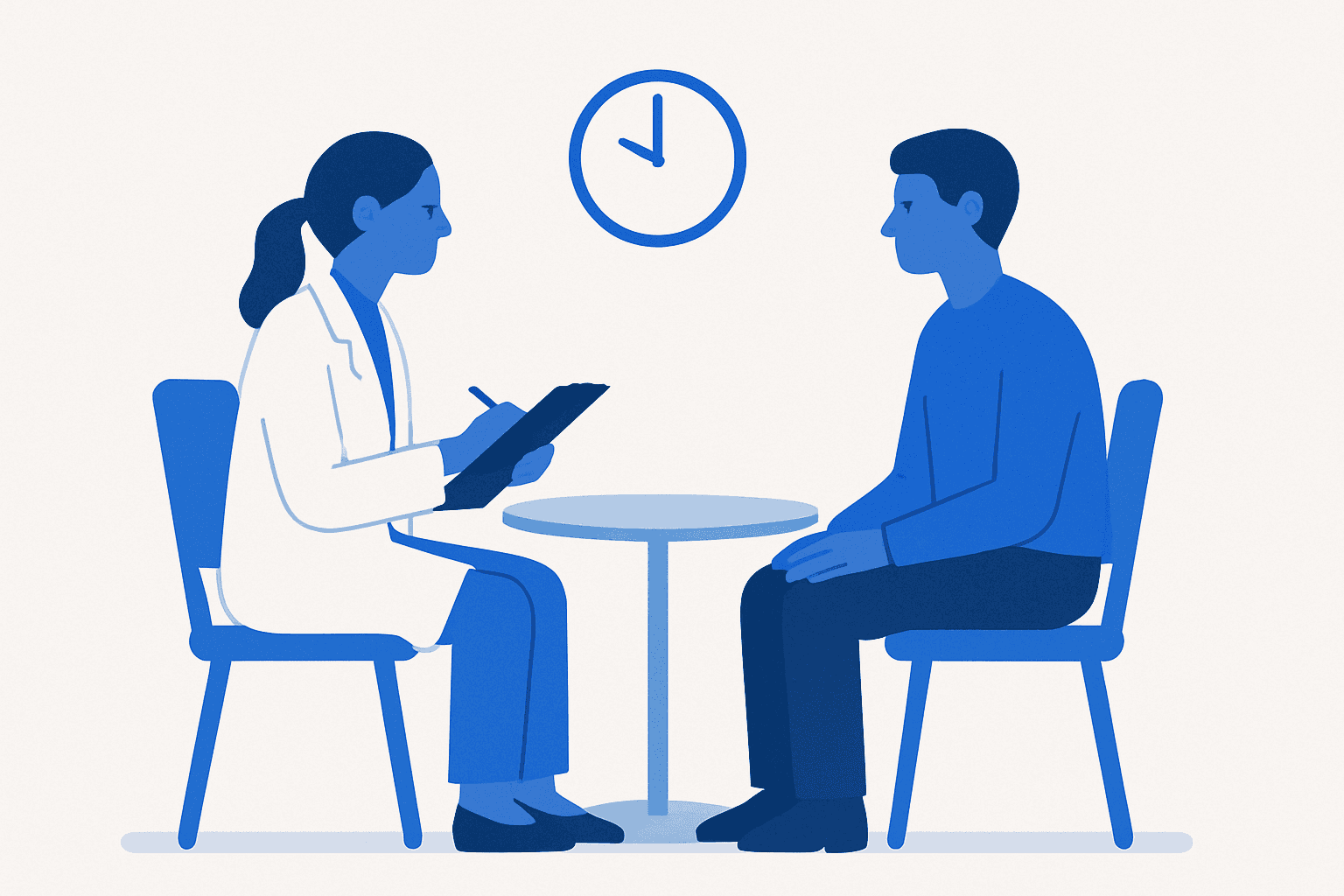
Reading a station isn't the same. Saying the words while someone answers at a pace you don't control is a skill that only comes from repetition.
This is history and reasoning under a clock, not physical examination. Diagnosica does not do physical examination practice, and you should not expect to rehearse signs or manoeuvres with software.
Diagnosica is live and early, rough edges expected. You speak, the AI patient answers by voice at any hour without booking. Rubric scoring after every case, with free cases every month on the free tier. The library has 50+ cases across roughly 16 specialties in three difficulty bands, and every case reviewed and signed off by a doctor.
It doesn't give advice about real patients, and it's not a diagnostic system. Treat every output as educational.
This replaces the availability problem, not the tutor. Use it to keep speaking and held to a rubric when your group evaporates and the rota does what it always does.
Study partners disappear at the exact moment you need them.Get a safe AI patient you can talk to by voice, case marked at the end. Free cases every month, no booking.Run a case free tonight

What to do in the last six weeks
Prioritise repeat presentations, then rehearse out loud properly on the clock. Get someone else to mark you. Fix structure before chasing facts. Keep written practice going so recall stays warm. Sequence beats dates, and the right order beats any calendar.
This is a priority order, not a timetable. The sequence is the useful part, the calendar is yours.
- Cover the presentations that keep coming back, not the rare ones that feel impressive. Written papers and stations reward fluency with common scenarios examiners see again and again.
- Rehearse out loud. Silent revision won't build the fluency the clinical half is marking, so time yourself, speak the history, record it if you can, listen for hesitations.
- Get marked. Self assessment swings between generous and harsh, usually isn't accurate. Ask a peer or a junior doctor to time, interrupt, and score you against a simple checklist.
- Fix structural habits rather than knowledge. Practise opening, signposting, asking about ideas, concerns and expectations, summarising, and safety netting, which score regardless of the diagnosis.
- Keep written revision ticking. Short, regular question sets preserve pattern recognition and keep recall warm while you focus on spoken fluency so the halves move together.
The presentations worth rehearsing
Rehearse the presentations that recur and that hide something a patient won't hand you. These three come from the Diagnosica case library, AI patients built on fictional personas, and we're working at history and investigation reasoning here, not examination or management.
- Sudden breathlessness, 55M What the patient blames it on: A heart attack, thinks blood means something serious · The fact that only comes out if you ask: Small amounts of blood coughed up twice, left calf swollen, tight, tender, warm for a week, long flight from Australia five days ago, keyhole left knee surgery three weeks ago
- Thirsty and breathless, 24M What the patient blames it on: A stomach bug on a sore throat · The fact that only comes out if you ask: Stopped taking insulin two to three days ago as he wasn't eating and felt too sick, partner noticed a sweet fruity breath smell, recent flu-like illness
- Back pain and leg weakness, 45M What the patient blames it on: An aggravated slipped disc, codeine causing bladder issues, wants stronger painkillers and a sick note · The fact that only comes out if you ask: Numbness between the legs and around the back passage when wiping, two days of poor urinary flow with dribbling and constant fullness, new erectile difficulty
Unless you ask, you miss small haemoptysis, a hot tight calf, the long flight and recent knee keyhole surgery, so it pairs well with a breathlessness history station and a chest pain station walkthrough.
Martin is the 55-year-old here. D-dimer is sensitive, not specific, and useful to rule out pulmonary embolism only when clinical probability is low or intermediate, which is exactly how examiners like it framed.
Ryan blames gastro and a sore throat, but he stopped taking insulin two to three days ago and his partner noticed sweet, fruity breath.
Neil blames a slipped disc and codeine for the bladder, but targeted questions surface saddle numbness, two days of dribbling with fullness, and new erectile difficulty.
What nobody can help you with
Physical examination needs a real body and a real tutor. There is no software substitute. Diagnosica does not do examination practice, and no case in its library has examination content. Not negotiable.
Practically, that means the hands-on stations are on you to arrange with actual people. Patients on the ward, skills lab sessions, a registrar who will watch you and interrupt you. The earlier you accept that, the earlier you'll book it.
If you're working out how to prepare for medical finals, keep this boundary in view. The written half rewards solitary hours. The clinical half needs other humans and a room.
Second boundary, and it applies to everyone. Nothing anyone builds can tell you how you'll perform on the day, and if a sitting does go against you, resits, appeals and repeat years are their own subject. Rehearsal buys you more reps, scored against the rubric. That is the whole claim, and it's the ceiling.
This is a trust point, not an apology. It helps to plan around what can be rehearsed with software and what cannot, then commit.
Practise the talking half tonight
If you're figuring out how to prepare for medical finals, protect the talking half first. The written papers collect hours by inertia, but history-taking and investigation reasoning get squeezed when partners drop out and the day overruns.
Fluency under a clock comes from reps you actually say out loud. You do not need a partner to get those reps.
Diagnosica has a free tier, you speak and the AI patient answers, available any hour without booking. Every case gets rubric scoring when it ends. You can start a case free.
Or try the no-signup demo, talk or type for about 3 minutes, and it is marked when the case ends.
Educational use only. Not medical advice. AI-generated; verify clinically against primary sources.
Clinical review pending.