How to Build Rapport With Patients in UK Clinical Training


What is rapport with a patient?
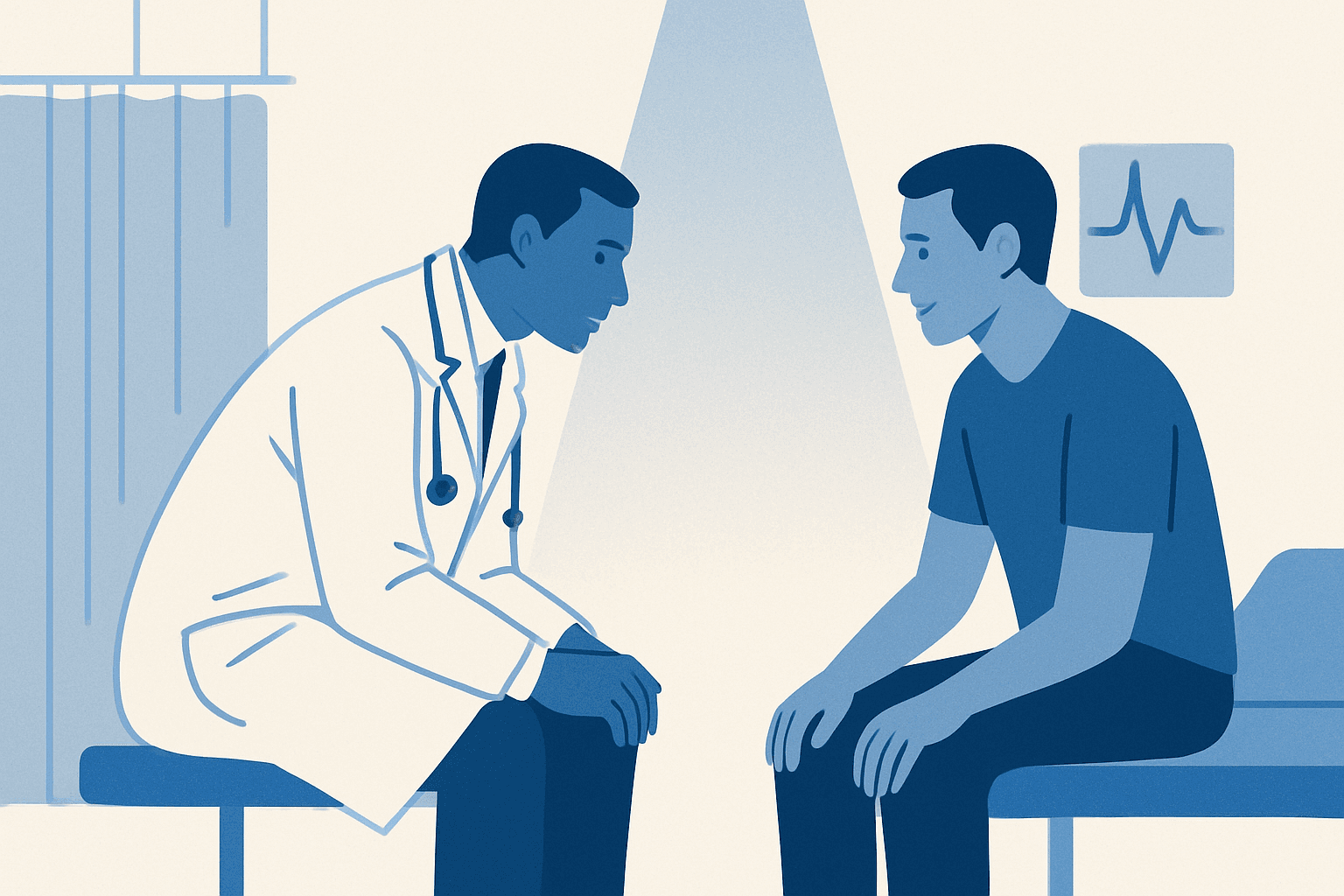
Rapport with a patient is a working relationship where they feel safe enough to tell you the real story. For doctors it shows up as observable moves, in how you open, listen, match words and pace, and respond to cues. It lives inside short appointments, and it's teachable.
In a foundation doctor's account, rapport is a "harmonious relationship" that relates to collaboration and parity between patient and physician.
Geeky Medics uses the Cambridge Dictionary line, "a good understanding of someone and an ability to communicate well with them", and adds that rapport isn't an exact science, it sits in the Art of Medicine.
Context and self-awareness drive what lands, and what works with one patient may not with another. You can't fake feeling, but you can practise the moves, and "thank you for sharing that" works in almost any scenario. That's how to build rapport with patients.
Why rapport changes what the patient tells you
Rapport changes content, not only comfort. In a short history, it decides whether you hear the thing that matters or the cover story that fits the clock.
Butt reports that firing ICE in the first breath on a hectic acute medical unit felt like a tick box, and he heard "well, you're the doctor" too often. Front loading like that can shut down disclosure before it starts.
Patients only remember 20% to 60% of what we tell them, and tone and listening shape what sticks, from a family physician's method. Check posture, tone, facial expression, pause for silence with critical information, verbalise care, and, as they put it, "Most importantly, listen to the patient."
Trust also gates detail. Some patients will not volunteer the worrying part unless you make it feel safe to say. Clive, 56, only mentions bleeding gums and easy bruising when asked directly, and he plays down how unwell he feels.
A quick check of the patient's own theory helps. If they think it is stress or a pulled muscle, you need to know that frame first or your questions will miss their mark.
How do you build rapport in the first 30 seconds?
Say your name and role, ask what they’d like to be called, explain what you’ll do today, ask one open question, then stop talking. Hold the space while they answer. This is how to build rapport with patients fast, and it buys you trust.
- Say your name and role, then ask, "Is [first name] okay, or would you prefer I call you something else?"
- Use your surname when you introduce yourself, Butt, an FY1 writing in Clinical Medicine, found Dr Butt was more memorable than first name only.
- Ask one open question at the start, then give a "golden minute" to talk, as in Geeky Medics' rapport guide.
- Treat the first thing they say as their headline, and follow that thread before you narrow.
- Use silence, what feels a long pause to you may barely register to them.
Early on, ask about work with context: "to learn a little about your life story, could you start with telling me what you do / have done for a living?" From Butt’s clinics it set pace and baseline understanding, and with a retired consultant anaesthetist he needed little lay translation, so we cover asking what they do.

Matching the patient's words and pace
Borrow their words, match their tempo, and keep language plain. If they say "tummy pain", you say "tummy", not abdomen. If they speak slowly and hedge a lot, don’t bulldoze with rapid-fire questions. Let their pace set yours for a beat or two.
If you need to type, say it first. "I am just going to note this down." Signposting and a brief recap keeps you and the patient aligned, and helps with keeping a history focused.
Summarise and invite correction early. For Toby, that sounds like, "So far I have tummy pain, this is the fourth time in eighteen months, and previous tests were normal, is that right?"
Drop filler words. "Cool" and "okay, great" feel like a brush-off. Neutral acknowledgements work better: "I see", "Right".
Swap "Okay, great." for "I see." Then replace "Cool." with "Let me check I have this right: tummy pain, fourth time in eighteen months, previous tests normal, is that correct?"
Picking up cues: the guarded, the self-conscious and the minimiser
Three fictional AI patients from Diagnosica’s case library show cue based moves inside timed histories.
The guarded patient. Toby Marchetti, 30, opens, "I've got this awful stomach pain again, it's the fourth time this has happened." It is the fourth in eighteen months and every previous test was normal, he repeats "I told them", was told stress or anxiety, and some staff hinted he wanted painkillers. Believe the pain out loud first, then ask what happened at previous visits; Butt observed patients given unexplained labels were receptive to genuine interest, and Toby softens when believed.
The self-conscious patient. Paul Henderson, 46, is easy going but worried, his ring no longer fits and his shoe size is up two. He is self-conscious about how his face and hands look, and he worries about headaches and loss of side vision. Ask permission and name the sensitive topic gently, then take his own explanation, ageing, weight and stress, seriously before you correct it; different from a flat, quiet patient, who may need space before any naming.
The minimiser. Clive Penhaligon, 56, starts, "I've had a chest infection for three weeks and two lots of antibiotics haven't touched it." Polite and apologetic, he plays down symptoms and only mentions bleeding gums when brushing and unexplained bruises on arms and shins when asked directly, he is embarrassed to volunteer them. Give permission to complain, ask the specific embarrassing question plainly, and use the Geeky Medics line, "You look a little bit anxious right now... Is there anything in particular that worries you?"
If you want to try this persona, talk to Toby yourself.

How do you rebuild rapport after it slips?
Spot the slip, name it in a short, neutral line, apologise if you caused it, then hand control back with an open question. Match their pace and let them finish. Do that before anything else, then rebuild detail after they nod.
Common slips: cutting off the headline, sounding disbelieving to a guarded patient like Toby Marchetti, drifting into jargon, or asking about work without context as Butt found.
- Name what happened and apologise, then give control back with an open question. If you need to type, signpost with "I am just going to note this down".
- Add a line of context before blunt or sensitive questions about work or substances. Butt shows a brief aim statement turns a cold probe into something acceptable.
- Validate first. "Thank you for sharing that", then a brief summary with an invite to correct you, backs off disbelief, which matters with someone like Toby who is upset when told nothing is wrong.
- If you don't know, don't guess. Say "I'm not sure, but I will find out for you" and see admitting you're not sure.
Rapport under time pressure: OSCE stations and busy clinics
In short consultations, rapport is built in the first minute and protected by not rushing; Geeky Medics notes people relax when they feel you have time.
On a hectic acute medical unit, Butt found opening with full ICE felt like a tick-box, hearing "well, you're the doctor" too often. Use context and self-awareness, fit the first moves to the patient.
In an OSCE the examiner can only credit what they can see and hear, so make it audible. Say what you’re doing, "I am just going to note this down", then give a concise summary they can correct, both from Geeky Medics. One spoken acknowledgement, not implied.
You can’t do everything in a short station. Commit to two or three moves every time, in this order: name and role, one open question with a beat of silence, one spoken acknowledgement, and a brief summary before you close.
If you don’t know, say so and commit to checking, per Geeky Medics. If your hands shake when your nerves spike, script those lines, then keep them alive by rehearsing a station alone.
Practising the words with an AI patient, and what it can't teach
Be honest: practising rapport with an AI patient rehearses words and structure, not a substitute for real human rapport. No feelings, no eye contact or posture you can read, and nothing physical.
It doesn't give advice about real patients, and it's not a diagnostic system. Treat every output as educational.
What it is good for, saying your opening out loud and trying responses to guarded or minimising personas. The patient appears as a video avatar you talk to by voice or type, and each case has a written tone and speech style.
That persona matters. Toby Marchetti braces for disbelief, then softens if believed. Clive Penhaligon is polite and plays things down, mentioning bruises and gums only when asked. Practise matching words and pace without losing structure.
You get a scorecard after every case. The History Taking score reflects whether you asked the essential questions for that case, it does not mark warmth, tone or rapport. Use the transcript to self critique, or ask a tutor.
The wards do the rest.
For variety, try ChatGPT playing the patient and our view on actors versus virtual patients.
Every case is written and signed off by a doctor. There is a free tier, no card, so start a case free.
Educational use only. Not medical advice. AI-generated; verify clinically against primary sources.
Clinical review pending.