Best AI Tools for PLAB 2: An Honest Guide
Last updated 4 October 2026
You’ve passed PLAB 1, your PLAB 2 date is set, and the clock says six to ten weeks. You google best ai tools for plab 2, click a few, and find they churn multiple choice items. Useful for recall. Useless for stations.
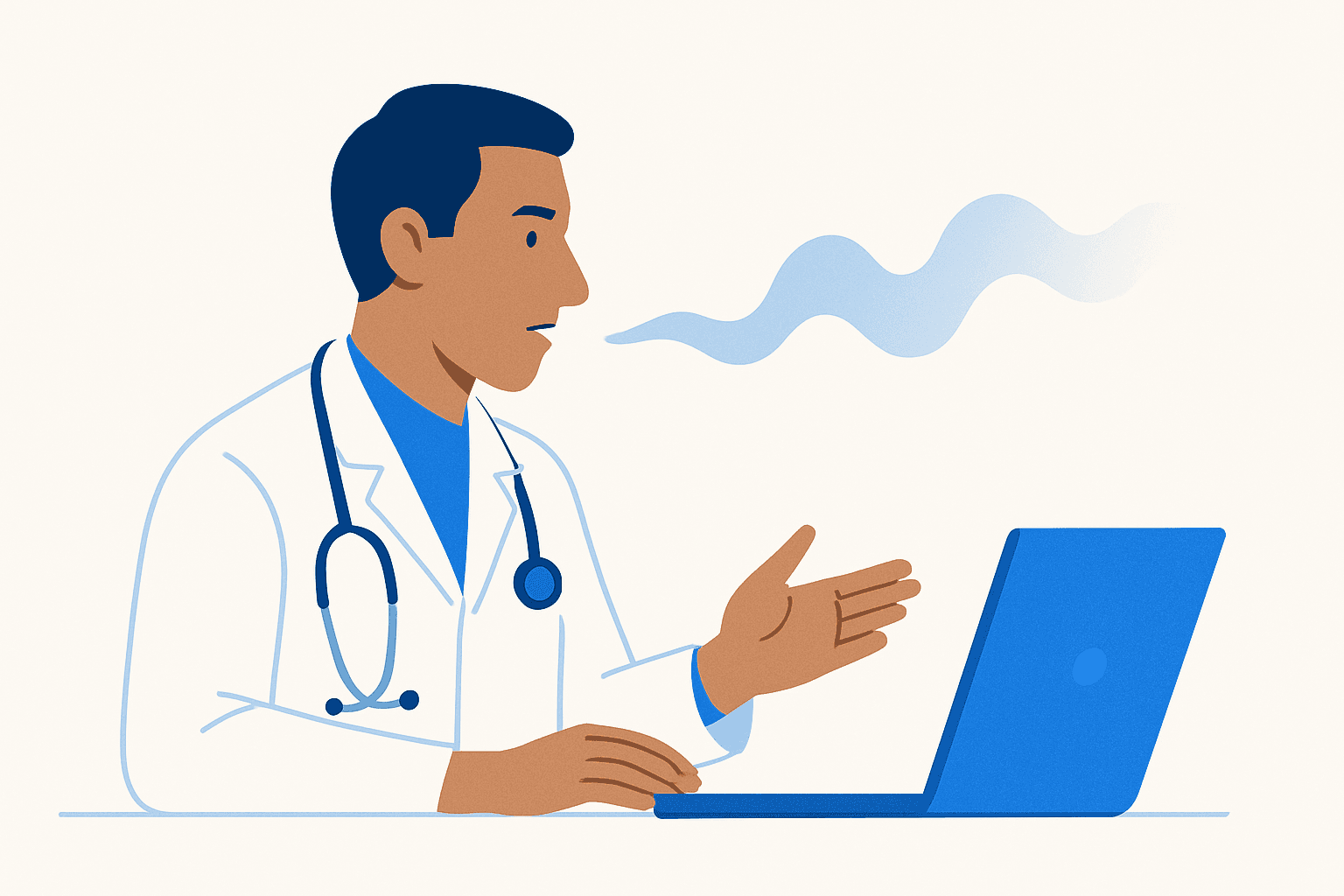
Here’s the rub. PLAB 2 is spoken, timed stations where you take a history, explain, show empathy, and organise your thoughts aloud. Most AI study tools drill written questions. Different exam, different skill. Treat them as the same and you’ll polish the wrong muscle.
This guide strips it back. I’ll group the tools by job, where they help, and where they miss in real station practice. I’ll also point to the parts no tool covers well, like non verbal communication, hands-on habits, and handling unpredictability. If you’re earlier in training and want a wider sweep, see our take on AI tools worth using in medical school.
Why do most AI study tools skip PLAB 2?
Most AI study tools are built for single-best-answer banks because they’re easy to make, auto-mark, and scale. A clinical exam of spoken stations needs a tool that talks back in real time and judges how you communicated. That’s harder and pricier to build.
Question banks optimise for fixed answers, quick feedback, and pattern spotting. They reward recall and tidy logic. That maps badly to a station where you greet a patient, take a history, explain, and answer worries out loud. No back-and-forth, no tone, no pacing.
So you can buy a good tool, use it well, and still make little dent in the exam you’re sitting. It trained you to pick the best answer on screen, not to structure a conversation or handle uncertainty in speech.
These tools scale by serving large banks with automated marking, low compute per user, and static explanations. A spoken station needs live dialogue, speech handling, and feedback on communication quality. Different build, team, and cost.
If you pay for anything now, match it to the task: real-time speaking, listening, and response under time.
How we picked
We picked against what matters for PLAB 2 practice, not what looks good on a landing page. The filter was blunt.
- Can you rehearse the spoken station end to end with realistic timing and prompts.
- Can you use it when IMGs actually study, nights and weekends, across time zones, without booking or waiting.
- Does it give actionable feedback that maps to the exam domains.
- Is there a free way to try it before paying.
We didn’t weight brand size or bank length. PLAB 2 tests what you do aloud under time with a person.
One line on conflicts. Diagnosica makes one of these tools, and we’ve said so wherever it appears in this guide, so you can discount accordingly.
Small aside. A lot of these tools are months old and change fast. Features and pricing move often. Check the current trial and timings before you commit.

The simulation layer: rehearsing the station itself
This matters most for PLAB 2, and it’s the thinnest bit of the market. By simulation layer I mean an AI OSCE simulator that plays the patient, lets you speak, and then marks how you did.
The field is crowded and young: PLABBuddy, Talking Cases, TuringMedSchool, MLA Buddy, and Plabster all say they target this exam. Most are small and recent. Try them before paying.
Full Code Medical turns up once you widen the search beyond PLAB 2, so we set out the Full Code Medical alternatives side by side.
You want repetition and feedback that map to how PLAB 2 scores. Fit and polish vary. So, run a test case first and see if it suits your cadence.
Diagnosica sits in this layer too, and here’s what it does. You speak to an AI patient by voice or text, order investigations, commit to a diagnosis and management plan, then get scored. PLAB-2 is one of the exams its rubrics are calibrated to the published mark sheet for. There’s a free tier with free cases every month. It is available any hour without booking, which is the real argument if you’re revising at 23:00 in a different time zone.
If your exam is six to ten weeks out, volume beats pretty dashboards. Pick the simulator you’ll actually use five nights a week, even if the interface is scrappy, then add a human partner once or twice weekly to keep your phrasing honest.
Rehearse a station tonight Take a history from an AI patient by voice or text, then get marked against a rubric. Start a case free
The knowledge layer, and its real limit
By the knowledge layer I mean question banks and note apps. They close gaps fast, help you recall common presentations, and anchor basics. If you don’t know asthma steps, red-flag belly pain, or safeguarding triggers, no amount of rapport saves the mark sheet.
There is a ceiling though. Knowing a textbook answer and saying it to a frightened person in eight minutes are different skills. Multiple choice questions reward recognition, PLAB 2 rewards structure, pacing, and empathic clarity. That bridge is apps that build clinical reasoning, plus deliberate out-loud practice.
So front-load the knowledge work. In the first half of your 6 to 10 week block, hit the banks, tidy your notes, and test recall. Then taper. By the last 2 to 3 weeks, spend most days talking cases out loud, timing yourself, and hearing what your explanations actually sound like. Honest point, this is the bit people skip.
Use the banks to script your skeletons: opening line, two focused questions, one screen for danger, one for psychosocial, summary, safety-net. Then wear those lines in until they’re automatic.
And yes, plenty have passed with a decent bank and a reliable study partner, no AI at all.
The structure layer: checklists and station frameworks
This is the structure: written station guides and mark-sheet-shaped checklists that show you what a good station contains before you rehearse. Think a crisp opening, agenda-setting, focused data gathering, ICE, red flags, explanation, safety-netting, and a clean close.
For free written structure, Geeky Medics and OSCEstop's station guides are well known. They’re clear, specific, and easy to scan when you’re mapping a station for the first time.
Treat these as the blueprint you internalise before any acting. Candidates who script an opening, consent, ICE, and safety-net once, then adapt it, waste less time in the room.
The limit of a checklist is simple. Reading one feels productive, but it isn’t rehearsal, and it won’t build timing, phrasing, or empathy under a timer. Eight minutes vanish when you’re trying to remember bullets you only skimmed.
Use them like this. Read the structure once, then close it and say it out loud from memory, start to finish. Time yourself, then open the guide and mark what you missed. Next run, swap to a new case stem so you’re not parroting.

What none of these tools can do for you
No software will teach you to examine a patient. None will reproduce a real examiner’s judgement. And none will capture how differently a real person behaves when they’re frightened or angry. Those parts still need a body in the room, real-time feedback, and the awkwardness of eye contact.
Physical examination is the clearest gap. Diagnosica marks itself as not covering it, and says so on its own comparison table. Manoeuvres, hand position, patient comfort, and micro-corrections happen in three dimensions. A chatbot can’t tell you your percussion is too heavy or your obs technique is sloppy.
On examiner judgement, treat any rubric score as a rehearsal aid, not a prediction. Real examiners weigh credibility, rapport, and timing, and they vary. A simulated rubric helps you practise structure, but it can’t predict how fatigue or station context shifts a human decision.
Find one study partner even if you only meet weekly, and use the tools for volume between those sessions. One committed partner beats five flaky groups. You need live feedback on your hands, voice, and pacing at least a little.
A realistic stack for the last eight weeks
You want a plan that matches what PLAB 2 measures, spoken performance under time. Pick the best AI tools for PLAB 2 that mirror station format, surface structure errors, and let you do many short reps.
Weeks eight to five: sort knowledge gaps and station shapes. Read the frameworks, then write a blunt list of presentations you’re weak on, ten or so. For each one, outline opening questions, red-flag screens, and closure. Short, one page. Use your tools to probe recall of structure.
Weeks four to two. Switch to volume of spoken repetitions. This is the part people skip and it's the part the exam tests, so aim for 10 to 20 minute daily sets, three or four micro-stations, out loud, timer on, and pair with a buddy when you can, and use simulators for solo practice. Here's a simple set-up for rehearsing PLAB 2 stations from home. Try things before you pay. There are decent free simulator options.
Final fortnight: stress test timing and the awkward stations. The angry relative. The mistake you have to explain. The thing you have to say that nobody wants to hear. Alternate easy with hard so confidence doesn’t crater. Keep feedback tight to timing, empathy phrases, and safety behaviours.
One catch: this is a shape, not a prescription. If you’re working full time in a hospital in another country, stretch the weeks and protect two or three short sets on work days. Progress beats purity.
One of the broader knowledge tools gets its own write-up: read our iatroX review before you subscribe.
Sitting PACES instead? The same treatment for AI tools for MRCP PACES. Sitting the UKMLA? Here's the UKMLA equivalent.
Common questions
Can I pass PLAB 2 using only AI tools?
Nobody can promise that, and be wary of anyone who does. AI tools give you structured repetitions and quick feedback on history-taking, data gathering, and spoken clarity. They don’t teach physical examination technique, patient handling, or station craft under pressure. You still need a human study partner, supervised mock stations, and exposure to a real examiner’s judgement to calibrate what good actually sounds like.
Are AI patients realistic enough to be useful?
They’re useful because they’re consistent, tireless, and available at any hour. That lets you rehearse frameworks, timing, and your opening thirty seconds. They won’t mimic a nervous or angry person, shifting cues, or the odd red-herring you’ll meet on the day. So treat AI patients as a rehearsal surface, then prove your scripts against humans who can surprise you.
How much should I expect to spend?
Expect to spend less if you use free tiers well. Most tools offer a free plan or a short trial, so sample the format, latency, and feedback style before paying. Pay only for what fixes your gap, for example station variety, timing drills, or mock scoring. Cancel ruthlessly if a tool duplicates another you already use. Your hours are the expensive bit.
When should I start practising out loud?
Sooner than feels comfortable. Start speaking through full stations out loud in week one or two, even if your content is rough. Most candidates delay this and then discover in mocks that timing, transition phrases, and closing the loop are the bottlenecks, not knowledge. Daily ten minute sprints beat long silent reading. Record yourself. Cringe, adjust, repeat.
Educational use only. Not medical advice. AI-generated; verify clinically against primary sources.
Get the spoken reps in Run a free case tonight and hear yourself take the history out loud. Start free