How to Study on Clinical Placement (and Not Just Stand There)
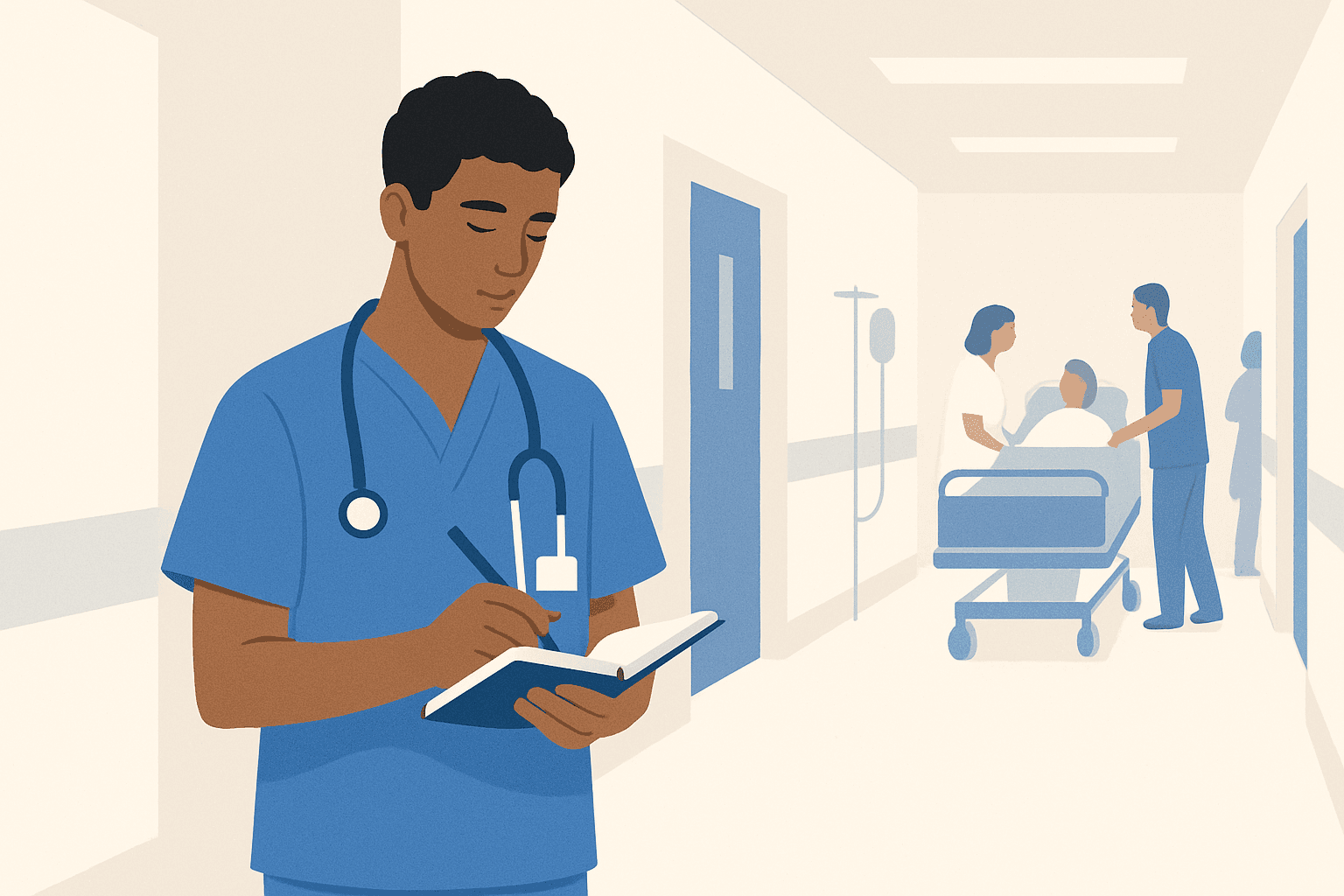

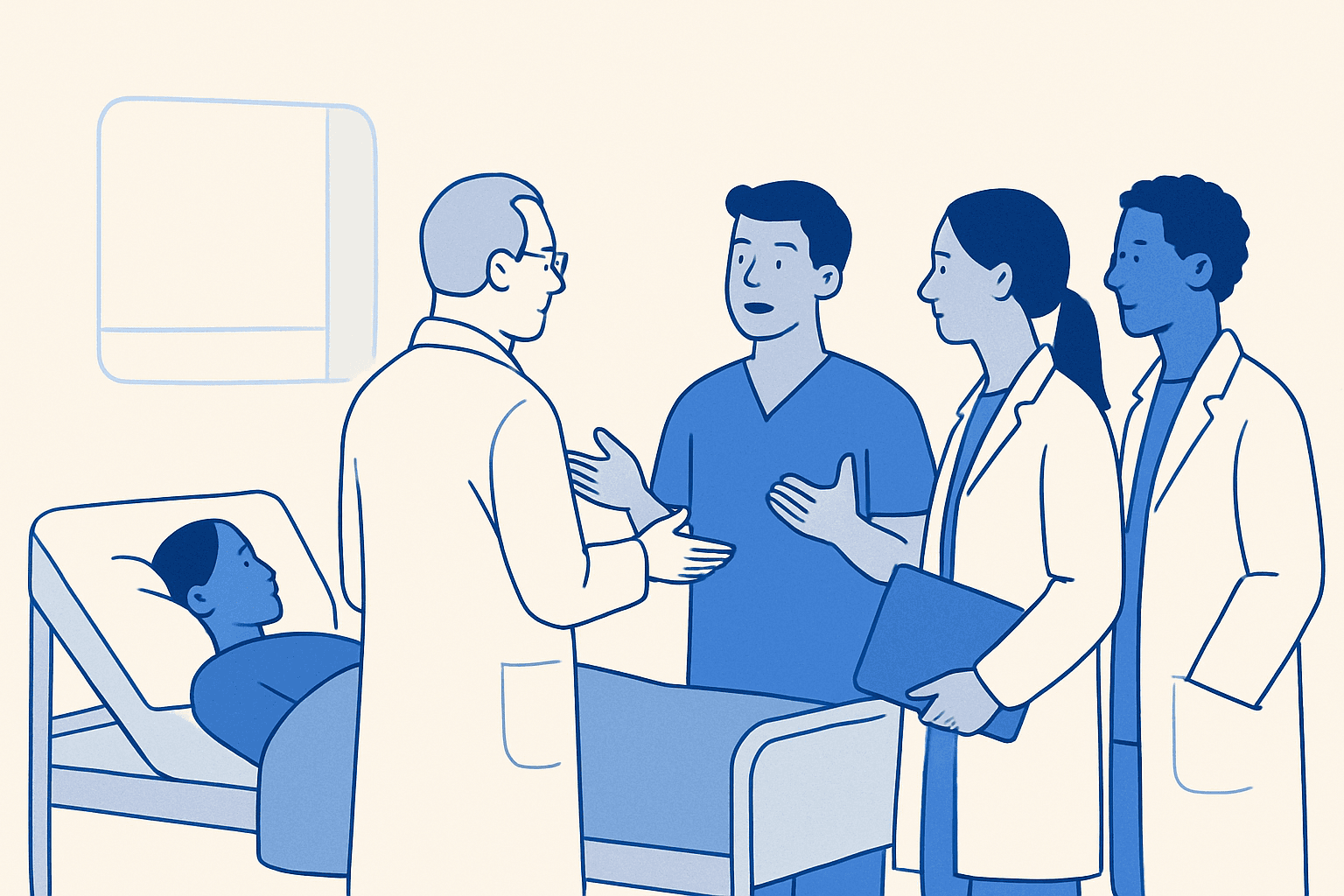
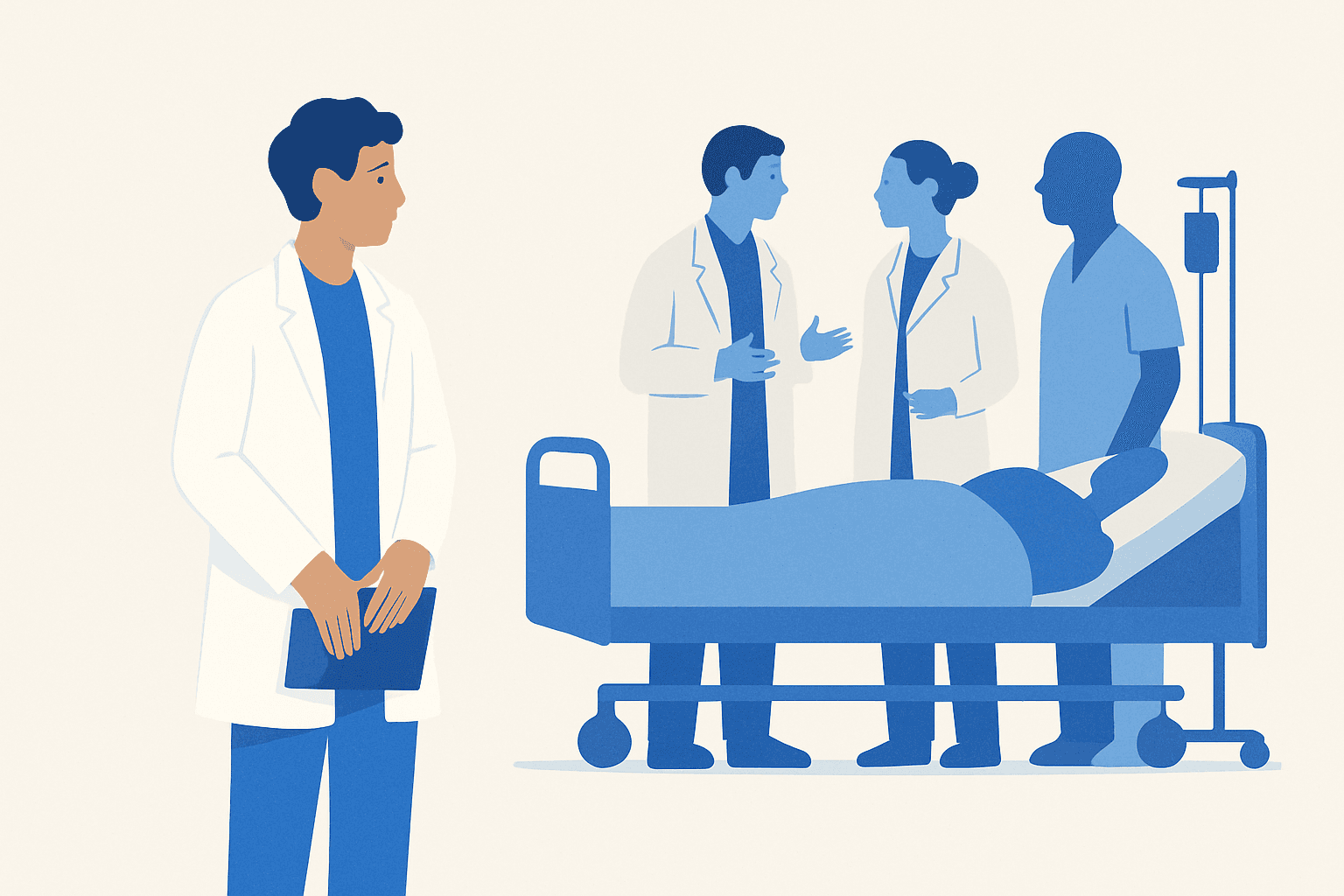
You trail the ward round, cling to the notes, stand at the back, then head home unsure what you learnt. UCL's placement guides warn how easy it is to end up passive, sat in the corner, feeling in the way.
Here's the fix: run one loop daily, clerk a real patient, present them, then check your differential and investigations against what the team actually did.
This post gives you that loop, before, during and after tactics, simulated cases to fill gaps, and a one week plan. Examination skills are learned on real patients with tutors.
How do you actually study on clinical placement?
You study on placement by running one loop every day. Clerk at least one patient yourself, present them to someone on the team, then that evening check your differential and investigations against what the team actually did. Write your plan before you peek at the notes, then compare it.
- Clerk. Find and clerk one new patient end to end, write a focused history, what you would examine, a short differential, and initial tests, because you're committing before you see the answer and reading never makes you do that.
- Present. Present that patient to someone on the team for two minutes and ask for one micro feedback point, because pressure to be clear exposes gaps and forces you to organise your thinking before the solution appears.
- Check. That evening, check notes and results to see what the team did, then write one correction and one next step, because closing the loop with the real outcome turns guesses into learning you'll remember.
Read the GMC's placement guide, written by medical students for medical students. It covers what to expect, what's expected of you and how to raise concerns, and it's worth one careful read at the start.
Before the day: pick two presentations to hunt for
The night before, pick two presentations to hunt for on that service. Breathlessness, chest pain, jaundice, red eye, confusion count. Presentations, not diagnoses. Skim what matters for each so you can spot patterns and ask better first questions.
You're not writing an essay. Spend 20 minutes max. One clinical page or a short video per presentation, plus three investigations you'd expect to order and why. Stop there. You'll learn more from a real patient at 8.15 than another hour at midnight.
Ask who to see. Catch the FY1 or the nurse in charge, or read handover, and identify patients who are good historians or instructive to see, as in the BMA's placement advice.
If you can, preview. UCL guides suggest seeing 1 to 2 patients the day before the ward round, so you understand the decision-making the next morning. For clinics, study the likely conditions and presentations that clinic sees.

On the ward: clerking patients nobody asked you to see
On the round, mark two or three patients you could clerk later, and write down every unfamiliar term to look up. Make a mini jobs list for each patient to review with the doctors after. This comes straight from UCL's placement guides, and it works.
If you want a quick walkthrough of the flow and who does what, that's in how a ward round runs.
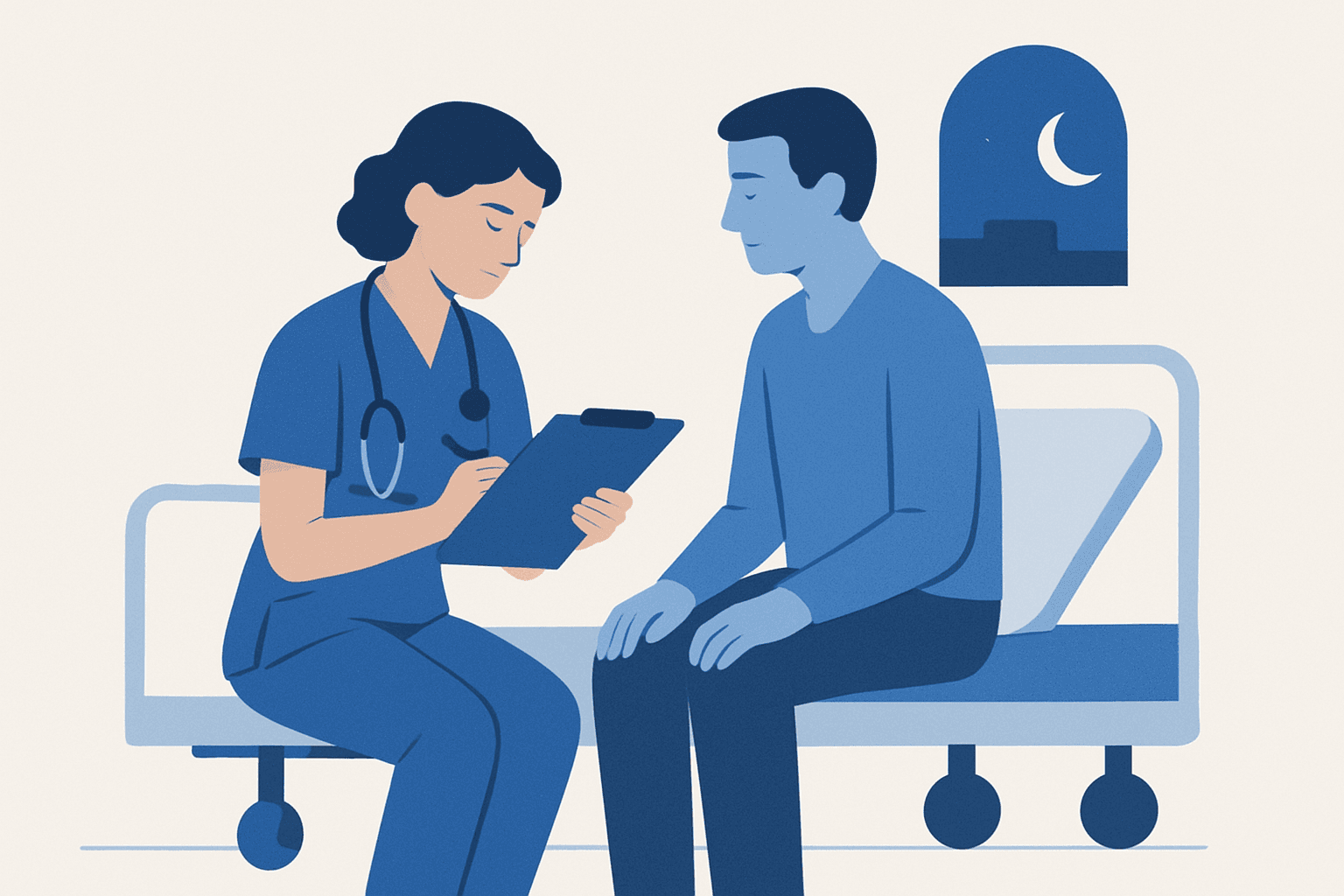
After the round, get the team's say-so and the patient's consent, then go back alone and take a full history. Go in without the notes open and without prior labels in your head, and read the notes after you've committed your own view.
Write it up as if it's going into the clerking proforma. Presenting complaint, history of presenting complaint, systems review, PMH, DH, allergies, FH, SH, ICE, then stop and commit to your differential.
List the investigations you'd want and why before you peek. Then open the notes and results, and see where you were right, where you missed, and what the team actually did.
If a patient asks about their diagnosis or management, recognise your limits as a student, explain your role, and encourage them to ask their team. That's standard BMA guidance.
Examination is part of a clerking, and you learn it here, on real patients, with feedback. No simulator replaces that, and nothing you do at home will.
Presenting what you found (and asking the question that gets you taught)
Offer to present your clerking to an FY1, registrar or consultant, keep it tight, and land on your differential and what you think the next step is. Keep it short, headline first, then the one or two details that actually moved your thinking.
Finish with a concrete question, not "any feedback?". Try, "I put X above Y because of Z, was that right?" or "Why did the team send this test and not that one?"
If you want the full scaffold for a ward-round pitch without waffling, see structuring a ward-round presentation.
Many resident doctors are keen to teach, and clinic is a good place to ask what you were too nervous to ask in a big group, the BMA notes.
In clinic, ask whether you can present a history to the clinician before the patient is called through, with the patient's consent. UCL's guides suggest it, and it keeps the consult smooth once the patient is in the room.

What to do in the dead time between ward round and clinic
Those half hours between a finished list and a late clinic are where most placement days leak away. Treat them as study windows, pick one small task, finish it, then park it when the bleep goes.
Start with your own notes. Look up the three terms you wrote during the round, the ones you nodded at but could not define, and write one line each you could say out loud to a reg.
If you cannot clerk right now, read a recent clerking and stop before the plan. Write your differential and the investigations you would order, then compare with what the team actually did. UCL guides say, "If you are unable to clerk patients yourself, review clerkings and consider differential diagnoses, investigations, and management for each patient."
Diagnosica's quick case is a two-minute rep you can run on your phone. The patient says one line, you get five clues one at a time, you guess after each, then you see the answer and a one-line teaching point. It keeps a daily streak going.
It is a small daily rep, not a substitute for a patient, and it does not teach examination skills.
Phones on the ward need judgement. Step away to a quiet spot, never mid-round, and the BMA is clear you do not share patient details in group chats.
After placement: closing the loop on your differential and investigations
I suggest 15 to 20 minutes at home per patient, set your version beside the team's conclusion, and explain the gaps.
Write, in your own words, what you thought was going on and why. Before you open the EPR, commit to building a ranked differential, then compare it with the team's working diagnosis and differential.
Interrogate the tests. For each investigation you planned, ask whether a test changes anything. If the answer is no, park it and work out why you reached for it.
For every team-ordered test you didn't think of, name the reason, diagnostic, staging, risk stratification, pre-op baseline, safety net. If you can't place it, look it up that night and add a one-line purpose to your notes.
Follow the patient the next day if you can. UCL guides say to follow up patients on the post-take ward round, ask what investigations and management took place, and review a topic you want to learn more about.
Write down one thing you got wrong. One sentence, no excuses. Keep a running page to spot the patterns you trip on.
No real patient identifiers in your notes, ever. De-identify everything.
What if your rotation never shows you the conditions in your exam?
Every rotation is a grab-bag, so some bread-and-butter presentations will never walk onto your ward. Fill the gaps on purpose, with peers and with simulated cases where you take the history, order tests and commit to a diagnosis. Keep using real patients for everything they teach, especially examination and teamcraft.
Run the same clerk, present, check loop on a simulated case. Take the history, order the investigations, commit to a diagnosis and plan, then read the scoring and teaching points so you close the loop the same day.
On Diagnosica, you take a history from an AI patient by voice or text, shown as a video avatar, order investigations and see results and imaging, commit to a diagnosis and a management plan, then get a scorecard with competency scores and teaching points after every case. The library has over 130 cases across 18 specialties, in three difficulty bands, each with a differential and named distractors, every case signed off by a doctor.
Here's the boundary. No physical examination practice. Not a replacement for real patients or tutors. It doesn't give advice about real patients, and it's not a diagnostic system. Treat every output as educational.
When the ward is quiet, organise a study group. The BMA's advice is plain, set one topic per week within your placement group and share summary sheets.
Slot this into your day, don't rebuild your whole year around it. It should sit alongside your wider finals plan, not replace it.
Practise the missing presentations Run the clerk, present, check loop on an AI patient, free to start with no card. Start a case free
A one-week placement study plan
- Monday. Pick two presentations to chase this week on the take list, ward board or clinic schedule, and tell the team you'd like to clerk them.
- Tuesday. Clerk the first patient, write a problem list with a ranked differential. Present to a junior or reg, note one question you couldn't answer and one investigation to order.
- Wednesday. Clinic. Prep both targets the night before, ask one tight question, then do a quick case to keep the streak.
- Thursday. Clerk the second patient, same structure. Present, ask a specific question, then note which investigations the team actually sent and why.
- Friday. Follow up both patients and close the loop. Compare the team's actions with your differential and tests, record one thing you got wrong and what changed your mind.
- Weekend. Run one or two Diagnosica simulated cases on the presentations you didn't see, then review this week's misses. Simulation fills gaps, it doesn't replace the ward.
If you're in Year 5, this habit is the work you'll do as an FY1, see the jump to FY1.
Educational use only. Not medical advice. AI-generated; verify clinically against primary sources.
Clinical review pending.
Try a free case tonight Run a free case tonight on a presentation you did not see this week, then take it back to the ward tomorrow. Start free