Standardized Patient Practice at Home: A Solo Drill Plan
Can you practice standardized patient encounters alone?
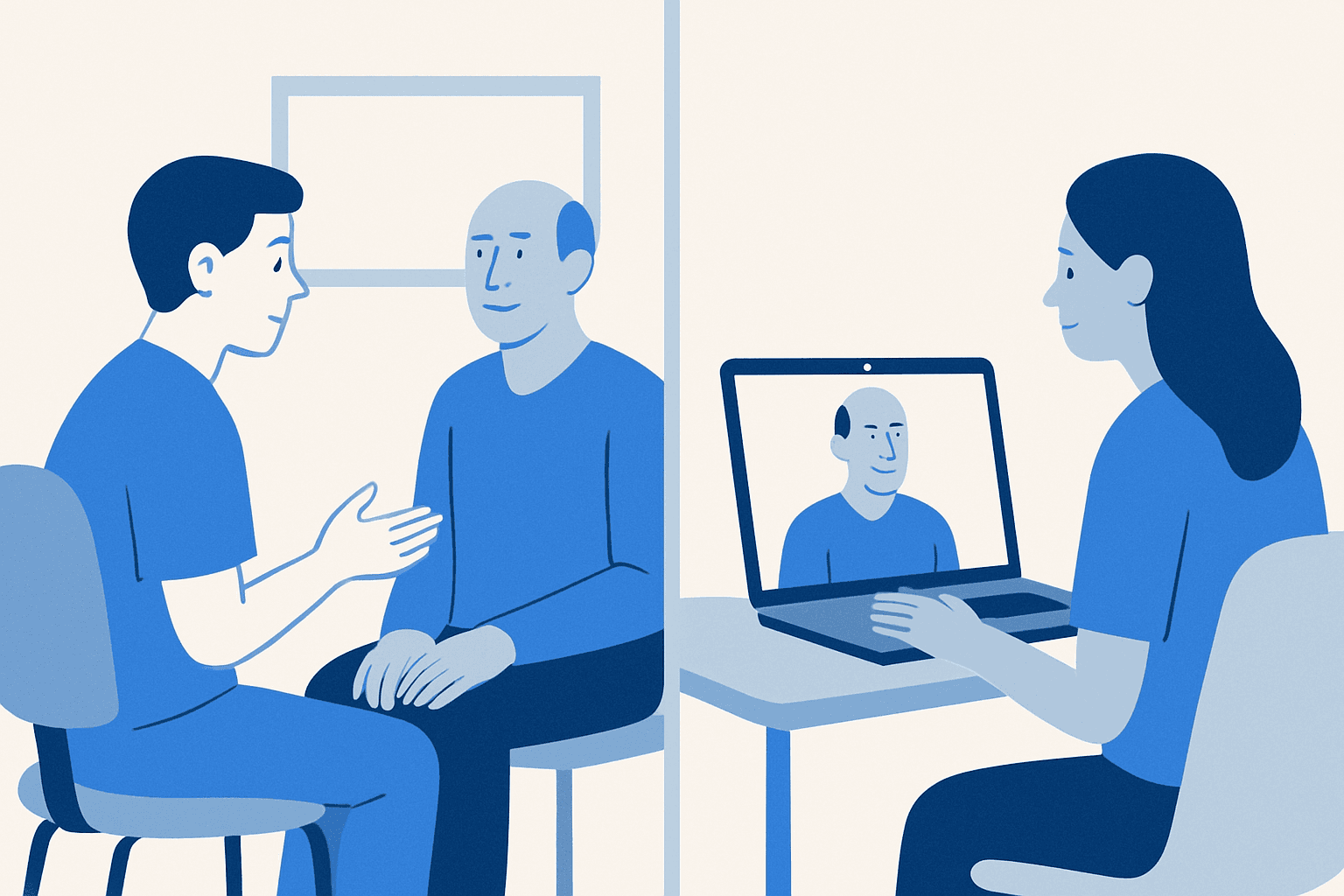
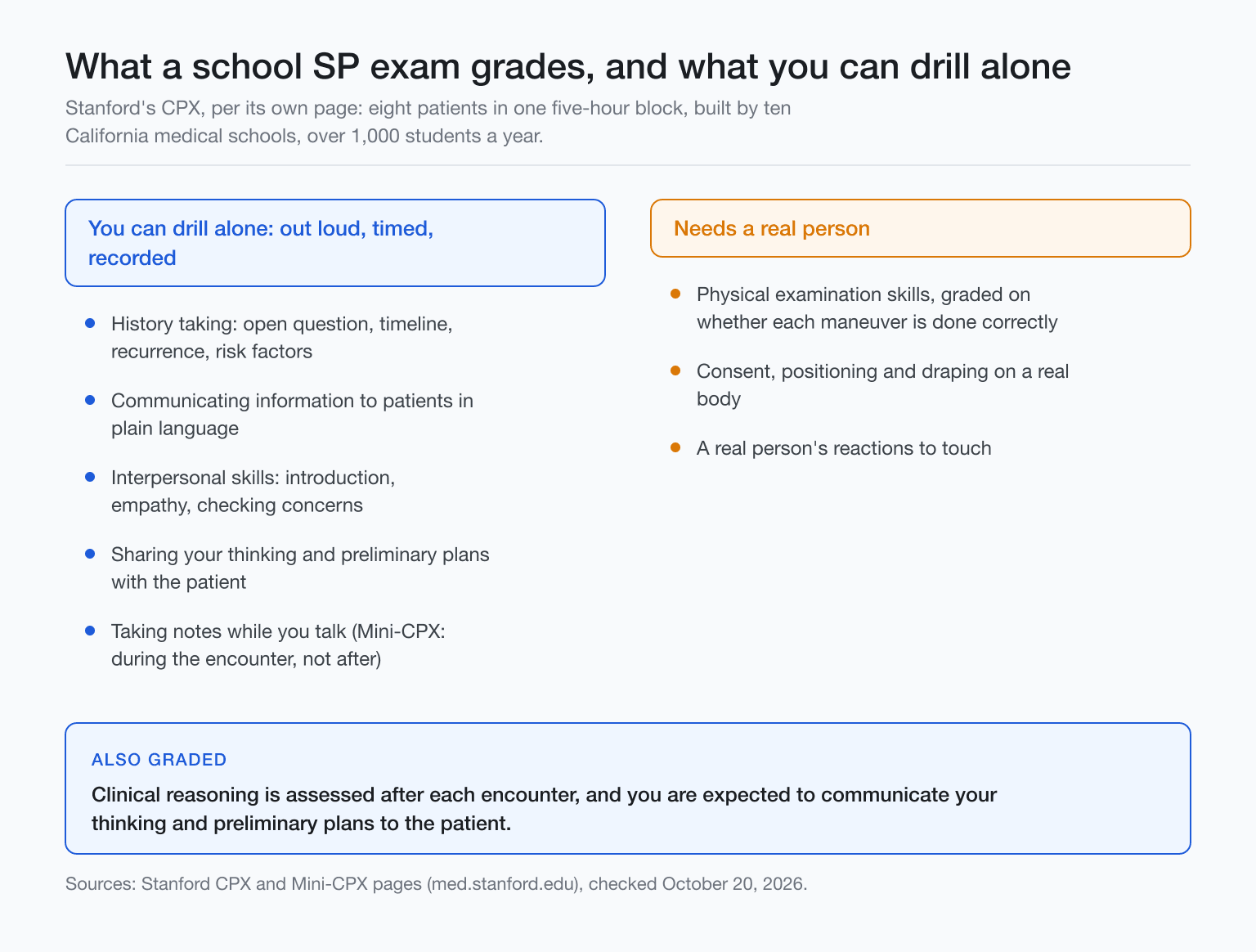
Yes, you can do most standardized patient practice at home alone, because standardized patient encounters are graded heavily on talk, from opening and focused history to explaining your thinking and closing, which you can rehearse out loud against a timer and a recording. What you can't rehearse solo is the hands on physical exam.
Your SP exam is close, classmates are busy, nobody can play the patient tonight. You still need reps you can control.
A standardized patient is a simulated patient or patient actor who plays the role of someone visiting a health professional, portraying a case with age, background, and life circumstances, per UNC's standardized patient program.
You’ll get next what graders watch for, a timed 15 minute solo drill with scripts, where an AI patient fits, and a one week plan. UNC says many encounters are videotaped for self review, so recording yourself is normal, and our solo OSCE practice routine shows how to set that up fast.
What do SP graders actually watch?
Standardized patient graders in standardized patient exams watch whether you can take a history, perform the physical examination correctly, communicate information to patients, and show interpersonal skills. At Stanford’s CPX you see eight patients in one five-hour block, built by a consortium of ten California schools; over 1,000 students take it each year and passing is required for graduation. Clinical reasoning is assessed after each encounter, and you must communicate your thinking and preliminary plans to the patients.
The checklist wording and format are public on Stanford's CPX page, which lays out the evaluation areas and timing.
Translate that into three solo drills. First, communication: your intro, empathy lines, and plain language for what you heard and what happens next.
Second, the history: aim for focused, not exhaustive, with a practiced structure. If you want a template, see structure a focused history.
Third, the close: share your thinking and next steps out loud, then check concerns and comfort.
Schools differ in checklist weighting, from what we can tell, so check your own school’s guide.
The 15-minute solo drill
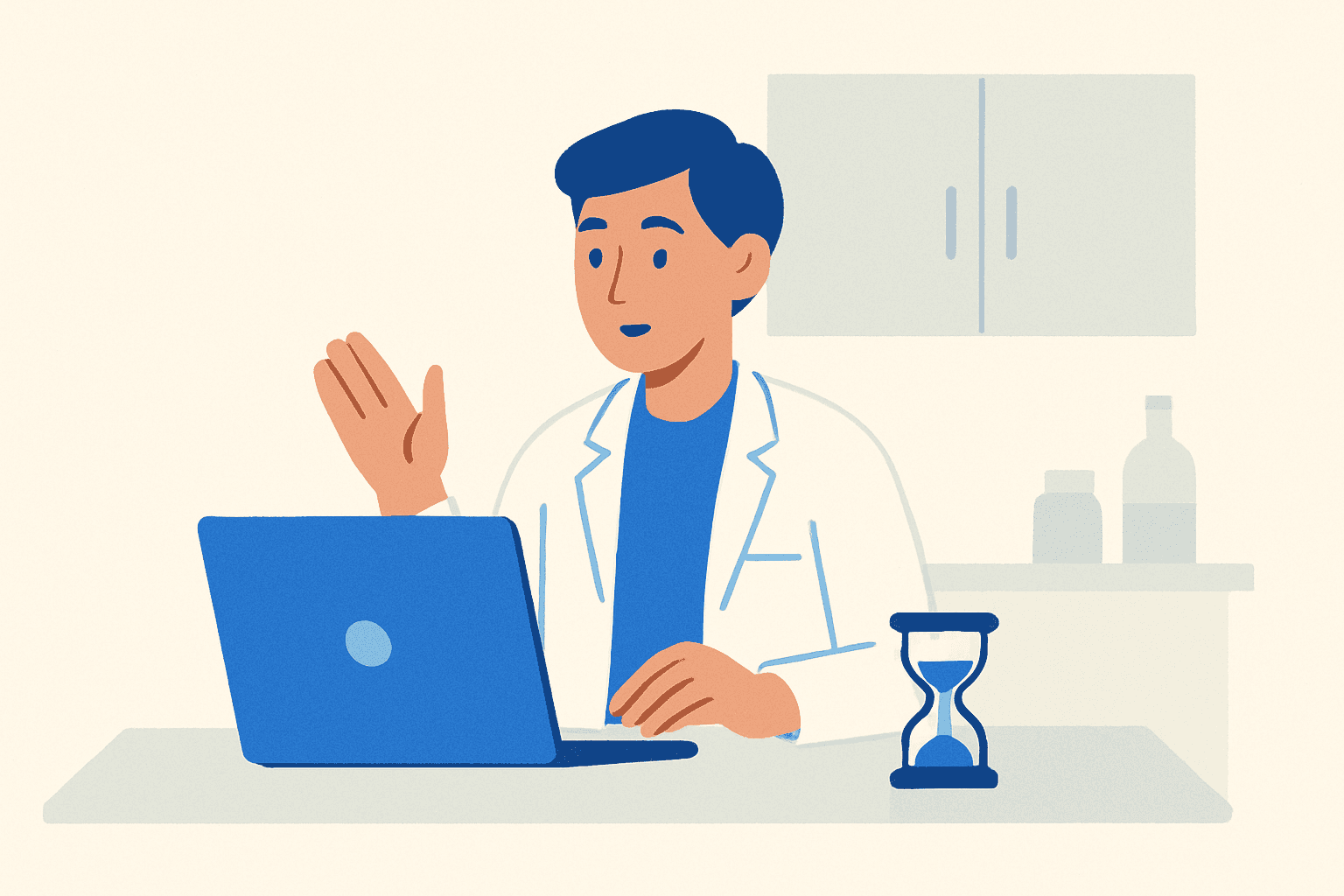
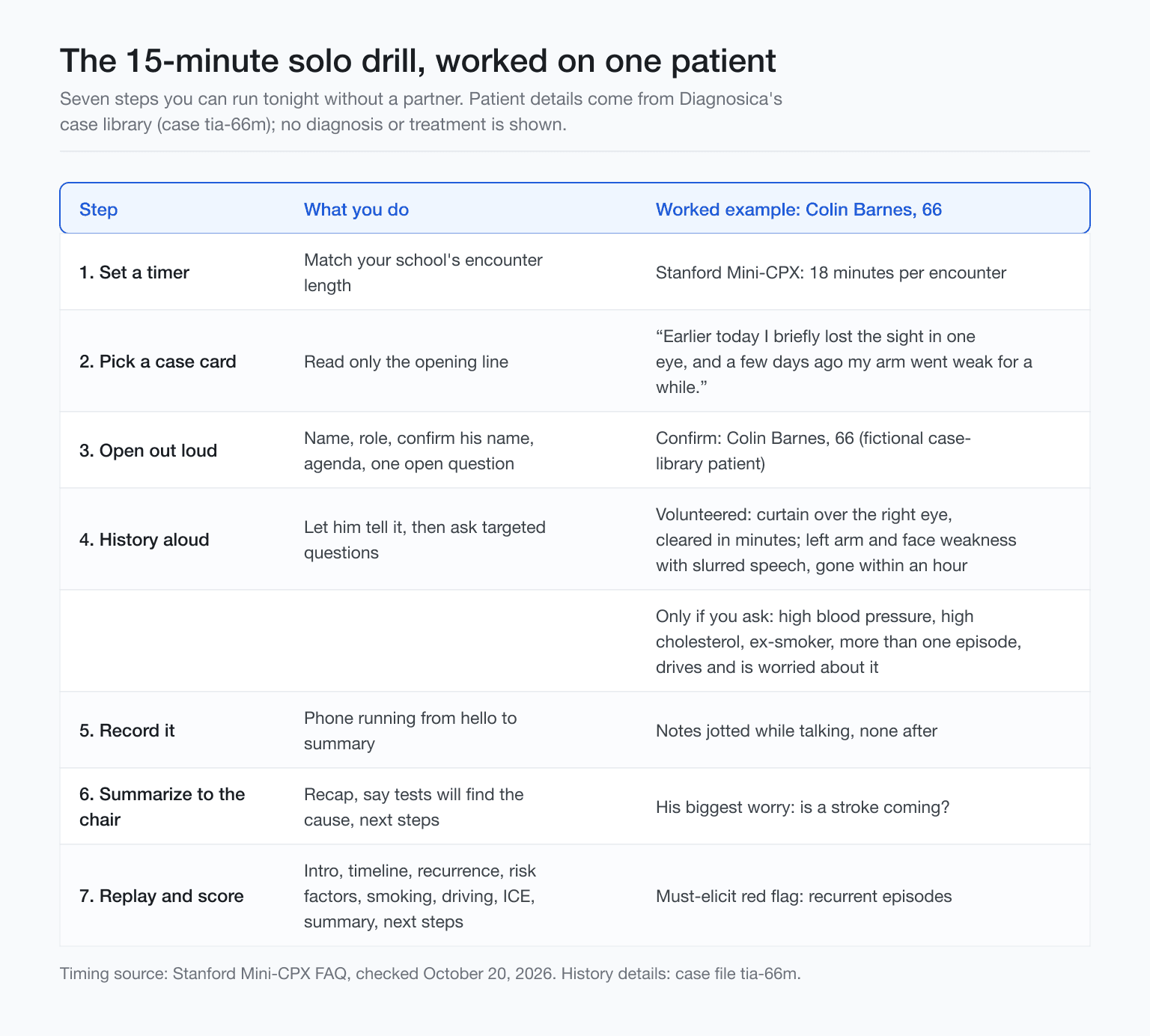
The 15-minute solo drill is a tight, repeatable run for standardized patient practice at home. You set a hard timer, talk to an empty chair as if the SP is there, and close with a clear summary. It trains time sense, question order, and talking while jotting key words. It doesn’t cover the physical exam, only the interview and your spoken wrap-up.
- Set a timer that matches your school. Stanford’s Mini-CPX uses 18-minute encounters and expects note-taking during the encounter, not after, so practice writing while talking, per Stanford's Mini-CPX FAQ.
- Pick a case card. Worked example, Colin Barnes, 66, a fictional AI patient from Diagnosica’s case library: opening line, “Earlier today I briefly lost the sight in one eye, and a few days ago my arm went weak for a while.”
- Say the opening out loud. “Hello Mr. Barnes, my name is [Name]. I’d like to understand what brought you in and what matters to you today.” Do your intro and hand hygiene.
- Run the history aloud. Start open, then target: timing, recurrence, risk factors, smoking, impact on driving, and ICE. His volunteered story is only half, the curtain over the right eye and earlier face and arm weakness with slurred speech; risk factors, smoking, repeated episodes, and worry about driving only come out if you ask.
- Record on your phone. You’ll forget what you actually said, not what you meant to say.
- Summarize to the empty chair and state your thinking and next steps. A short lay recap, then say you’ll run tests to find the cause and outline what happens next. Mini-CPX expects you to counsel and share next steps.
- Replay and score yourself against a short checklist. Intro, open question, timeline, recurrence, risk factors, smoking, driving, ICE, summary, next steps.
If you want to hear a patient answer back by voice instead of an empty chair, run a voice case with an AI patient tonight.
Opening and closing scripts you can say out loud
Opening and closing scripts for a standardized patient encounter help you start cleanly, finish clearly, and hit the communication marks SP exams grade. They work the same in a center or for standardized patient practice at home when you're drilling solo.
For tone and body language that land well, see rapport in the first minute.
- "Hi Mr. Barnes, I'm Alex, a second-year medical student."
- "Can I confirm your name is Colin Barnes?"
- "I'll ask some questions, then summarize and discuss next steps."
- "What brings you in today?"
- "Pause."
- "What do you think is going on?"
- "What worries you most, including about driving?"
- "What were you hoping we could do today?"
- "To check I understood, you had brief right-eye vision loss like a curtain, then left arm and face weakness with slurred speech, now resolved."
- "Did I get that right?"
- "I'd like to run some tests to find out what caused these episodes."
- "Next, we'll start those tests and keep you updated."
- "What questions do you have, or any worries we haven't covered?"
- "Thank you, Mr. Barnes."
Practicing with an AI patient: what it gives you and what it can't
Practicing with an AI patient adds responsive dialogue to standardized patient practice at home. Someone answers, stays in character, and holds facts until you ask. You can run reps any hour without a partner. The limits are clear. No physical exam, no hands, and no real human reactions to touch or personal space.
Diagnosica is an AI clinical simulator for medical students and junior doctors: you take a history from an AI patient by voice or text, order labs and imaging, commit to a diagnosis and management plan, and get a competency scorecard. Each patient appears as a video patient. It is free to start, no card needed. It runs on iPhone, Android, and the web, and learners use it outside the US too. For setup and workflow, see how AI patient practice works.
It offers no physical exam practice, and it will not replace reps with a real person or your school's SP sessions. It doesn't give advice about real patients, and it's not a diagnostic system. Treat every output as educational. For context on formats, compare virtual and standardized patients.
As of October 2026, Geeky Medics offers a solo practice mode with a built in timer, and AI virtual patients by text free, audio at 4 AI credits up to 15 minutes, or video at 15 AI credits up to 10 minutes. Their overview is in Geeky Medics' solo practice guide.
A one-week plan before your SP exam
A one-week plan before a standardized patient exam should be concrete, timed, and repeatable. You can do standardized patient practice at home by scripting openings and closings, drilling within station clocks, and alternating solo-voice monologues with AI-patient encounters. It won't teach the physical exam, but it will stabilize format, pacing, and patient-centered language fast.
- Day 1: Read your school’s exam guide and timing; draft intro, signposting, and a neutral closing that says tests will find the cause.
- Day 2: Two timed drills on different complaints; alternate solo-voice and AI-patient; record one and replay.
- Day 3: Two new complaints; switch which format you record; tighten transitions.
- Day 4: If available, have a classmate or family member sit for your physical exam sequence, to practice order, consent, and draping only.
- Day 5: Two more drills, alternate formats as you go, record and review each run in full, then practice a counseling-heavy close with focus.
- Day 6: Full timed mock with back-to-back encounters that match your exam’s count, no pauses.
- Day 7: Light day, review scripts and checklist, rest.
Common questions
Quick answers to standardized patient practice at home questions you keep texting.
Is there still a USMLE standardized patient exam?
No. The USMLE posted on January 26, 2021 that it discontinued Step 2 CS. School-run standardized patient exams still exist, like Stanford’s CPX, which puts you through eight patients in one five hour block and is a graduation requirement. Those programs assess history, exam technique, communication, and reasoning, and expect you to explain your thinking and preliminary plans to the patient.
How long is a standardized patient encounter?
It varies by school. For example, Stanford’s Mini-CPX uses 18 minute patient encounters across four focused H&P stations, with no time afterward to write a full note. You can take notes during the encounter, and prewrite a template on the provided scratch paper. Read your exam brief for the exact timing at your school.
Can you practice the physical exam alone?
Not properly. You can rehearse the sequence, verbalize what you’d do, and time yourself, but technique and feedback need a real person. Some schools grade whether a maneuver is done correctly, as Stanford’s CPX states. For solo time, put the effort into history, counseling, safety net language, and your closing explanation of tests to find the cause.
Do one tonight with a video AI patient by voice or text, take the history out loud, order tests, commit to a diagnosis and plan, then see a competency scorecard. Free to start, no card needed. No physical exam practice here. Start a free case