Neural Consult vs AMBOSS: An Honest Comparison
Last updated 4 October 2026
We build Diagnosica, an AI clinical simulator, and we compete with Neural Consult and AMBOSS.We opened amboss.com/us/pricing and neuralconsult.com/pricing on 13 August 2026, quoted vendor prices, and dated them.We’ll name at least two things each rival does better than us. No affiliate deals or affiliations.
Neural Consult vs AMBOSS at a glance
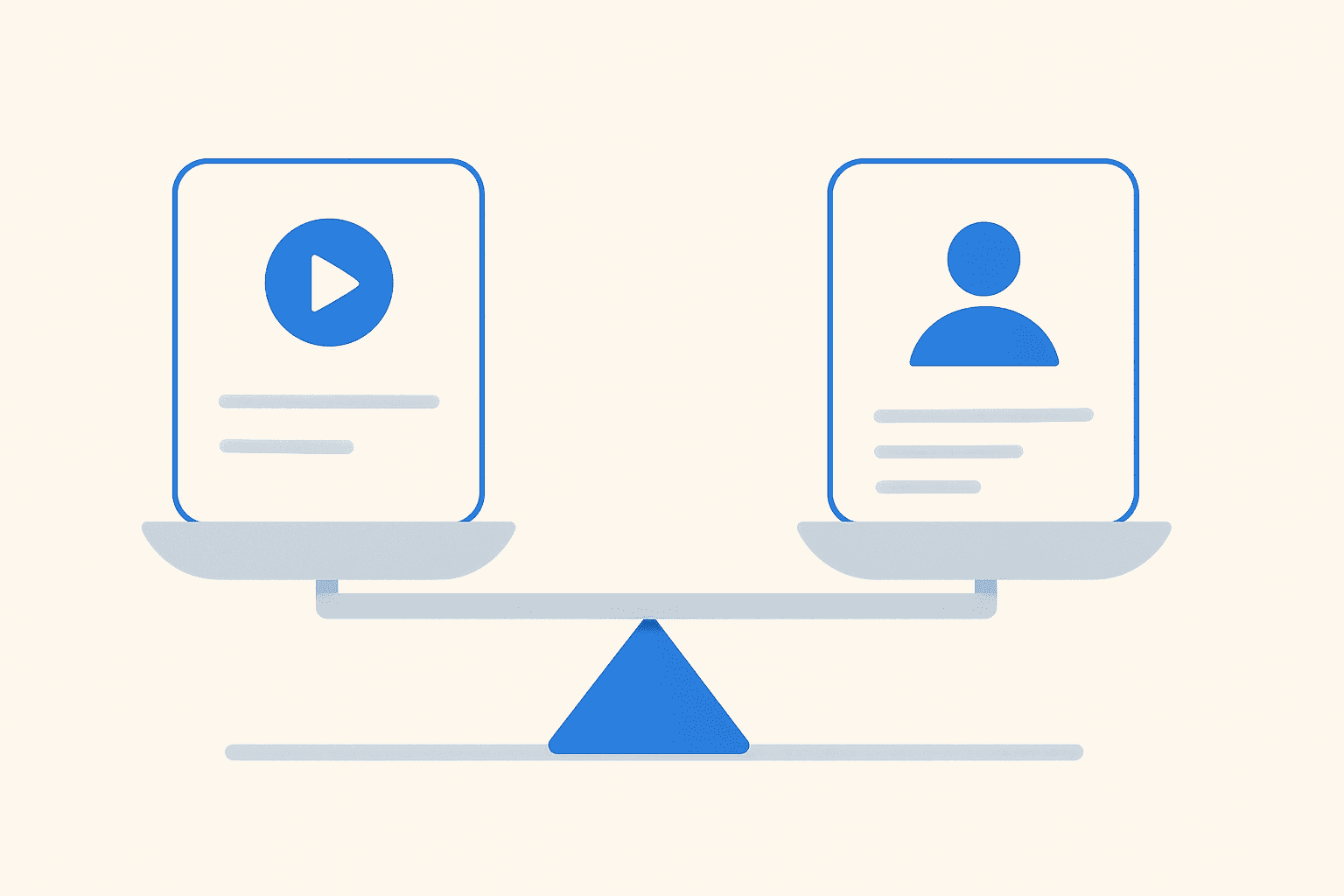
AMBOSS and Neural Consult do less of the same job than people assume. AMBOSS is a reference and a question bank. You read it, drill it, and look things up. Neural Consult is an AI study layer built on your own material, with a case simulator attached. Overlap exists, but not much.
AMBOSS names its surfaces as QBanks, a Medical Library, a Clinical Reference Tool, and Educator Support. Neural Consult's plans list searches, case simulations, flashcard sets, board question sets, and lecture summaries. So Neural Consult vs AMBOSS is the wrong question. Better ask which job is unfinished in your week, or scan a wider set of AI tools.
Try a free case Start free, no card needed, talk and the AI patient answers. Start your free case
What each one costs
- AMBOSS Student, billed monthly Price: $19.99/month
- AMBOSS Student, billed yearly Price: $12.50/month
- AMBOSS Qbank Bundle Price: $448, billed yearly
- AMBOSS Student Life Price: $1,199
- AMBOSS Clinician, billed monthly Price: $29.99/month
- AMBOSS Clinician, billed yearly Price: $21.58/month
- Neural Consult Starter Price: free, with limited usage of every feature
- Neural Consult Monthly Pro Price: $24.99/month
- Neural Consult Annual Pro Price: $18.75/month, billed annually at $224.99
Prices checked on the vendors' own pricing pages in August 2026: AMBOSS pricing page, Neural Consult pricing page.
Diagnosica has free cases every month and a paid Standard plan; the current price is on diagnosica.com.
AMBOSS tells residents they can click through to get the student price on its pricing page.
Neural Consult tags the annual plan as Best Value with Save 25% annually, and the free tier includes limited searches, case simulations, flashcard sets, board question sets and lecture summaries.

Practice diagnosis and defense Commit to a diagnosis in a case, then defend it to an AI senior. Run a case now
What AMBOSS is genuinely better at
AMBOSS is the thing you open mid-shift when a patient says one line that changes the plan and you need a clear, sourced explainer now. The editors keep the AMBOSS medical library tightly written and quick to scan, and they bill it as “created by medical professionals for medical professionals.”
The other win is scale and integration. Their own site lists QBanks, a Medical Library, a Clinical Reference Tool and Educator Support in one place, so the lookup you do on the wards and the drilling you do at home share the same voice and crosslinks.
They are an incumbent with a real editorial operation behind it. We can’t match that kind of publishing cadence or breadth, and we don’t pretend to.
A third-party review pegs Neural Consult as newer and smaller than incumbents like UWorld and AMBOSS, which tracks with what you feel on the wards.
What Neural Consult is genuinely better at
In Neural Consult vs AMBOSS, Neural Consult is better when you want a simulator-first study flow. Per Neural Consult's case simulator, the voice patient talks back like real life, and the product orients around that rather than sitting beside a bank.
Students can request physical exam maneuvers and order labs or imaging, and Diagnosica does not do physical examination at all.
It also turns your school's lectures and notes into flashcards, board-style questions and summaries, and the free Starter tier lets you try the simulator before paying. Future features also include realistic patient avatars, so there is no video patient today, and Diagnosica has none either; for context see the UWorld comparison.
The bit neither comparison tests: what an AI patient encounter is actually like
You pick Respiratory, Intermediate, "Sudden breathlessness, 55M." An AI patient, Martin Rowe, 55, opens breathless, anxious but lucid: "I've suddenly gone short of breath with chest pain over the last two days."
He volunteers sharp, right-sided pleuritic pain and says he’s worried it’s a heart attack. He withholds the flight home from Australia five days ago and keyhole knee surgery three weeks ago until you ask. You must also ask about the left calf and two times he coughed up blood, or it stays a chest pain case.
The case file flags three must-elicit items: any blackout, central crushing pain, and whether breathing worsened over the last few hours.
You order investigations. Labs include D-dimer, arterial blood gas, high-sensitivity troponin, CRP, and a thrombophilia screen tagged as a red herring. Imaging includes CT pulmonary angiogram, 12-lead ECG, leg Doppler, and chest X-ray. The D-dimer note reads "sensitive but not specific: useful to rule OUT PE only when clinical probability is low/intermediate".
You then commit to a diagnosis against wrong options like acute coronary syndrome, community-acquired pneumonia, pericarditis, pneumothorax, aortic dissection and panic disorder.
An AI senior asks, "How would you decide whether to send a D-dimer or go straight to a scan?"
Feedback covers four competencies, 25 each: Communication, Clinical Workup, Clinical Thinking, Approach to Treatment. Miss clot risk factors, minus 5; skip instability screening, minus 5.
It’s voice or text, no video patient, and there’s no physical examination here, so what you’d find by looking at and feeling that leg is missing; scoring is formative, not pass or fail.
"It doesn't give advice about real patients, and it's not a diagnostic system. Treat every output as educational."

When to choose AMBOSS
If what you open at 2 pm on the ward is a quick reference, or your next hurdle is a written MCQ and you need volume, pick AMBOSS and stop reading. It’s the right tool for fast answers and steady question practice.
A simulator won’t patch a knowledge gap. If you can’t recall a fact, talking it through with a patient will only show you that you can’t recall it, and a reference plus a big question bank is the fix.
AMBOSS Student is $19.99 a month billed monthly as of August 2026.
When neither is what you're missing
You’ve got content and a question bank, but still freeze once it’s your voice, your orders, your diagnosis. That’s where Diagnosica can sit, as a voice and text only simulator, no video patient, no physical examination practice, cases are educational worked examples with formative scoring calibrated to the published mark sheet.
Free cases every month, then a paid plan priced on diagnosica.com, and a no-signup demo, about 3 minutes, marked when the case ends. If you actually need more content, see these alternatives to a question bank. A caution applies to every AI study tool, from a third-party Neural Consult review: “quality depends on your inputs and on the model. Because most questions and summaries are AI generated...you should treat them as practice and verify anything high stakes against a primary source.”
FAQ
Can Neural Consult replace AMBOSS?
No, and it isn't trying to be. Neural Consult vs AMBOSS are for different jobs. AMBOSS gives a reference and question bank. Neural Consult layers AI over your notes with a simulator. Drop AMBOSS and you'll still need reliable lookups.
Is Neural Consult worth it if you already pay for AMBOSS?
It depends on the gap. If your notes are organized and recall is solid, flashcards add little. If you've never rehearsed the conversation, the simulator is the value. Try a short case and see if it fixes the weak link. If AMBOSS is only one of the names on your list, the wider Neural Consult shortlist runs through the rest.
Which is better for Step 2 CK?
Neither is a Step 2 CK question bank. For drilling, AMBOSS is closer. Diagnosica's rubrics are calibrated to the published mark sheet for other exams, and we make no Step 2 CK scoring claim. For picks, see Step 2 CK specifically.
Is this comparison independent?
No, and we won't pretend otherwise, we build a competing product. Instead, we dated and linked sources, called out where rivals are stronger, and avoided pricing spin. The same approach is in our review of another AI study tool reviewed.
Last reviewed: 13 August 2026. Prices verified at source on that date.
Educational use only, not medical advice. AI-generated; verify clinically against primary sources.
Clinical review pending.
Any hour, no booking Use voice or text on your phone or laptop, and run cases any hour without booking. Open Diagnosica app