What is system 1 and system 2 thinking in medicine?
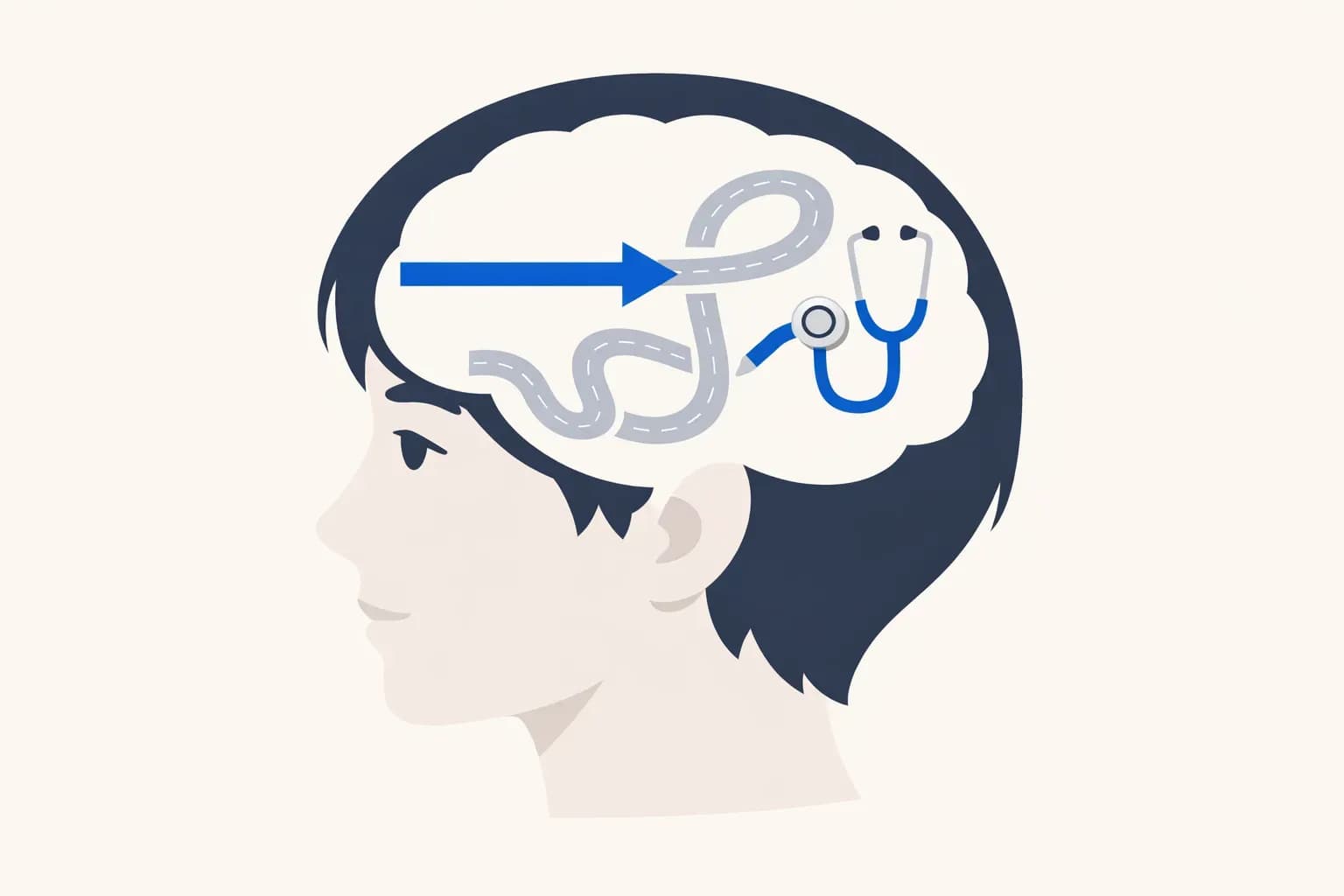
System 1 and system 2 thinking in medicine are reasoning modes: System 1 is fast, intuitive pattern recognition, and System 2 is slow, analytical; Croskerry’s 2009 Academic Medicine paper calls dual process theory the predominant approach.
Key takeaways
- Both modes are normal, fast first, then check.
- In Norman's 2014 trial, slowing down left residents' accuracy 45.0% versus 44.5%, unchanged.
- Next history: ask one specific question your first guess skipped.
What is system 1 and system 2 thinking in medicine?
System 1 is fast, automatic pattern recognition, the "I've seen this before" read; System 2 is slow, step-by-step analysis. Together this is called dual process theory. In medicine you switch between rapid pattern reads and deliberate checks, matching stories to data before you commit.
The idea comes from psychology. Daniel Kahneman's book Thinking, Fast and Slow describes fast, intuitive thinking and slow, rational thinking. Kahneman won the Nobel Prize in economic sciences in 2002 for work on human judgement under uncertainty.
In medicine, Croskerry's 2009 model in Academic Medicine names System 1 heuristic and intuitive, and System 2 systematic and analytical. It calls dual-process theory the predominant approach.
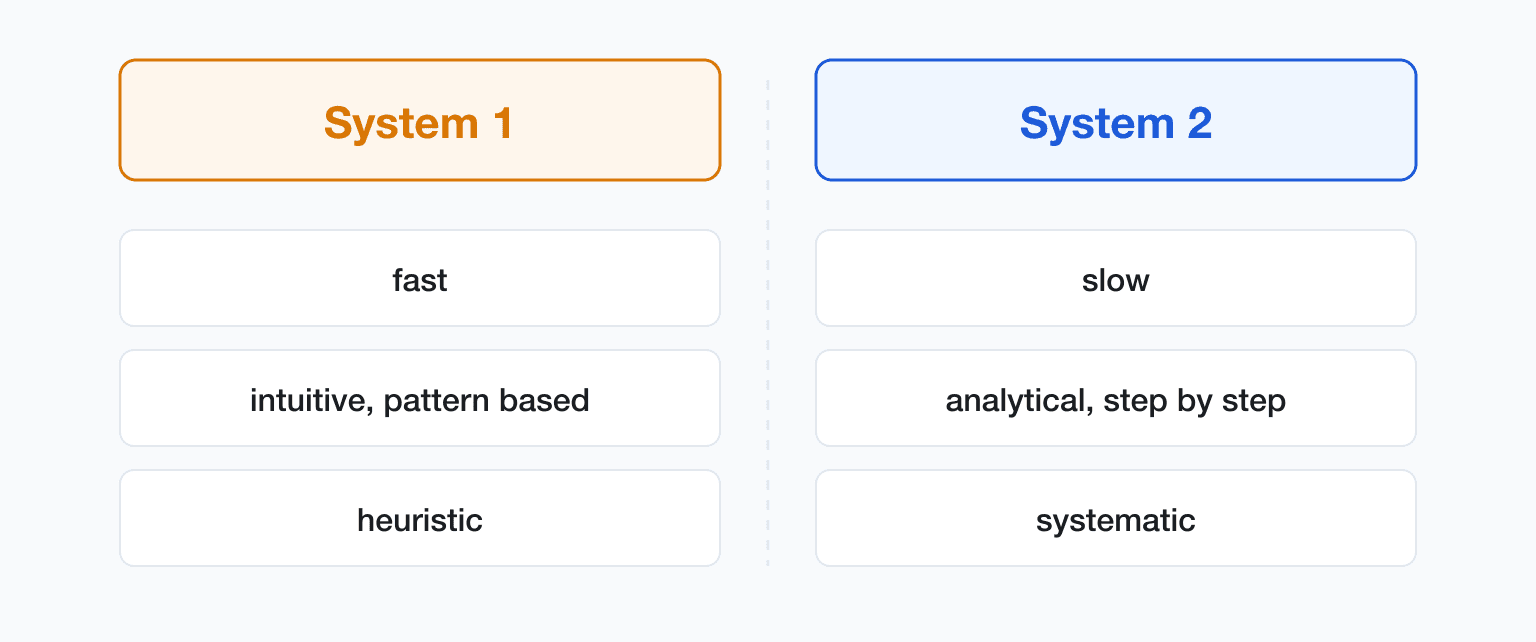
Dual process model, System 1 intuitive and System 2 analytical, from Croskerry, Academic Medicine 2009.
Neither mode is the good one. Croskerry cautions that not all medical reasoning falls neatly into one system or the other, and most real thinking mixes them.
Feel a fast read on a two-minute quick case, where you name the diagnosis from up to 5 clues. Try a two-minute quick case
System 1 and system 2 at a glance
Two complementary modes guide clinical reasoning: the fast, pattern-based route and the slow, stepwise route. They differ in speed, inputs and error patterns, so match the mode to the task and cross-check.
Use this side-by-side to organise dual process theory clinical reasoning:
| System 1 | System 2 |
|---|---|---|
Speed | fast, automatic | slow, deliberate |
Runs on | stored patterns from cases you have seen | step-by-step reasoning through the findings |
Typical slip | grabs first familiar pattern; availability bias, Mamede 2010 | limited working memory, per Norman 2017 |
Read more |
Norman's 2017 review says both types make errors, but with more expertise and knowledge the likelihood falls. That means System 1 improves as you see more patients, which is why pattern recognition strengthens over time.
How the two systems work on one case
One case shows both modes at work. From a single simulated patient, the fast read comes from what he volunteers, and the slow read from what you have to ask; seeing both side by side makes the switch concrete.
Marcus Delaney, 50 (simulated), opens with his line: "I got the worst headache of my life and now I'm seeing double." He volunteers a sudden headache at full force within seconds, double vision with a drooping right eyelid. Vomiting, light hurting his eyes, and a slightly stiff neck.
System 1 maps that to the thunderclap headache pattern on the NHS page on subarachnoid haemorrhage. That page lists sudden extremely painful headache, stiff neck, being sick and light sensitivity.
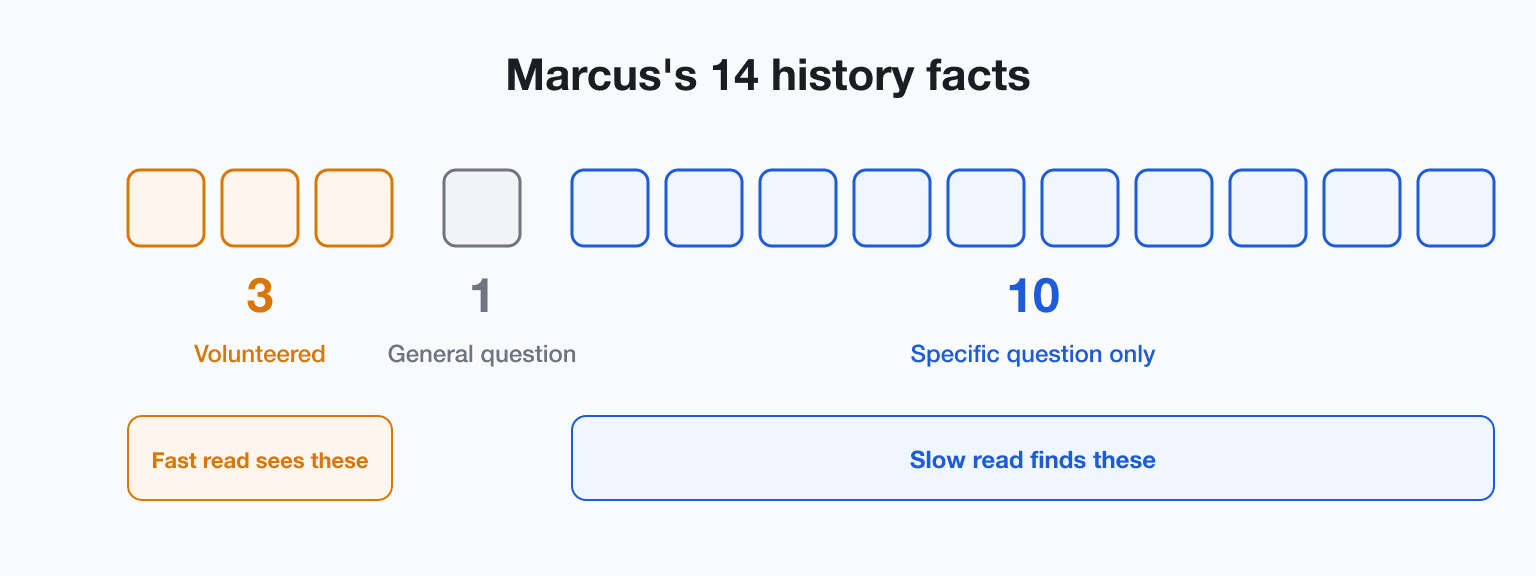
Counts from disclosure tags in a simulated patient case; Marcus is a simulated patient.
In the case file, 3 facts are volunteered, 1 comes on a general question, and 10 only on a specific question. The fast read only sees the first three.
Marcus, 50 (simulated): what he said, and what we had to ask
Chip | Question | Answer | Why it mattered |
|---|---|---|---|
Volunteered | What did he say first? | Sudden worst-ever headache behind the eyes, at full force within seconds. | fits the fast pattern |
Volunteered | What else did he volunteer? | Double vision and right eyelid drooping; right eye will not move properly. | eye signs the fast read may skip past |
Only if asked specifically | Any problems with side vision? | Lost outer sides of both eyes, bumping into things. | does not fit a bleed pattern; System 2 notices |
Only if asked specifically | Any months-long changes before today? | Wife: months of tiredness, less interest in sex, mild headaches. | a slow story before a fast event |
Only if asked specifically | Any migraine or similar before? | No migraine history, nothing like this before. | closes off the familiar label |
Simulated patient. Case file: Marcus Delaney, 50. Questions written by us as a model, not a learner session.
Switch from fast to slow
To switch from fast to slow during a history, run this sequence:
- Name your first pattern.
- Ask what does not fit it.
- Ask one specific question your pattern did not need.
- Re-rank before you commit.
For a structure you can use tomorrow, see taking a headache history. The case file lists subarachnoid haemorrhage as a distractor, not the answer, and the case answer is left out so you can work it yourself.
How Diagnosica helps with this
Ask your own questions, by voice or text, in full cases.
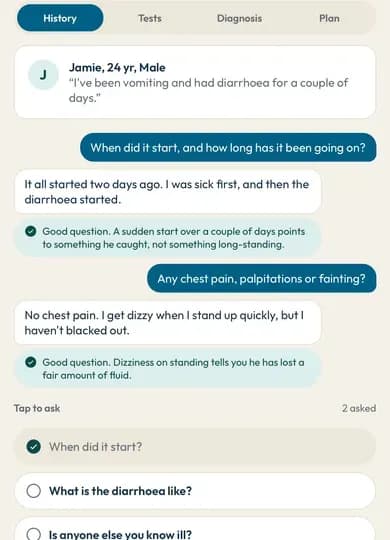
Diagnosica app, history step, as of October 2026.
- You type each history question.
- The simulated patient replies to what you asked.
- A 'Good question' note appears underneath.
Simulated patient. Screenshot from Diagnosica, October 2026.
Mistakes and myths about fast and slow thinking
Clinical reasoning uses fast and slow modes, often called system 1 and system 2; the evidence is less tidy than 'fast bad, slow good'. Both can help and both can err, so speed alone is a poor rule.
Keep these three myths and one truth in view:
- Myth: slow helps. Norman 2014: 45.0% careful vs 44.5% fast, not significant.
- Myth: blame System 1. a 2017 review by Norman and colleagues says both types err.
- Myth: bias training. Norman 2017: bias recognition ineffective; knowledge reorganisation had small, consistent benefits.
- Truth: a second look. Mamede 2010: reflection improved look-alike scores to 2.03 and 2.31 of 4.0.
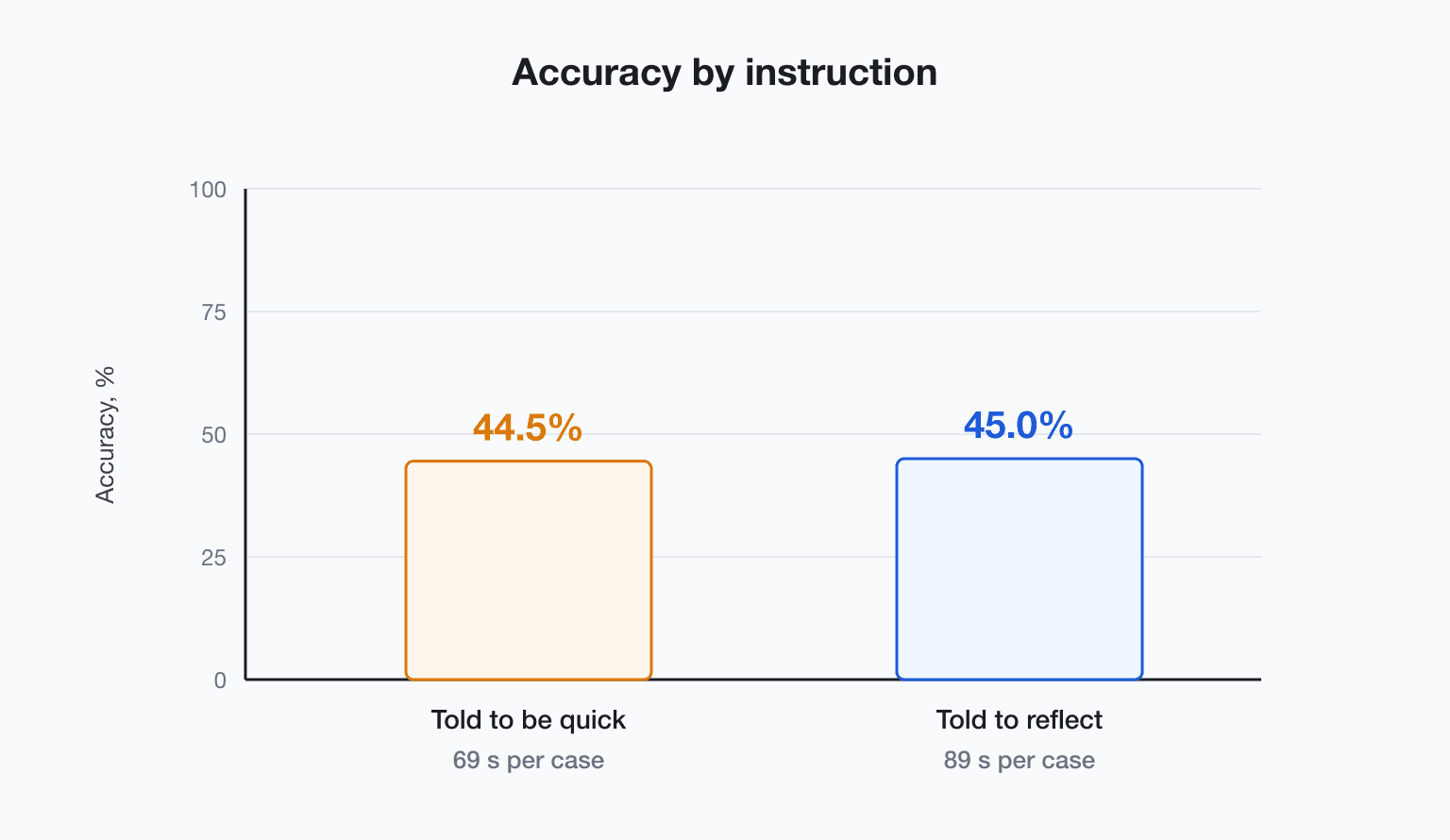
Accuracy similar whether quick or reflective, from Norman et al., Academic Medicine 2014.
In Norman 2014, the reflect group took 89 seconds per case vs 69. In total, 96 plus 108 residents completed 20 computer cases. Extra time alone did not buy accuracy.
Watch out. Fast thinking is not the danger. Stopping at the first pattern is, especially when one awkward clue refuses to fit the picture you prefer; see clues that mislead you.
None of these studies tested Diagnosica, and no study has tested whether our cases change how you reason.
Where to go next
On your next placement, say your first diagnosis aloud, then ask one question it didn't require. Speak, then verify. That links your fast read with a disconfirming check, training you to commit decisively, then try to break it.
Read the wider reasoning toolkit for context and worked examples, practise writing a one-line summary before ordering tests, and compare when one diagnosis fits everything with real comorbidity cases.
On a full case, slow down and ask one question at a time, exploring your first idea and a rival. Use an AI patient who answers only what you ask in order: Take a full case slowly