PLAB 1 pass mark: why there is no fixed number

The GMC sets the PLAB 1 pass mark separately for each test, using the Angoff method plus one standard error of measurement, so there's no fixed number. Checked 18 November 2026.
Key takeaways
- 62.2% passed in 2025, down from 70.5% in 2024, checked 18 November 2026.
- Use the pass score printed on your result, not a forum number.
- Treat the 115 to 120 range on prep sites as unofficial.
What is the PLAB 1 pass mark?
The PLAB 1 pass mark has no fixed number, as the GMC sets it for each test. After the exam, your result shows the pass score, your total score, the score required to pass, and the average for all candidates. The standard stays constant, and the actual number can move between sittings.
You gain one mark for each correct answer, checked 18 November 2026. The GMC sets the pass mark for each test using the Angoff method with one standard error of measurement, and your result shows your total score, the pass score, and the average for all candidates, see the GMC's results guide. That page gives no fixed numeric pass mark.
PLAB 1 uses 180 multiple choice questions to answer in three hours, five options each, checked 18 November 2026, see the GMC's PLAB 1 format.
Take a breather between question-bank blocks and try a two-minute quick case, free, no sign-up; it isn't PLAB 1 question practice.
PLAB 1 pass rate by year
The PLAB 1 pass rate was 62.2% in 2025, down from 70.5% in 2024, per GMC figures checked 18 November 2026. Raw counts for 2021 to 2025 are below for context, all figures from the GMC.
Year | Candidates who sat | Candidates who passed | Pass rate |
|---|---|---|---|
2021 | 10,431 | 7,728 | 74.1% |
2022 | 14,470 | 10,259 | 70.9% |
2023 | 21,916 | 15,781 | 72.0% |
2024 | 21,058 | 14,849 | 70.5% |
2025 | 13,691 | 8,513 | 62.2% |
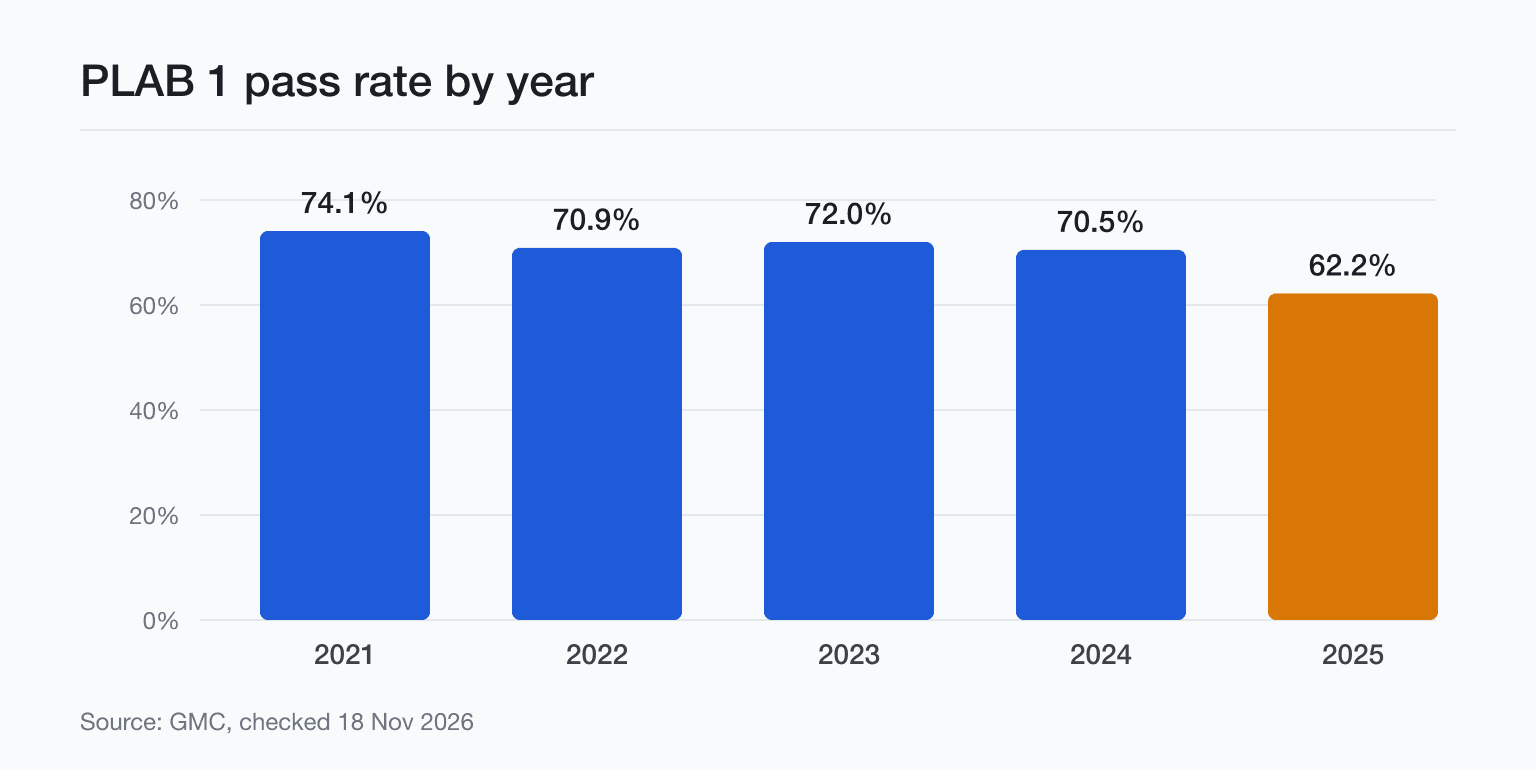
Source: GMC PLAB pass rates page, checked 18 November 2026.
In 2025 the rate was 8.3 percentage points below 2024, checked 18 November 2026, our subtraction of the two published GMC percentages. The figures come from the GMC, as of 18 November 2026, in the GMC's pass rate table.
The GMC says there is no expected pass rate or average score. The page gives counts only, no reasons and no first-attempt split; the table shows candidates who sat and passed, nothing more. See PLAB 2 pass rate trends (PLAB 2 was 59.8% in 2025, checked 18 November 2026).
How does the GMC set the PLAB 1 pass mark?
The GMC sets the pass mark for each PLAB 1 test using the Angoff method plus one standard error of measurement. The standard reflects what the GMC expects of a doctor entering the second year of Foundation Programme training. The GMC says this approach keeps the level consistent over time.
From the GMC results page, checked 18 November 2026, the method is:
- Standard: The GMC sets the standard at Foundation Programme year 2.
- Angoff per test: The GMC sets a new Angoff pass mark for each sitting.
- One SEM added: The GMC adds one standard error of measurement to the cut.
- Post-test review: Experts review the paper against performance after each test.
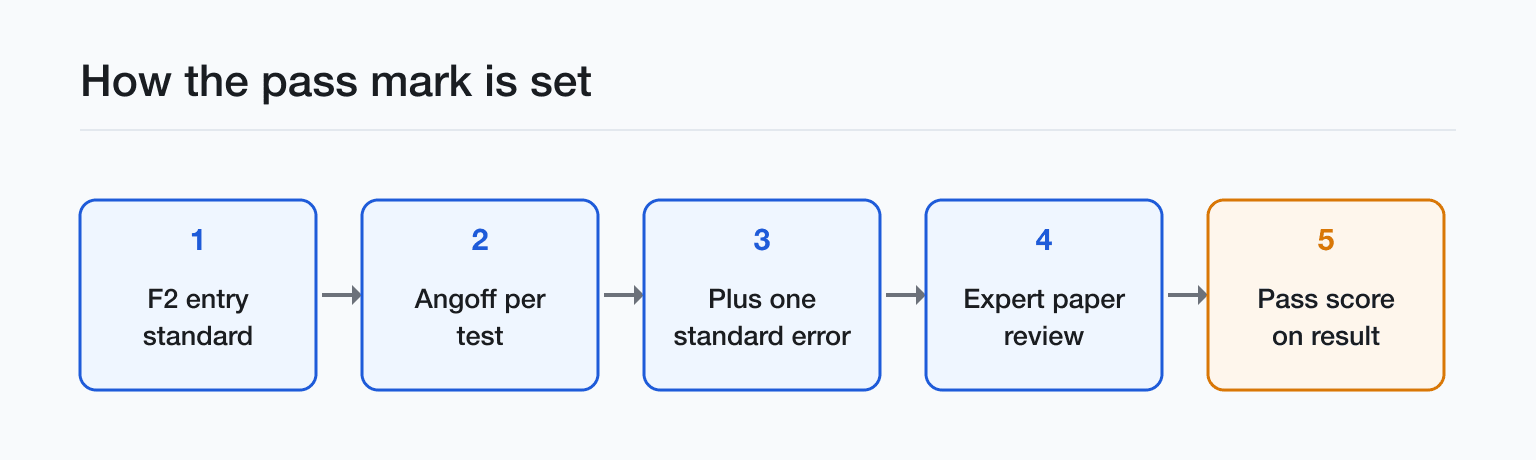
Drawn from the GMC PLAB results and standard setting guide, checked 18 November 2026.
Because the standard, not a fixed number, is held constant, the pass mark can move between sittings. The GMC may change its standard setting procedures without notice. A standard error of measurement is the margin of error around a score.
PLAB 1 is an applied knowledge test the GMC says follows the MLA requirements, the same framework as the UKMLA AKT pass mark. For another UK exam's pass mark, see how the MSRA pass mark works.
How Diagnosica helps with this
Two-minute diagnostic drill with five clues. It's not PLAB 1 question practice.
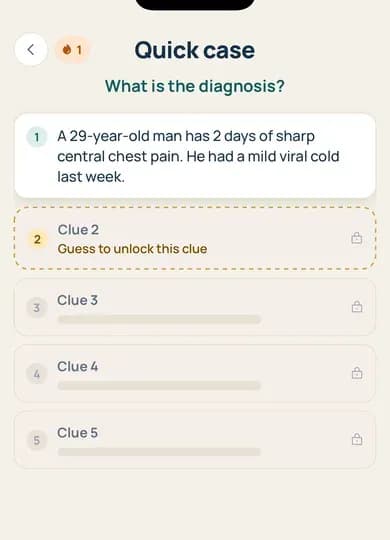
Diagnosica app, quick case screen, as of 18 November 2026.
- Clue 1 open, type a diagnosis to guess.
- Clues 2 to 5 locked until you submit.
- See the answer and a one-line teaching point.
Simulated patient. Screenshot from Diagnosica, November 2026.
Where does the 115 to 120 figure come from?
The 115 to 120 range for a PLAB 1 pass mark is unofficial and comes from prep pages, not the GMC. The GMC pages, checked 18 November 2026, describe standard setting and what your results show, not a fixed number or a published range anywhere.
Pastest's PLAB 1 guide says the GMC minimum "can range from 115-120". The Wikipedia entry says passing scores are "usually 115-120". iatroX's pass rate post says around 115 to 120 out of 180. Pastest and iatroX also say the mark varies by paper or that the standard is what's fixed.
Watch out. Watch out. Don't plan revision around a folk number; the only official figure is the one printed on your own result.
For MCQ practice, see PLAB 1 question banks compared.
Reading your PLAB 1 result
Your PLAB 1 result shows your total score and the score required to pass, plus the average for all candidates, and the GMC publishes it six weeks after the exam (GMC, checked 18 November 2026).
You also get your percentage correct in ten areas of clinical practice based on the MLA content map, with the cohort average shown for each. As of 18 November 2026, sittings listed include 5 November 2026 with results by 4pm on 17 December 2026, and 11 February 2027 with results by 4pm on 25 March 2027.
Example. Example. A candidate sees they cleared the pass score by a small margin. They read the ten-area percentages against the cohort averages, circle weaker areas, and plan the next study block around those topics.
Once PLAB 1 is done, PLAB 2 is spoken clinical consultations. Plan the next phase with structuring your exam revision and a PLAB 2 self-study plan. Then practise a PLAB 2 style history with an AI video patient, by voice or text, free to start, no card needed. It has no physical examination practice and isn't PLAB 1 question practice.