Gastrointestinal history taking: questions and one worked case

Gastrointestinal history taking is what many UK students mean by an abdominal history. A GI history covers pain, bowel habit, stool colour, weight, swallowing and vomiting, then drugs, alcohol, family history, travel and red flags.
If stomach ache comes with black, sticky poo or vomiting blood or coffee-ground vomit, call 999 or go to the emergency department (NHS stomach ache advice). This post is exam and ward practice.
Key takeaways
- Ask stool colour directly, because black and sticky poo is an NHS 999 sign.
- Both of David's red flags emerged only after a specific, targeted question.
- Under NICE NG12, dysphagia at any age means a suspected cancer pathway referral.
Do this first: let the patient say where it hurts
Gastrointestinal history taking starts with an open question and time for the patient to talk. Patient.info says, "Ask open questions and give the patient time to elaborate". Keep the general history order, add gut-specific questions, then move into a focused GI history.
Patient.info reminds you that "the word 'stomach' can mean anywhere from the diaphragm to the groin", so ask them to point.
David Nolan, 45, is a simulated AI patient from our library, a self-employed electrician who lives alone and smokes. He opens with: "I've had stomach pain and diarrhoea for months now." Before you read on, take this history from an AI patient by voice or text.
What to ask in a GI history, in order
Gastrointestinal history taking starts open with the story in the patient's words. Then narrow through pain, bowel habit, stool colour, upper gut symptoms and weight. Then cover drugs, smoking, alcohol, family and travel; the order follows patient.info's GI history guide.
Use this order on placement and in simulation:
- Ask them to point, then describe nature, easing or worsening, frequency, and any spread.
- Ask about any change and duration, not whether bowels are 'normal', and what they mean by diarrhoea.
- Ask stool colour; melaena is black, sticky and tarry. Pale floating stool suggests fat malabsorption.
- Ask about swallowing, vomiting, and what any vomit looks like.
- Ask weight change, how much and over what period, and whether intentional.
- Ask about over-the-counter and herbal drugs, smoking, alcohol, family history and foreign travel.
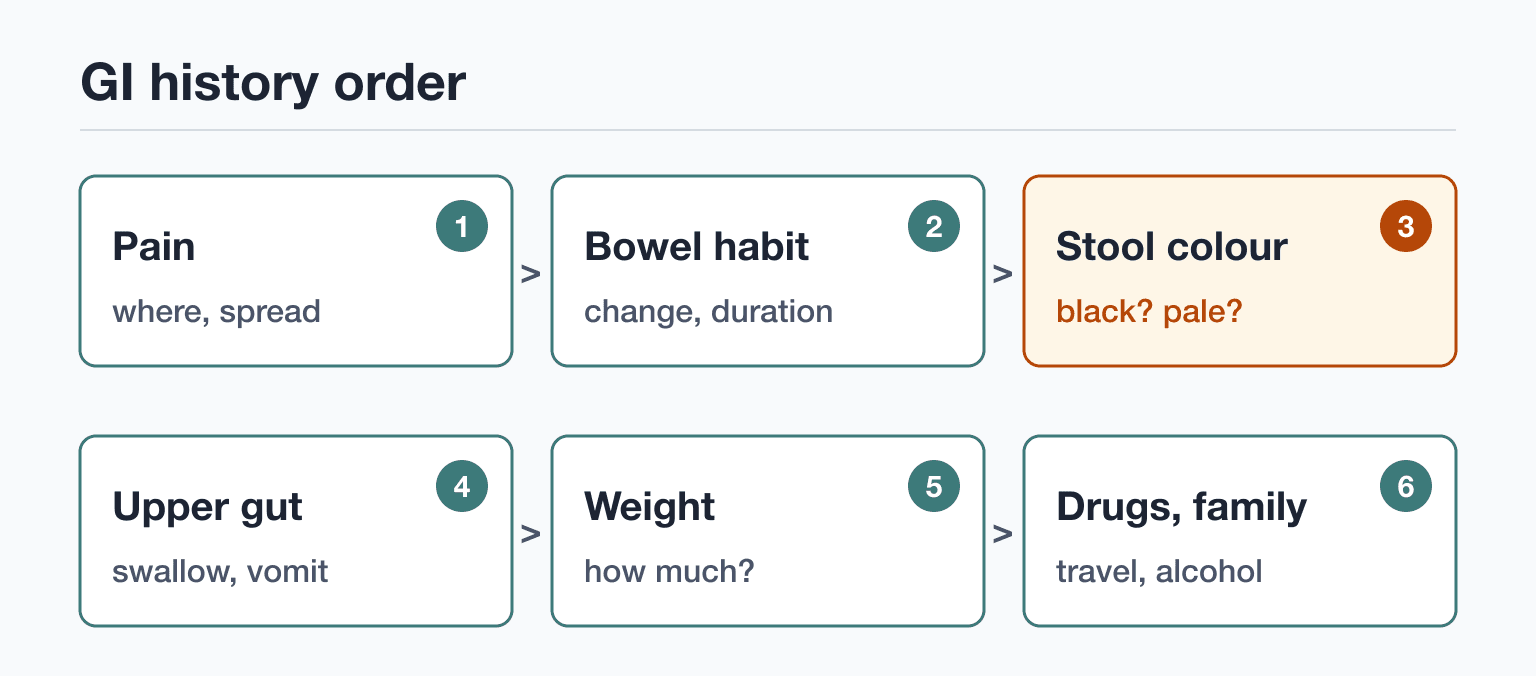
Start open, then narrow from pain and bowels to stool and risks. Use it in teaching and practice. Order adapted from patient.info.
Each symptom has its own station. See the abdominal pain station walkthrough, the swallowing history station and the jaundice history walkthrough.
Worked example: what David said, and what we had to ask
David volunteers the pain, the timing, and the diarrhoea to start. But the facts that change things need a question, and most need a very specific one, asked with exact words.
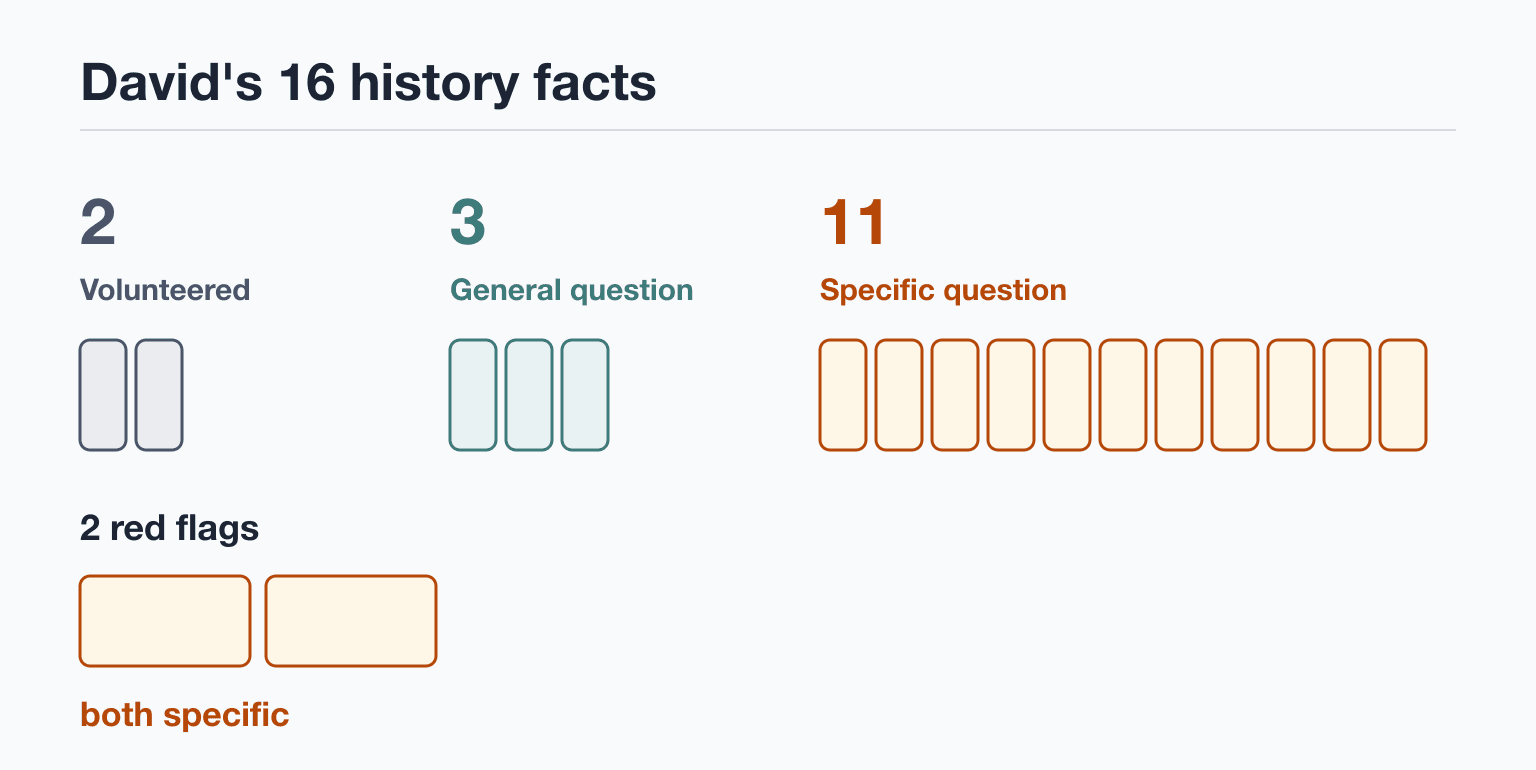
Our count from one simulated case file.
In this GI history, the file has 16 facts: 2 volunteered, 3 from general questions, 11 only from specific questions. It marks 2 red flags, black stool and ongoing weight loss despite tablets, both found only by a specific question. A clean no is worth recording too, see negatives worth asking out loud.
David, 45 (simulated): what he said, and what we had to ask
Chip | Question | Answer | Why it mattered |
|---|---|---|---|
Volunteered | Tell me about the pain. | Burning upper tummy pain and heartburn for about a year, back despite acid tablets. | Character, location, duration, and recurrence despite acid tablets matter. |
Volunteered | What are the bowels doing? | Watery, greasy diarrhoea for months; pale, floaty stools that are hard to flush. | Greasy, pale, floaty stools imply fat content; chronic watery diarrhoea signals impact. |
Asked | Has your weight changed? | About a stone and a half lost over several months. | Unintentional weight loss over months marks severity and risk. |
Only if asked specifically | Have you seen black or very dark poo? | One black, sticky, tarry stool about a month ago. | Black, tarry stool suggests bleeding; timing and episodes guide risk. |
Only if asked specifically | Do you take anti-inflammatory painkillers? | No, he doesn't take them. | Removes a common stomach irritant. |
Only if asked specifically | Does anything run in the family? | His father had kidney stones and "a problem with his glands". | Family history still counts even if the patient doubts relevance. |
More facts came out only on specific questions. A negative Helicobacter test, a camera test showing more than one ulcer, and pain, diarrhoea and weight loss carrying on despite tablets.
Simulated patient. Case file from our library. Questions written by us as a model, not a learner session.
David only shares worries like ulcers coming back, weight loss and black stool when asked, so finish by asking what worries him most.
Which abdominal history red flags need urgent action?
Abdominal history red flags that need urgent action include stomach ache with black, sticky poo, or vomiting blood or green or coffee-ground vomit. That means call 999 or go to the emergency department. Diarrhoea or vomiting that hasn’t settled after a few days needs an urgent GP appointment or NHS 111. The NHS page was reviewed on 20 October 2026.
NICE's dyspepsia guideline on dyspepsia with significant acute GI bleeding: "refer them immediately (on the same day) to a specialist".
NICE's suspected cancer guideline, revised on 15 April 2026, lists dysphagia at any age for a suspected cancer pathway referral. It also flags people aged 55 and over with weight loss plus upper abdominal pain, reflux or dyspepsia. There is FIT stool testing for adults aged 40 and over with unexplained weight loss and abdominal pain.
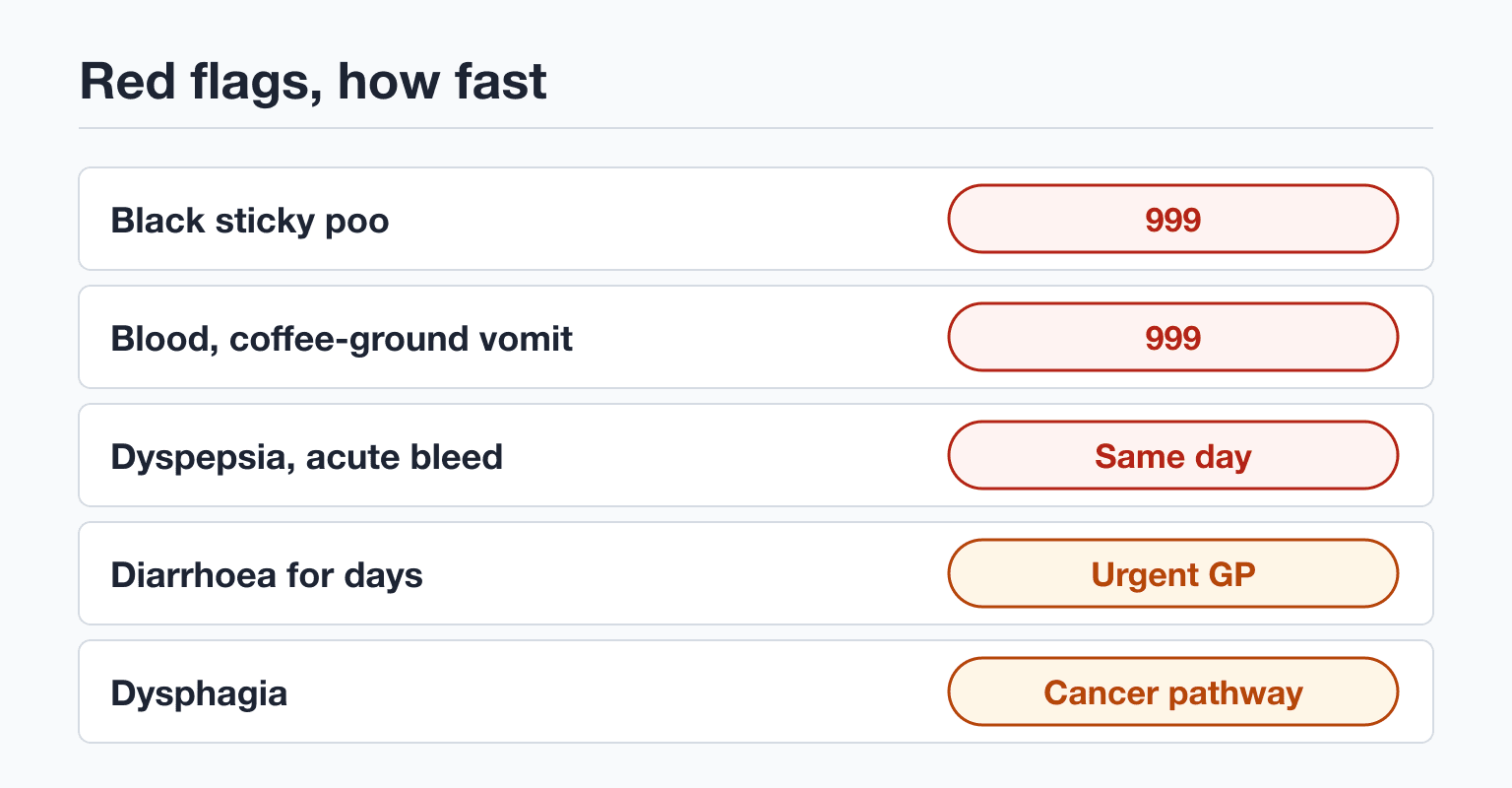
Criteria from NHS and NICE, checked 18 November 2026
For David Nolan, 45, the 55-plus NG12 rule doesn’t fit on age, but he’s over 40 with weight loss and abdominal pain. He reports "one episode of black, sticky, tarry stool about a month ago", not active bleeding now. This is why the timing question in a GI history matters.
Watch out. These guidelines steer referral decisions and your trust's local pathway applies. As a student, your job is to find the red flag, say it plainly and tell a senior promptly, not to decide the referral.
How Diagnosica helps with this
Ask by voice or text, the AI patient answers, and feedback follows.
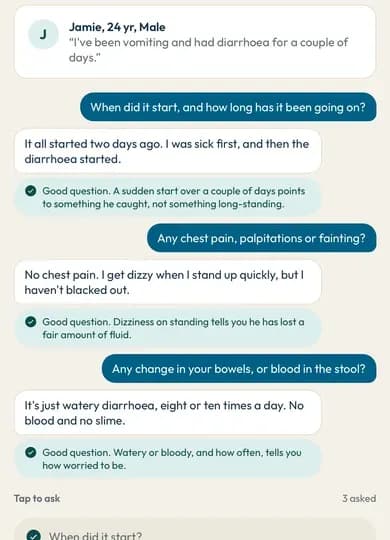
Diagnosica app, guided case history screen, a different case, as of October 2026.
- Your question gets the patient's answer.
- A feedback line says why the question was worth asking.
- History only; no abdominal examination to practise.
Simulated patient. Screenshot from Diagnosica, October 2026.
Common mistakes in a gastro history OSCE
Spot avoidable slips in a gastro history OSCE:
- Diarrhoea at face value. Ask what they mean by diarrhoea, and quantify consistency, frequency and volume.
- Never ask stool colour. Colour matters, or you miss a single black, tarry, sticky stool event.
- Drug history too thin. Ask prescribed, over-the-counter, alternative remedies including herbal, plus recreational and illicit drugs.
- Weight loss not quantified. Always ask how much, over what period, and whether it was intentional.
Weight loss belongs in screening. The NHS indigestion page lists losing a lot of weight without meaning to as a reason to see a GP.
Practise the GI history out loud
Gastrointestinal history taking sticks when you practise it aloud; reading helps, but stool colour and family history questions really stick once you've asked them yourself.
The same open-then-specific habit carries over to a respiratory history.
Then practise another full history from a library of over 130 cases across 18 specialties (as of 18 November 2026), free to start, no card needed.