How to prepare for clinical rotations: 7 things to do first
To prepare for clinical rotations, set a simple plan now. Rehearse the first history you'll be sent to take, because history-taking is the first of the AAMC's 13 core activities for entering residency. Practice introductions and organize templates.
Key takeaways
- Before day one, message a fourth-year and ask what your first rotation expects.
- Take one practice history out loud, then present it to a friend.
- In the sample case below, 15 of 18 history facts surfaced only when asked.
What changes when rotations start
On day one, learning flips from lectures to patient encounters, and your day follows a clinical service. If you're asking how to prepare for clinical rotations, expect people over pages and tasks over tests from day one.
At many schools, clinical training begins in earnest in the third year. Clerkships rotate by discipline, usually a month at a time, per ACP's advice for new clerks. Class gives you facts; on the wards you must get them from a person. Do one thing tonight: clerk a practice patient tonight, and practice moving from scripted questions to live listening and reasoning.
This post is about the weeks before day one; for what to do once you're in, see surviving the clerkship itself.
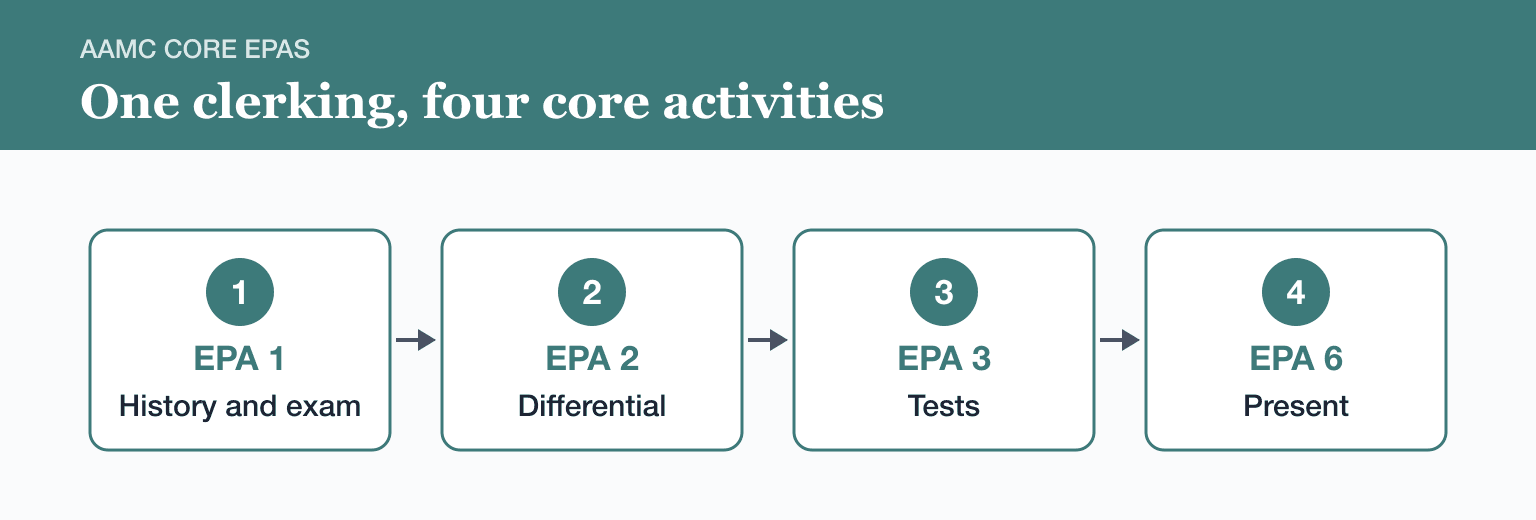
EPA flow from first history to presenting on rounds. Source: AAMC Core EPAs guide.
The AAMC lists 13 core activities "all medical students should be able to perform upon entering residency" in the AAMC's 13 core activities. On a single clerking you'll touch EPA 1 history and physical, and EPA 2 differential. You'll also hit EPA 3 tests and EPA 6 oral presentation, per the AAMC faculty and learners' guide.
Seven things to do before day one
Seven steps show how to prepare for clinical rotations: scout expectations early, plan the sequence, and rehearse out loud until the first summary feels natural. Do the prep now and reduce flailing later. You'll stay calmer.
If that sounds abstract, anchor your prep with what a rotation actually is and how rotations work.
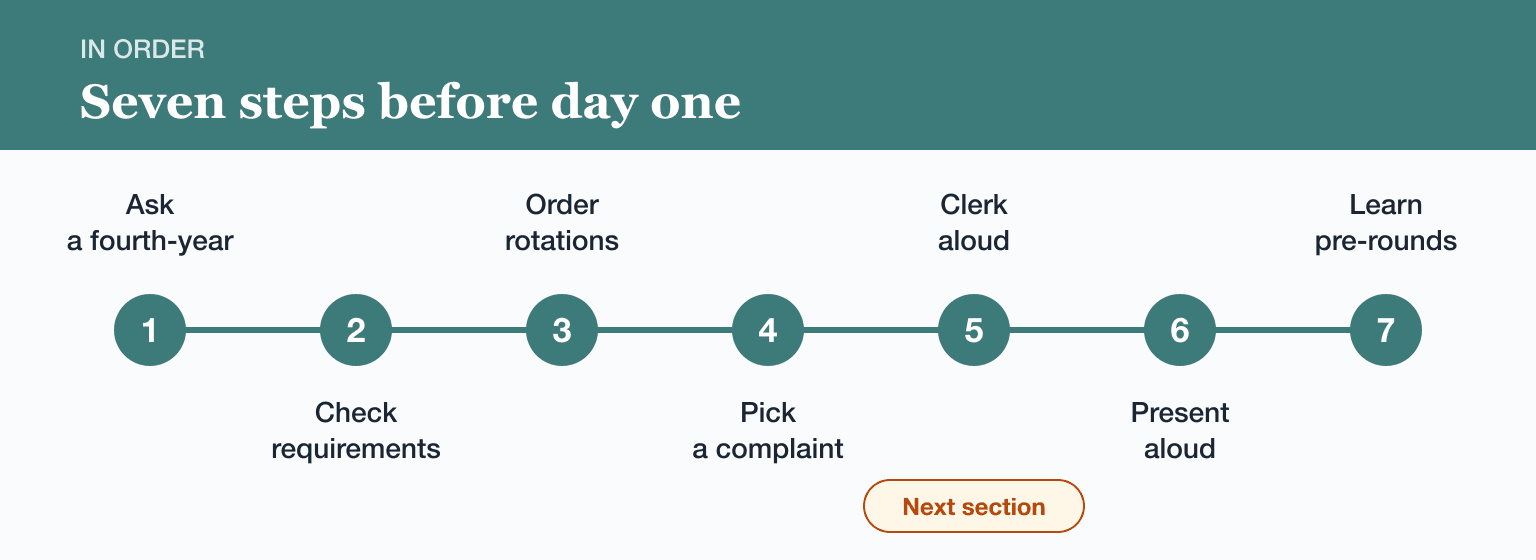
Seven steps to get ready before day one, from admin checks to clerkship practice.
Work through these in order during the weeks before your first clerkship starts:
- Find a fourth-year and ask what your first rotation expects, then read AMA's clinical rotation tips for context.
- Look up the specific requirements for each rotation before it starts, including deliverables and evaluation forms on the school site.
- Schedule an early rotation you’re curious about, if you can choose, so you learn its workflow.
- Pick a likely first presenting complaint and write your history questions and reasoning, then review practicing a focused history.
- Clerk one practice patient out loud, start to finish, before day one, with no notes or pauses.
- Present your summary to a friend as to a resident, "EPA 6: Provide an oral presentation of a clinical encounter".
- Learn what a morning looks like before rounds, then review your pre-round routine and visualize the flow.
Clerk one practice patient before day one
Clerk one practice patient before day one with a simulated case and a tight question set. Doing one full history now primes your red-flag reflexes, rehearses ICE, and makes day one feel like case two. It also checks your structure.
Meet Rupert Wexford, 52, a Diagnosica simulated patient. He opens with, "My left calf's been swollen and aching for about four days now." He thinks he pulled a calf muscle and is worried it might be a clot.
Rupert, 52 (simulated): what he said, and what we had to ask
Chip | Question | Answer | Why it mattered |
|---|---|---|---|
Volunteered | What brought you in today? | Left lower leg swollen, aching, warm for four days, whole leg. | Good onset and location, then assess risks, flags. |
Volunteered | What makes it better or worse? | Worse when standing or walking, easier with the leg elevated. | Good pattern context, then explore travel, immobilization risks. |
Asked | Any recent long travel or immobilization? | Twelve-hour window-seat flight from Singapore six days ago, barely stood. | Good exposure risk, then time symptoms to flight. |
Asked | Any breathlessness, chest pain, or coughing blood? | No breathlessness, no chest pain on breathing in, no coughing blood. | Good pertinent negatives, then justify urgency and tests. |
Asked | Is the other leg affected at all? | The other leg is normal, so one leg only. | One leg only argues against bilateral causes. |
Only if asked specifically | Any family history of clots? | Father had a leg clot after a hip replacement. | Good thrombotic context, then include in risk reasoning. |
The case file holds 18 history facts, and 15 of them only come out when asked.
Simulated patient. Case file proximal-deep-vein-thrombosis-52m. Questions written by us as a model, not a learner session.
Ask beyond the volunteered story
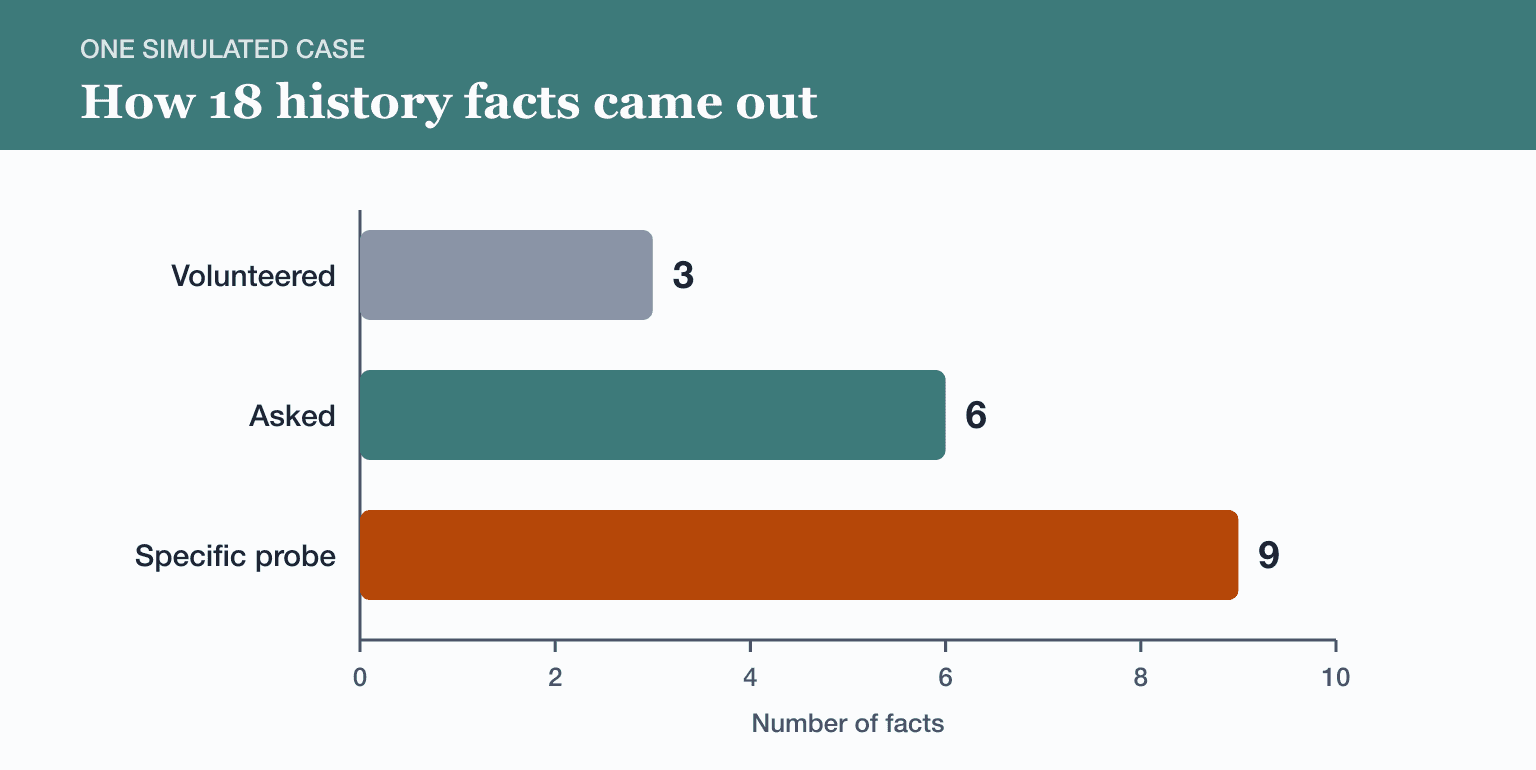
Full simulated case: 18 history facts, split by method, volunteered 3, asked 6, specific probe 9. Source: Diagnosica case file, simulated patient.
This case has three must-ask red flags: the calf, the flight, and the chest symptoms. A student who stops at the volunteered story misses the flight. That answer shows why pertinent negatives matter for your write-up and your next questions.
How Diagnosica helps with this
You ask, AI patient answers, with feedback on each question's value.
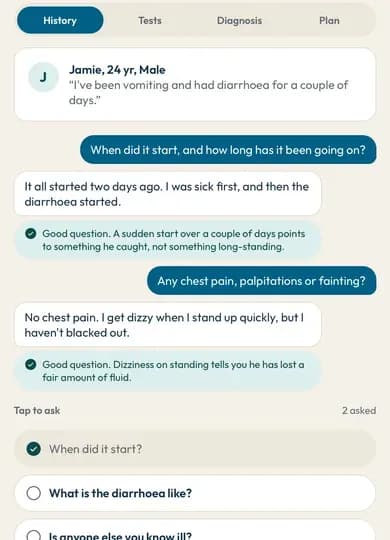
Diagnosica app, guided case history screen, as of November 2026.
- Opening patient line stays at the top.
- Each question shows a reply and a green why-it-mattered note.
- Tap-to-ask in guided mode; real cases allow anything, voice or typing.
Simulated patient. Screenshot from Diagnosica, November 2026.
Mistakes students make before rotations start
The common mistakes students make before rotations are over-collecting advice, hiding uncertainty, over-rehearsing stories, and mistaking reading for practice. Name them now, then plan a fix so you start clerkships calmer, more focused, and better prepared to learn.
Watch for these four traps before day one:
- Too many lists. Filter materials; ACP warns many opinions can intimidate.
- Always have answers. Admit confusion early; ACP encourages asking without delay.
- Only rehearsed stories. In the sample case, 9 of 18 facts need specific probes.
- Reading, not listening. Start by listening; AMA’s Dr. Dangles says so.
Watch out. For a swollen leg, ask chest questions too, they're one of three must-ask red flags with the calf and the flight. Patient reports no breathlessness, no chest pain on breathing in, and has not coughed up blood.
Once rotations begin, keep momentum with impressing your team early and add domain context from surgery clerkship tips.
Practice the clerking before you meet a real patient
To prepare for clinical rotations, rehearse the clerking out loud with a partner or with an AI patient. Time it, cover review of systems. Repetition makes your questions automatic under pressure and your notes cleaner and faster.
Diagnosica lets you take a history from an AI patient by voice or text. The patient appears as a video avatar, and you can order investigations. Commit to a diagnosis and plan, then get rubric scoring after every case; free tier, no card needed. It has no physical examination practice, so the "perform a physical examination" half of "EPA 1: Gather a history and perform a physical examination" still happens on the wards.
It doesn't give advice about real patients, and it's not a diagnostic system. Treat every output as educational.
Your end task is to run a case before day one, then get some rest. After graduation, this prep rolls into new-doctor survival habits that keep your systems tight.