How to impress on clinical placement as a medical student
How to impress on placement comes down to habits the GMC lists: be on time, introduce yourself, be honest about your level and seek feedback. Then add clean notes, focused presentations, and steady follow through.
Key takeaways
- Introduce yourself daily to the team and each patient by role.
- Clerk one patient yourself and present it back to the team.
- Ask about regular tablets. Peter's blood thinner surfaced only on specific questioning.
What to do on your first morning
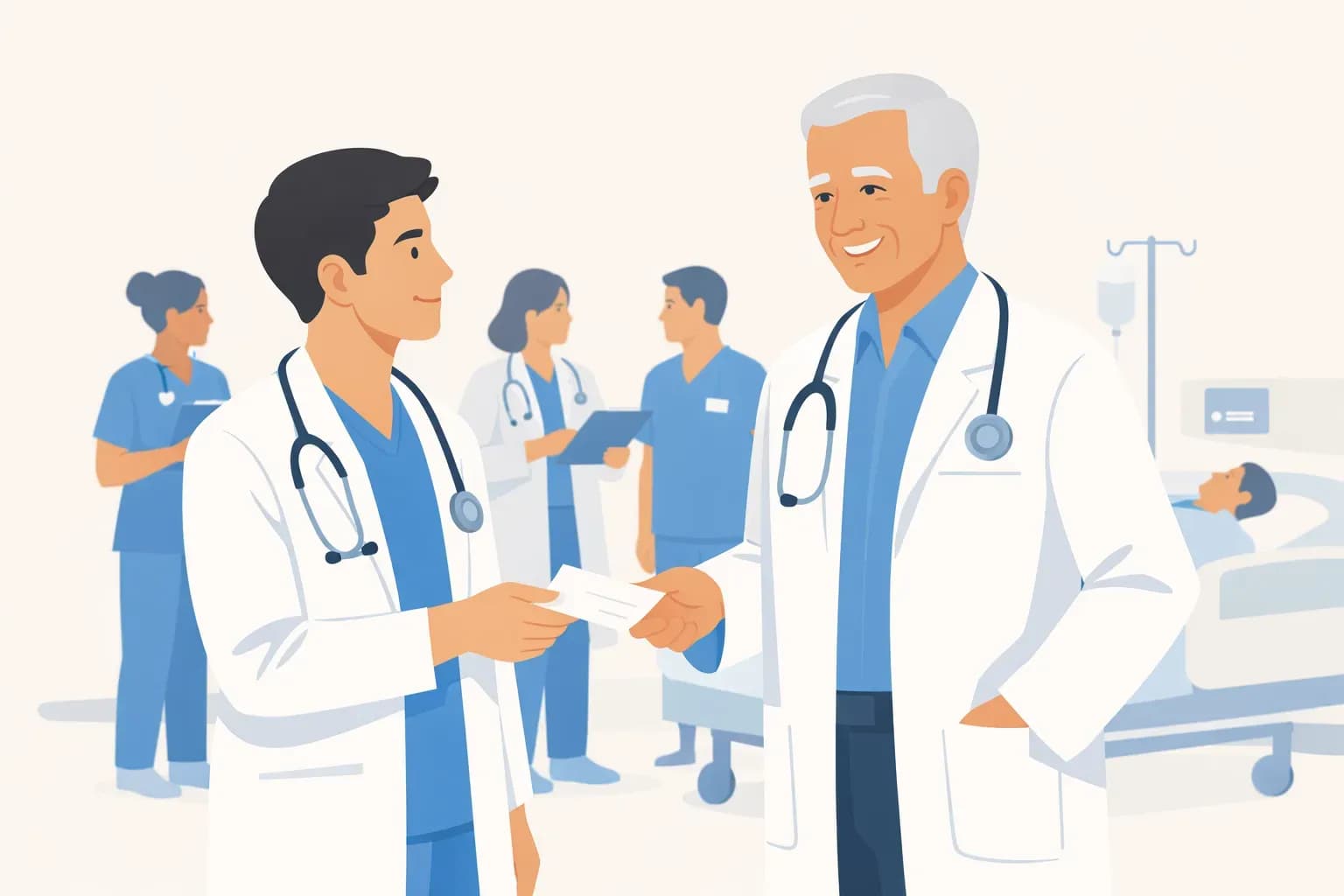
On your first morning, be on time and tell the team if delayed. Dress presentably and follow infection prevention and control. Introduce yourself with your role. Say you're a student. The GMC expects this baseline of professional conduct.
Greet the team at the start of each day, and ask where to join the morning round; see how ward rounds work.
With patients, start with your name and that you're a medical student. The GMC asks you to state your level of experience and capabilities, and to ask for support. The hellomynameis campaign began after Kate Granger noticed in August 2013 that many staff did not introduce themselves. See talking to patients as a student for phrasing you can use.
Example. "Hello, my name is [your name]. I'm a medical student with the ward team today." "Would you be happy to talk about how you're feeling and why you're here?" "Morning, I'm [your name], medical student joining the ward round."
Before your first day, practise one history before placement with an AI patient (voice or text).
Seven habits worth building on any placement
Seven habits show professionalism on any firm. Reliability on placement, one patient each day, and active feedback seeking, plus clear introductions, clear scope with patients, concise presentations and supervised first attempts. For expectations and boundaries, see the GMC's placement guide.
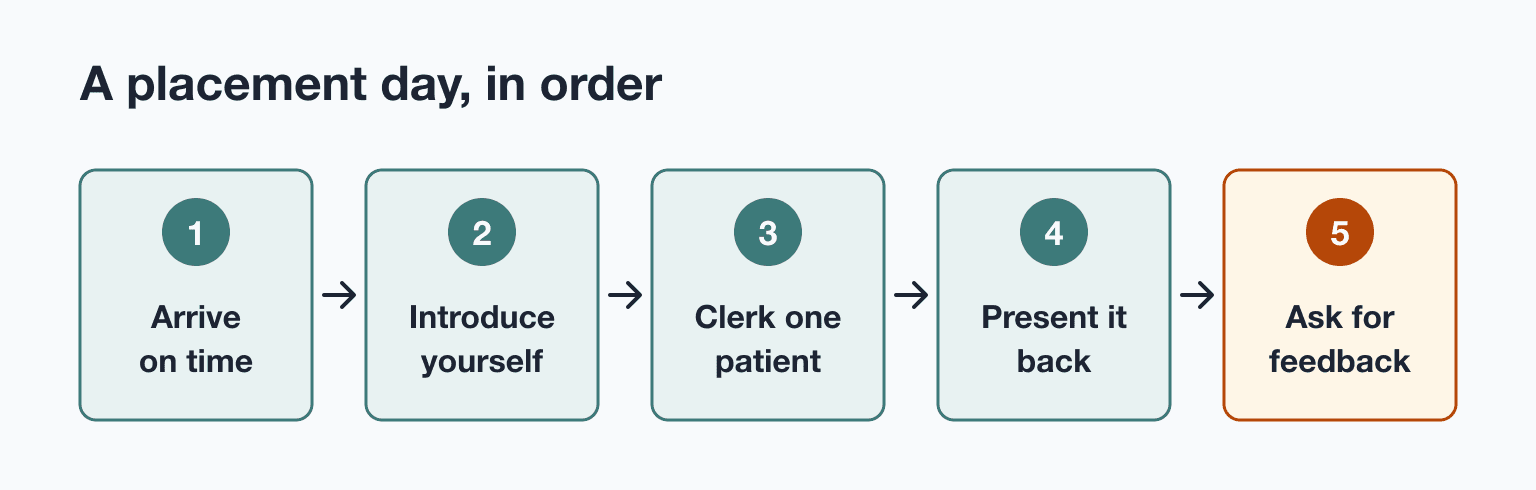
Steps 1, 2 and 5 follow GMC placement guidance; 3 and 4 are our suggestion for using the day well.
Treat these as repeatable actions you can do on any placement:
- Arrive on time and tell the team if you're running late or cannot attend.
- Greet the team each morning and introduce yourself by name and year.
- Tell each patient your name and that you're a student, and be clear about your level.
- Clerk one patient yourself today: see clerking a new admission.
- Present that patient back with headline-first structure: use a crisp ward-round presentation.
- Watch first for any skill you have not done, then ask to assist.
- Ask for feedback from patients, supervisors, the wider team or students: see the GMC's feedback section.
Worked case: the question that changes the picture
Diagnosica's Peter Hallam, 55, is a simulated AI patient with a persistent nosebleed who volunteers some facts. The picture changing details arrive only when you ask a specific question, and that's what strengthens your short presentation.
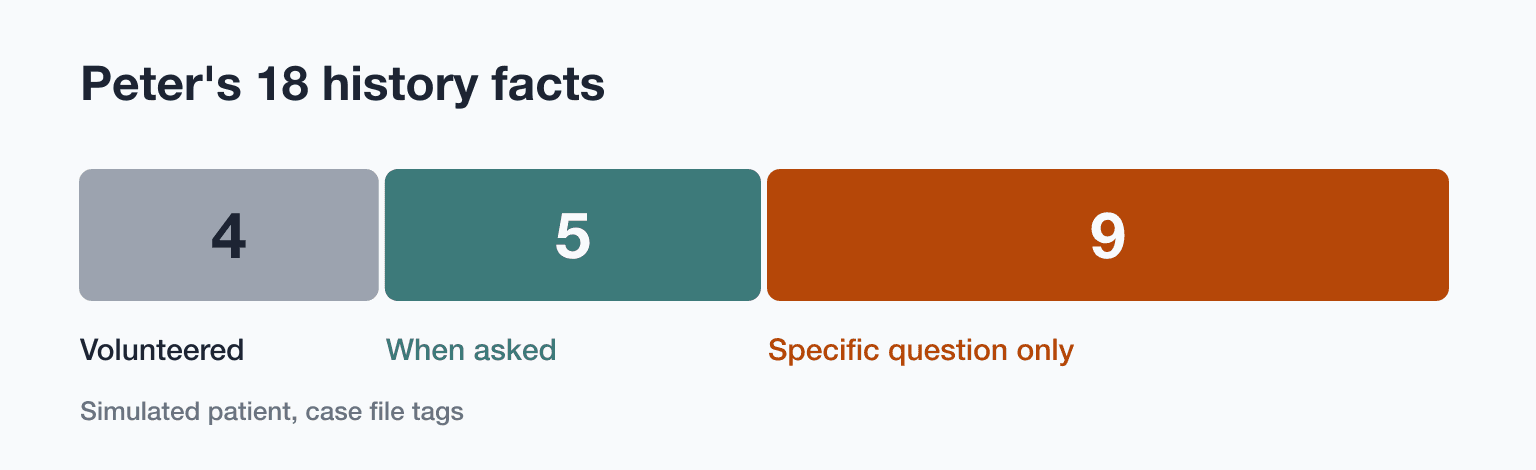
Simulated patient; our count of the case file tags, grouped by volunteered, asked, and specific question.
Of 18 history facts in the case file, he volunteers 4, gives 5 when asked, and 9 only on a specific question.
Peter Hallam, 55 (simulated): what he said, and what you'd have to ask
Chip | Question | Answer | Why it mattered |
|---|---|---|---|
Volunteered | How long has it been bleeding? | About forty minutes and it won't stop. | Duration for your presentation. |
Volunteered | What have you done so far? | Sat with his head tipped back, swallowing the blood, the whole time. | Case file: hides blood loss, causes vomiting. |
Asked | Which side is it coming from? | Right nostril only. | Locates the bleed for your presentation. |
Only if asked specifically | Where exactly have you been pinching? | The hard bony bridge, letting go every minute or so. | Technique detail for your presentation. |
Only if asked specifically | Do you take any regular tablets? | A daily blood-thinning tablet since a small heart attack four years ago. | The case file says it prolongs the bleed. |
Lead with the tablet in your summary, and try asking that question yourself next time.
Simulated patient. Case file epistaxis-55m. Questions written by us as a model, not a learner session.
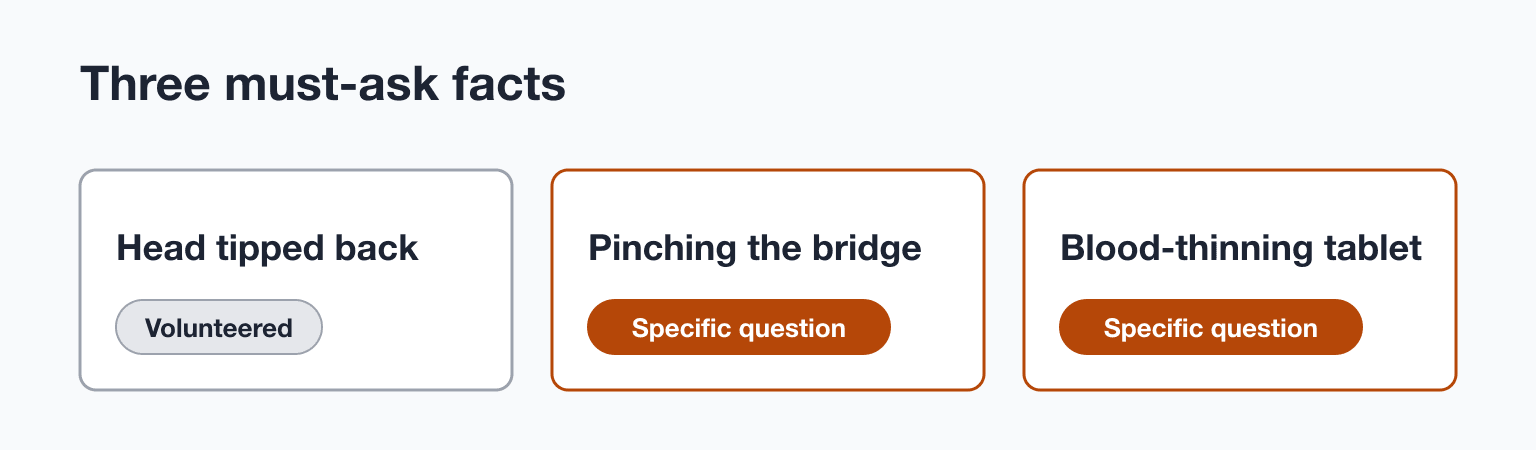
Simulated case file must-elicit items, with source tags: head tipped back volunteered; pinching the bridge and blood-thinning tablet on a specific question.
The case file marks 3 facts as must-elicit and 2 of them come out only on a specific question.
How Diagnosica helps with this
Take a history by voice or text from an AI patient, get a scorecard.
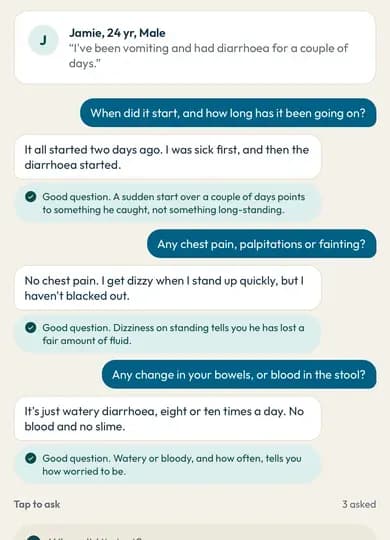
Diagnosica app, guided case history screen, as of October 2026.
- You ask, the AI answers
- Good questions get a short why
- Peter's case opens below
Simulated patient. Screenshot from Diagnosica, October 2026.
Placement mistakes the GMC warns about
GMC guidance on placement mistakes for students sets four ground rules: state your experience, observe before doing, protect privacy, and use slow spells for study. Ask for support early, and say no if unsure.
Four mistakes, with the wording from the GMC's guide for students on placement:
Mistake | What the GMC says |
|---|---|
Overstating your experience to a patient | Be open about "your level of experience and capabilities" |
Trying a new skill without watching first | "it's best to observe first and ask for assistance" |
Posting anything that could identify a patient online | "do not share any potentially identifiable information about patients online" |
Going quiet when the ward is slow instead of self-study, lectures or webinars | "look for other learning opportunities such as self-study, lectures, and webinars" |
Watch out. Work within your competence, and ask for help early. The GMC says students must "work within your competence" in GMC guidance for students. If a task feels beyond you, say so.
Practise the history before your next placement
Practise the history before your next placement to rehearse the history, tighten reasoning, and present out loud. Speak or type to an AI patient, then get a scored run afterwards.
Diagnosica rehearses history with an AI patient, voice or text. Scorecard each case. Free to start, no card needed.
No physical exam. It doesn't give advice about real patients, and it's not a diagnostic system. Treat every output as educational.
Pair this with preparing for clinical rotations and learning on clinical placement. For context after finals, see the FY1 year ahead. Run a case before tomorrow, then present it out loud.