Cardiovascular history taking: the questions, with one case

Cardiovascular history taking means characterising chest pain, screening for breathlessness, palpitations and fainting, then asking the five risk factors NICE lists. The post walks one simulated chest pain patient through those questions.
If a real person has chest pain now, call 999 in the UK. This post is exam practice and history-taking training only.
Key takeaways
- NICE defines angina by three features: constricting pain, exertional trigger, rest relief.
- NHS: call 999 if chest pain persists or spreads to arm, neck, jaw, stomach, back.
- In the worked case, 10 of 15 facts surfaced only after specific, directed questions.
What does a cardiovascular history cover?
A cardiovascular history starts with the complaint in the patient's words. Then take a detailed chest pain history, assess breathlessness or fainting, and screen for palpitations. Cover past heart disease and risk factors, then the patient's concerns, keeping that order so red flags land in context.
NICE CG95 (published 24 March 2010, updated 30 November 2016) advises a detailed pain history and associated symptoms such as breathlessness. Ask about any history of angina, heart attack or coronary revascularisation, and cardiovascular risk factors. Discuss people's concerns, including anxiety. If you're new to cardiovascular history taking, see the full history order.
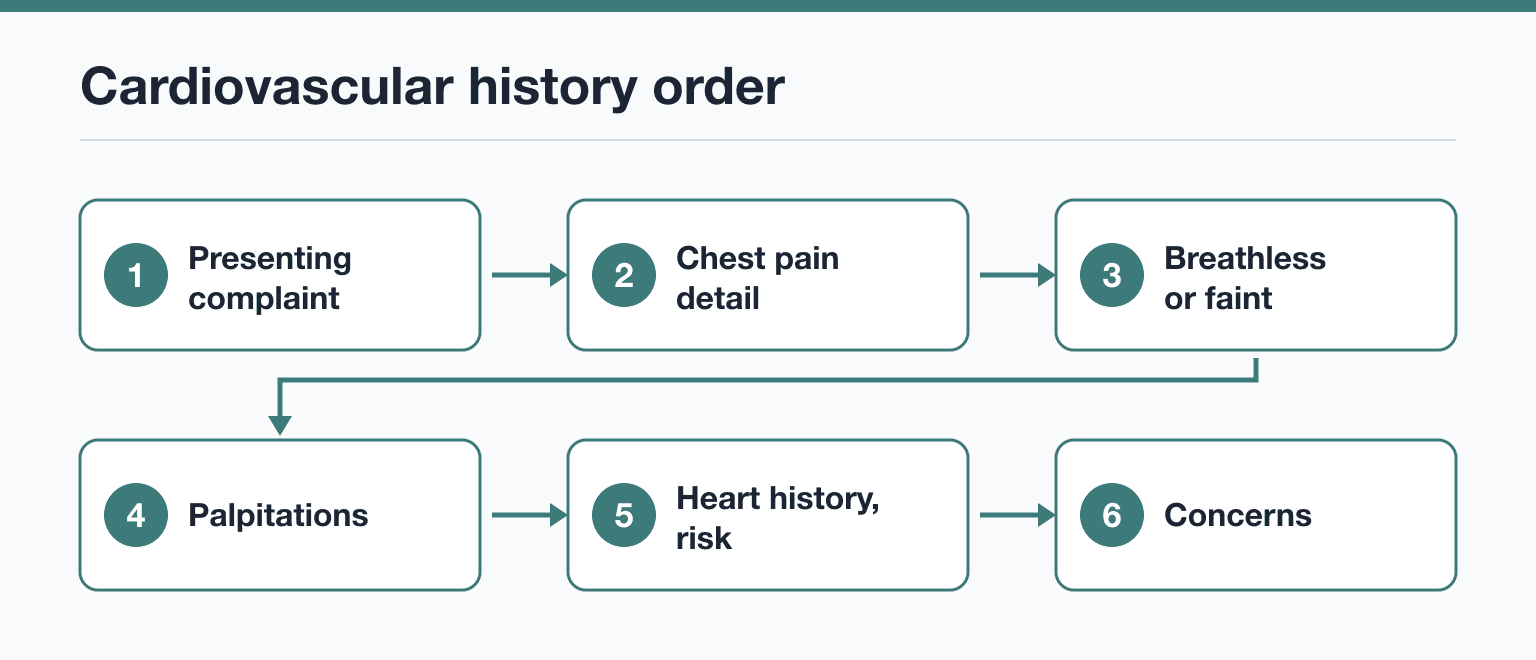
From complaint to concerns, keep to this order and cover pain detail, breathlessness or fainting, palpitations, then heart history and risk.
Start with the presenting complaint, then chest pain details, and ask about breathlessness or fainting. Screen for palpitations, cover heart history and risk factors, and finish with the patient's concerns.
You can take this history from an AI patient, free to start, no card needed.
Chest pain: the questions that sort it
When chest pain is the complaint, take a history that covers character and triggers, associated symptoms and risk. Include features for or against angina, so urgency and likelihood are clear before you even plan investigations.
To practise the tests that follow a cardiac history, try the free ECG quiz with real 12-lead tracings and explained answers.
- Characterise the pain: location, radiation, severity, duration, frequency, provoked and relieved.
- Ask associated symptoms: breathlessness, nausea or vomiting, marked sweating, or pain lasting longer than 15 minutes.
- Classify angina features: constricting chest or neck, jaw, shoulder or arm discomfort, with exertion, relieved by rest.
- Look for features against angina: continuous, prolonged, unrelated to activity, triggered by breathing in, dizziness, palpitations, tingling, dysphagia.
- Record risk and history: smoking, diabetes, hypertension, dyslipidaemia, family history, previous angina, heart attack or revascularisation.
For cardiovascular history taking in chest pain, anchor your questions to the NICE chest pain guideline and then practise structuring them under timed pressure. If you want a dry run on format, see the chest pain OSCE station for what examiners test and how to pace your opening minute.
Breathlessness and fainting: what to screen
For breathlessness or fainting, screen for context and red flags. Ask about orthopnoea or ankle swelling, fainting with chest pain or on exertion, and driving risks. Record timing, triggers and current impact on activity in clear terms.
On breathlessness, ask if it worsens when lying down or comes with swollen ankles, and whether the chest feels tight or heavy. Those are flagged on the NHS breathlessness page. For a worked example, see a full breathlessness station.
On fainting, ask about chest pain, palpitations, during exercise, or while lying down. These are 999 features on NHS fainting advice. It also says to tell the DVLA if fainting regularly, so include a driving question. For structure, see a full syncope history and the respiratory history.
Palpitations: the short version
When palpitations are the concern, open with four checks: what it feels like, how long episodes last, and the triggers and red flags you can elicit before moving on, in a clear, consistent order. Patients describe racing, irregular, pounding or fluttering beats, sometimes for seconds or minutes, sometimes longer.
Ask these four in order:
- Describe the sensation: racing, irregular or skipped beats, pounding, thumping, or fluttering.
- Time course: seconds, minutes, or longer, and how often episodes recur.
- Triggers and substances: exercise, lack of sleep, stress, caffeine, alcohol, nicotine, medicines.
- Family history and red flags: heart disease in relatives, chest pain, shortness of breath, fainting.
Escalation criteria and possible causes sit on the NHS palpitations page.
Worked case: Jamie, 30, with sharp chest pain
Jamie, 30, with sharp chest pain shows the structure in action: what lands unprompted, what needs targeted questions, and how pleuritic, positional pain and non-exertional chest pain steer your course. Ten of fifteen facts needed specific prompts.
Jamie, 30 (simulated): what he said, and what we had to ask
Chip | Question | Answer | Why it mattered |
|---|---|---|---|
Volunteered | Opening line | Sharp central chest pain, worse with deep breaths and cough. | Fits the NHS description of pericarditis pain: worse breathing deeply. |
Volunteered | Then unprompted | Worse lying flat, better when sitting forward. | Fits the NHS description: worse lying down. |
Asked | Does the pain go anywhere? | Up to his left shoulder near the neck. | Pain spreading to the trapezius ridge points to pericardial inflammation. |
Only if asked specifically | Any recent viral illness? | A flu-like cold about a week ago. | Only a direct question found it; record it. |
Only if asked specifically | Is it brought on by exertion? | No, and it's not heavy or crushing. | Not exertional removes one angina feature. |
Only if asked specifically | Any severe breathlessness or near-fainting? | No severe breathlessness at rest and no feeling of nearly fainting. | Screens NHS red flags. |
Simulated patient. Case file pericarditis-30m. Questions written by us as a model, not a learner session.
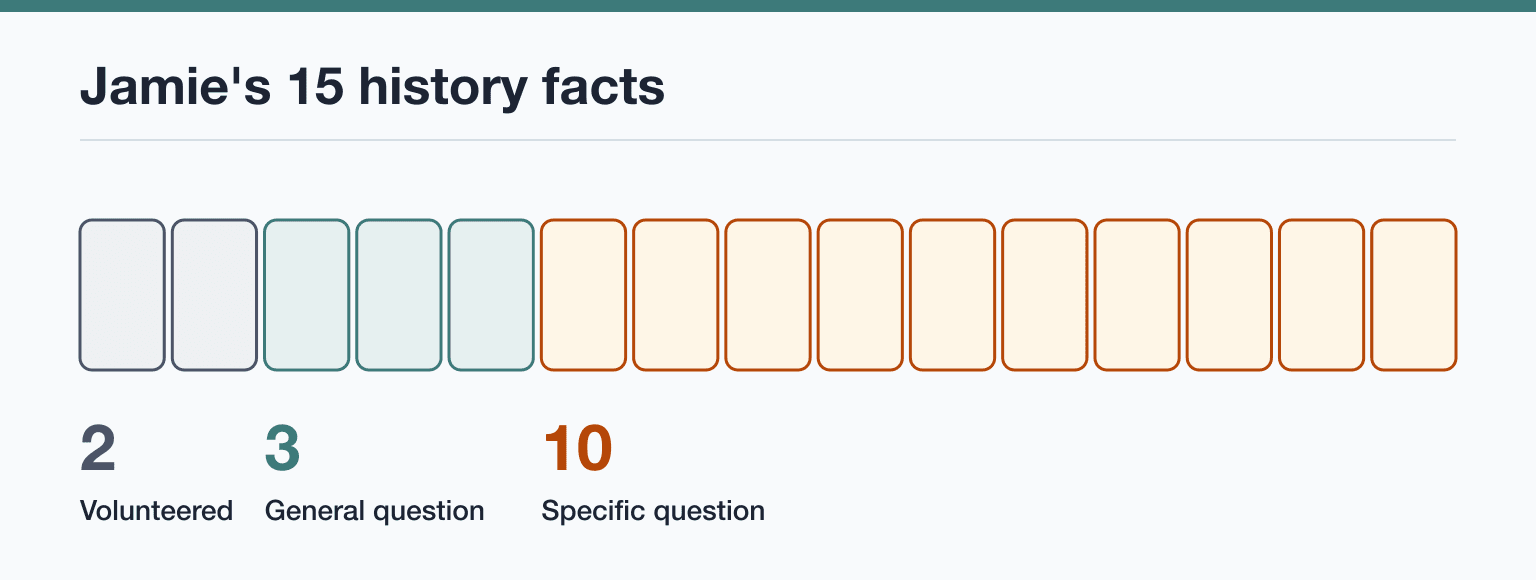
Most decision points came from directed questions, not the opening line. Volunteered details helped, but they were the minority here.
Two were volunteered, three from general questions, and ten only with specific questions, of fifteen.
How Diagnosica helps with this
You ask, the AI patient answers by voice or text, shown as a video avatar.
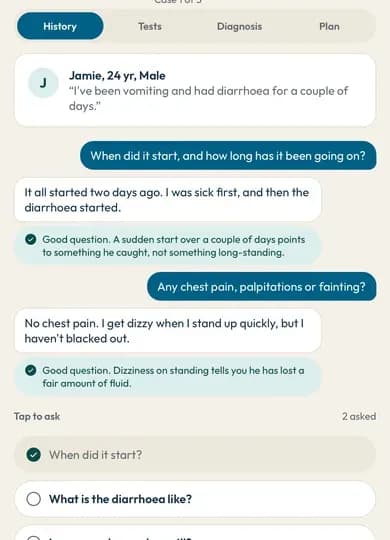
Diagnosica app, guided case history screen, as of November 2026.
- History tab where you ask
- Any chest pain, palpitations or fainting?
- Short note under each reply saying why that question helped.
Simulated patient. Screenshot from Diagnosica, November 2026.
On this script, pericarditis fits the pattern, but the marks come from pattern plus ruled-out traps. Non-exertional, pleuritic, positional pain count, and so do scored negatives like no near-fainting or no PE flags; that's why negatives earn marks.
Red flags and the mistakes that cost marks
To avoid mark losses, centre your cardiovascular history on the 999 triggers, must-ask symptom screens, and the avoidable omissions that recur. Apply NHS criteria for chest pain, palpitations and fainting, then follow local trust guidance on the wards.
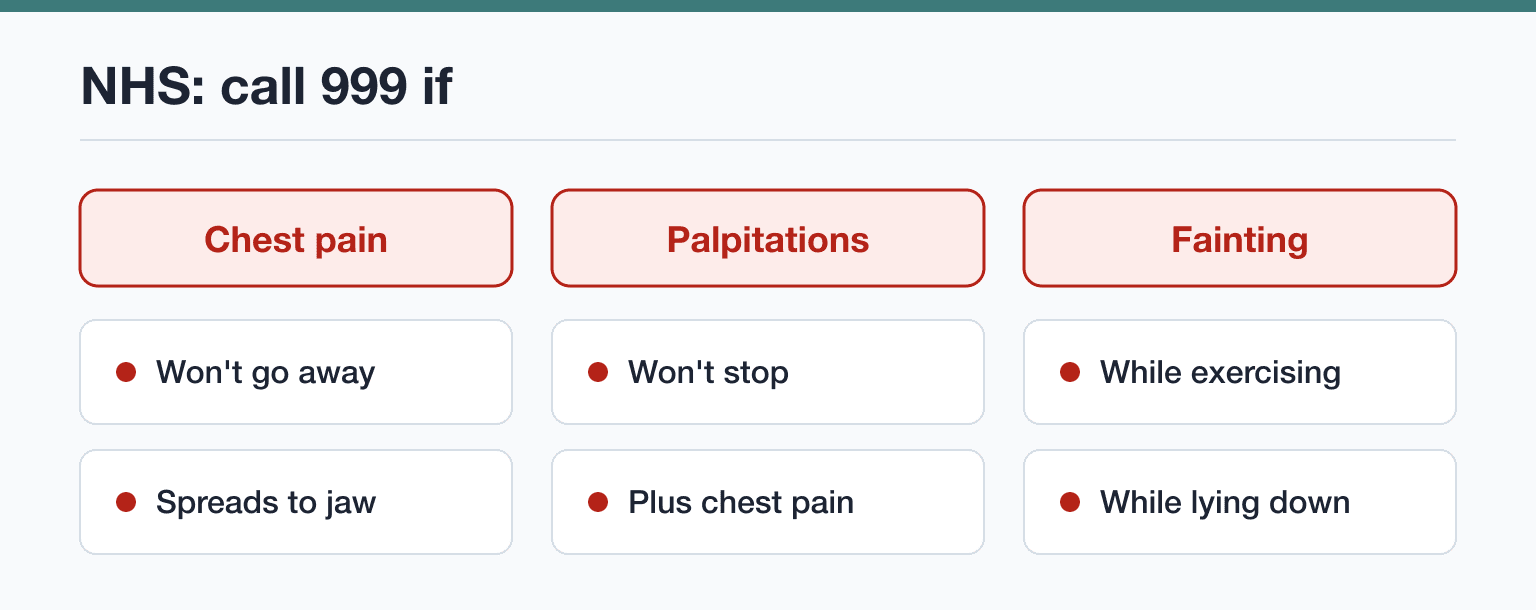
NHS call 999 criteria for chest pain, palpitations and fainting. Source: NHS.
From the NHS chest pain page, call 999 for sudden pain that does not go away. Pain spreading to arm, neck, jaw, stomach or back, or chest pain with sweating, feeling sick, light-headed or short of breath. It also flags palpitations that do not stop or come with chest pain, and faints during exercise or while lying down.
Marks go missing for stopping at “not crushing” without asking position and effect of breathing. Another quiet loser, missing a recent viral cold unless you ask directly.
Watch out. Must elicit in chest pain: breathlessness, near-fainting and leg swelling. The case file marks missing any of these as a red-flag omission that costs marks.
For OSCE prep, fold these into cardiovascular history taking across the full OSCE stations list, then adapt to context.
Practise the cardiovascular history out loud
History taking lands better when you practise aloud with a simulated patient you can question by voice or text, and the Diagnosica app on phone, tablet or laptop gives teaching-point feedback after each case.
Want another go at cardiovascular history taking with a different case? Use Diagnosica to practise another full history, free to start, no card needed. It doesn't give advice about real patients, and it's not a diagnostic system.