How to talk to patients as a medical student, from hello to goodbye

To talk to patients as a medical student, GMC Good medical practice says introduce yourself and explain your role. Say your name and that you're a student, sit at their level, ask one open question, then listen.
Key takeaways
- Ask two feelings questions: what they think and what worries them.
- If asked for advice, decide to find out and return with the doctor.
- Practise the seven steps aloud before placement and time them.
What to do before you walk in
First conversations can feel jumpy and you’ll want to rattle through a checklist. Before you knock, have one opening line ready, find a seat at eye level, and plan to listen more than you ask.
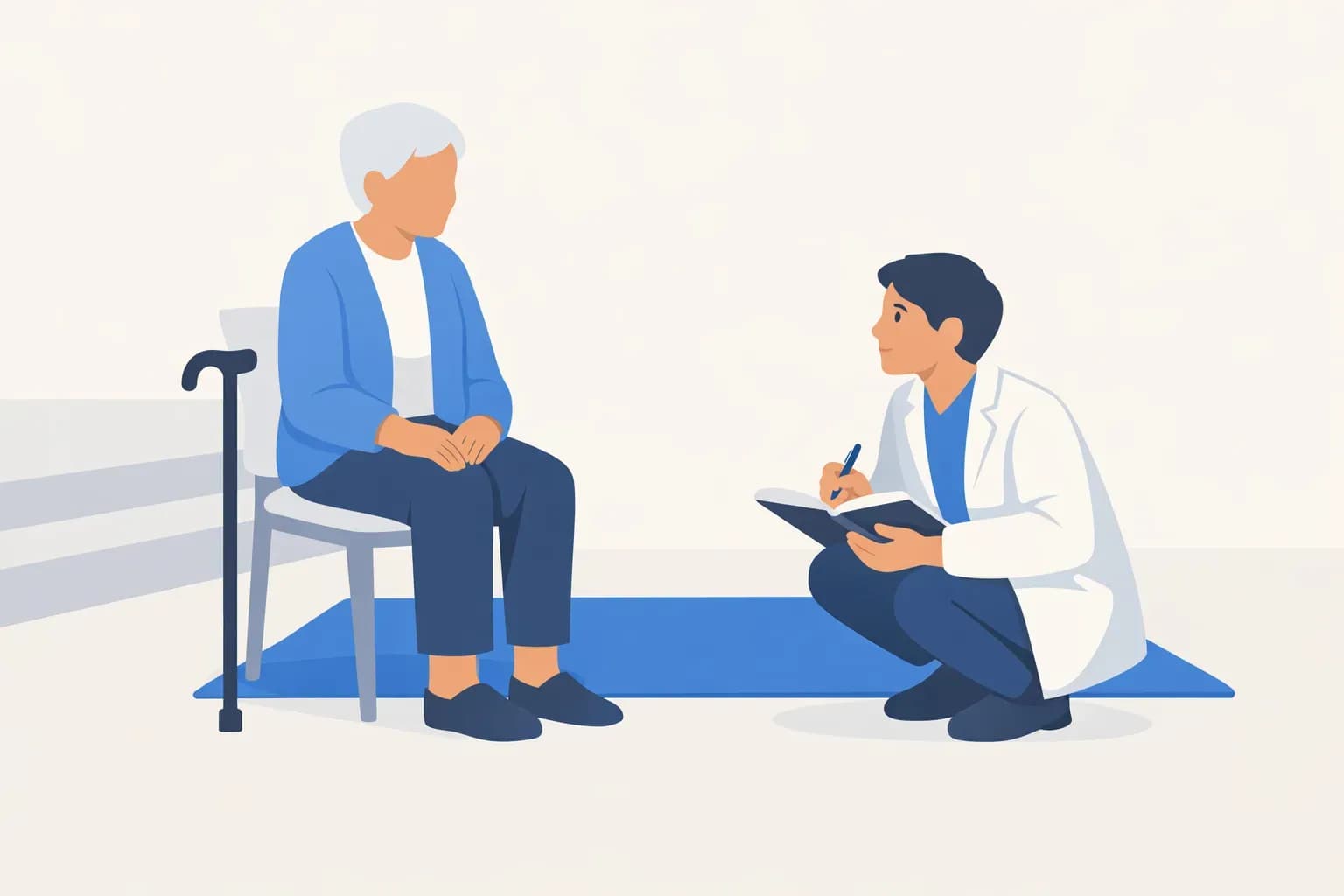
In one student's first patient, a second-year US medical student met a patient only weeks in. There was no chair, he stood, and the patient craned his neck up from the bed. His voice shook, he rushed quiet questions, and he wished he’d spoken louder.
Nerves are normal. If shaky hands or a racing voice worry you, read first-patient nerves for quick tactics that calm the body without scripts.
For a rehearsal first, have a first conversation with an AI patient, free to start, no card needed.
Your first conversation in seven steps
For how to talk to patients as a medical student, use this seven-step order: introduce yourself and your role, sit, one open question, listen, use their words, ask their worry, close with what happens next.
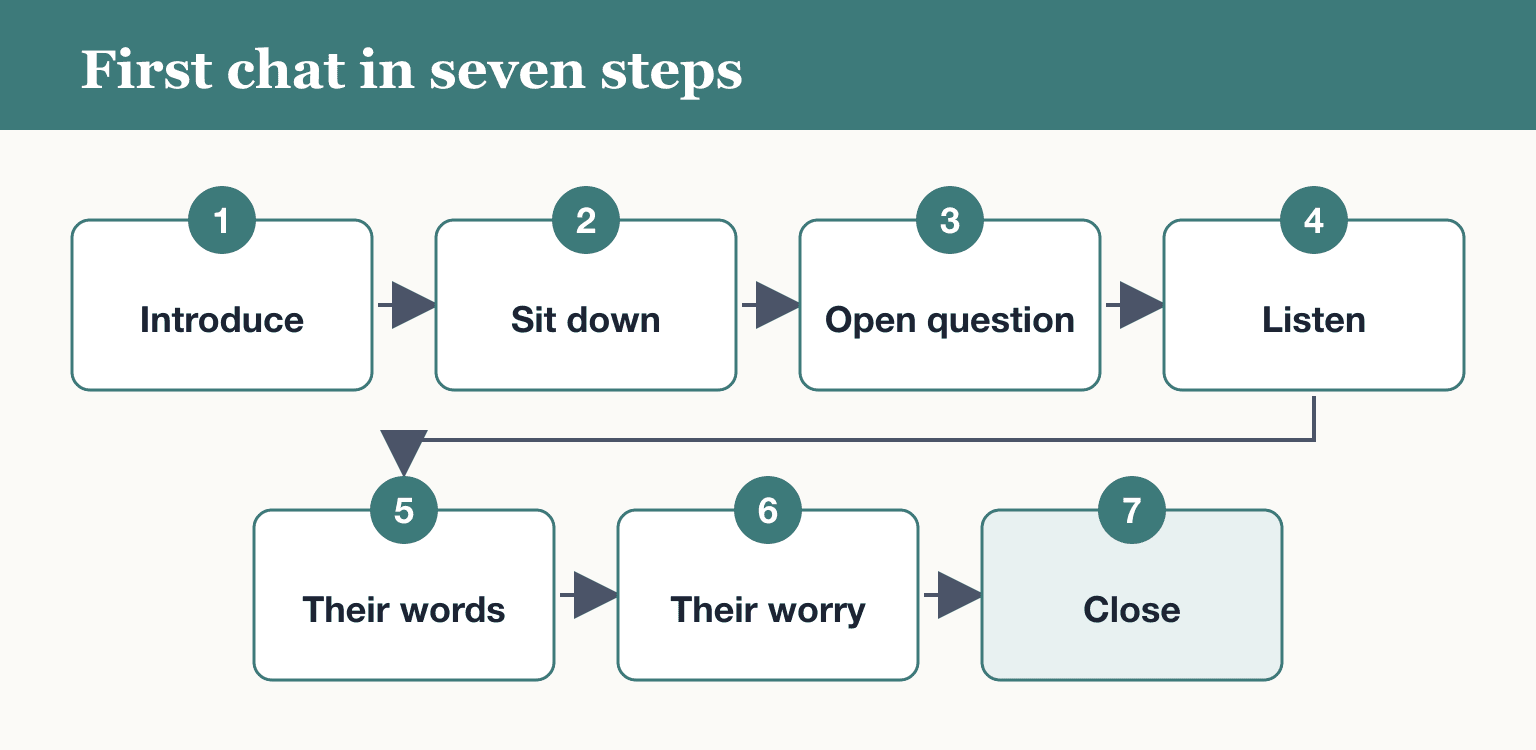
Use this default structure from hello to goodbye to stay clear about your role, time, and what matters most to the patient.
Use this order the same way each time to start well:
- Say your name and that you're a medical student, and explain your role today with the team.
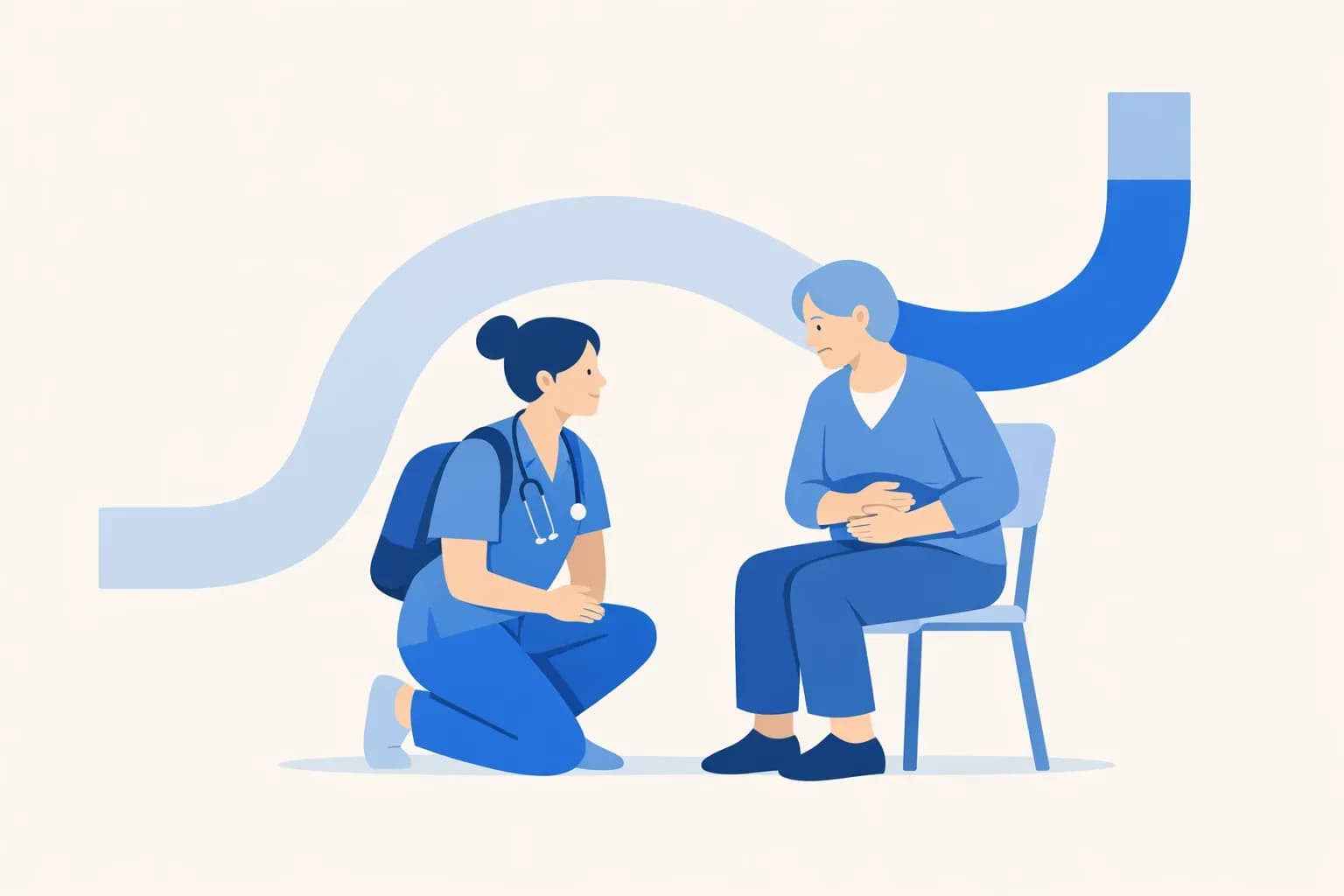
- Sit at their eye level in a chair if possible.
- Ask one open question (e.g. what brought you in) and keep it short.
- Stop and listen without interrupting their first answer.
- Use their words, plain language, never talk down or use elderspeak.
- Ask what they think is going on and what worries them.
- Close: ask if there's anything else, thank them, and say what happens next briefly.
The GMC's Good medical practice tells you to introduce yourself and explain your role, and the BMA's communication guidance says to listen, ask for views, and respond to concerns.
Read when to use open questions for timing the switch, and summarising before you close to tidy endings. The AMA's communication tips suggest asking "What is important to you?", which sits well after you ask what worries them.
A worked first chat with Simon, 40 (simulated)
An example for how to talk to patients as a medical student: one simulated library case shows the opening, the worry question and the close; the patient's replies below are word for word from the case file.
Simon, 40 (simulated): three moments in a first chat
Chip | You ask | Simon says | Why it matters |
|---|---|---|---|
Volunteered | What brought you in today? | I woke up this morning and the left side of my face had drooped. | Starts in their words, sets the agenda quickly. |
Asked | When did it start? | It was there when I woke up this morning. I went to bed fine. | Clarifies timing in their words, avoids assumptions. |
Only if asked specifically | What do you think is going on, and what worries you most? | I think I've had a stroke because my face has dropped. | Surfaces fears you won't hear unless you invite them. |
Asked | Who's at home with you? | My wife is waiting outside, as worried as I am. | Acknowledges support and flags updating family later. |
Asked | Is there anything else you would like to tell me? | Will my face get better, and how long will it take? | Closes the loop and captures unanswered questions respectfully. |
His biggest fear only came out because the question was asked.
Simulated patient. Case file bells-palsy-40m. Questions written by us as a model, not a learner session.
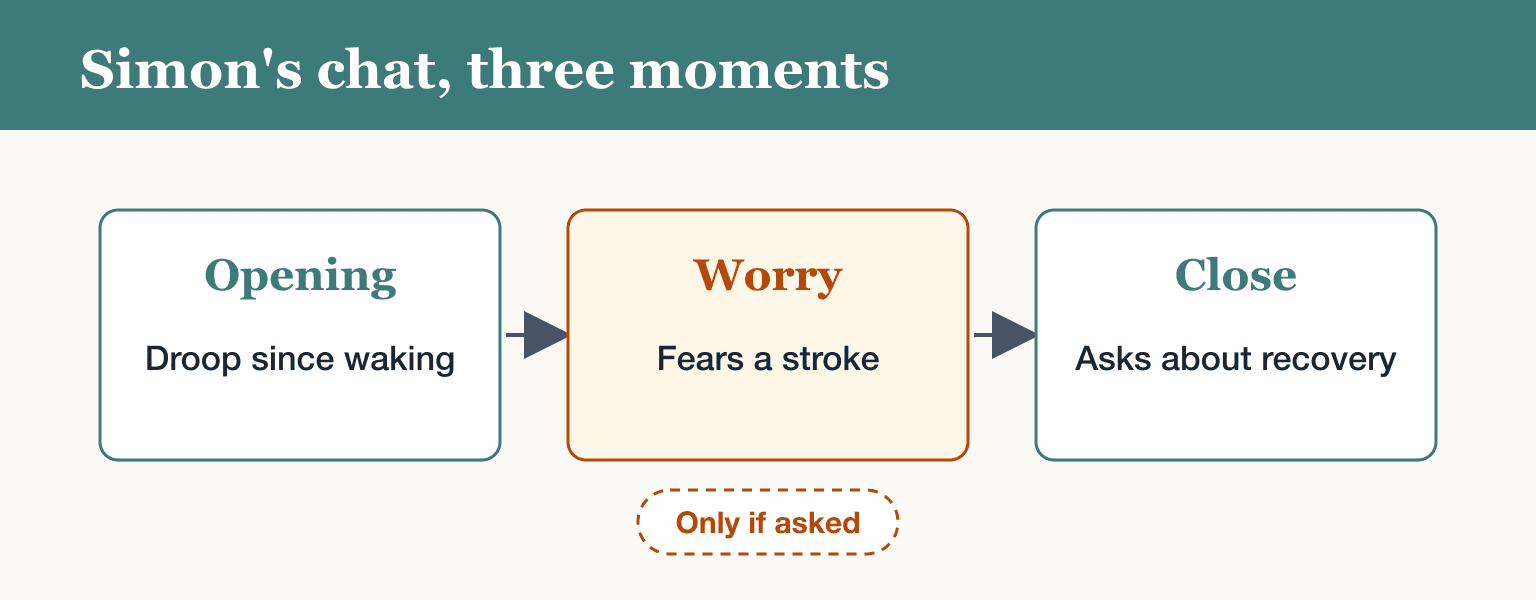
Simon Wright’s three beats: droop since waking, fears a stroke if asked, then asks about recovery and eye care at the close.
The opening was a droop since waking, the worry, named only when asked, was a stroke, and the close was a recovery question. That's the arc, from opening to worry to close; see how ICE questions work.
How Diagnosica helps with this
Practise first conversations: you ask, the AI patient answers, then you get a scorecard.
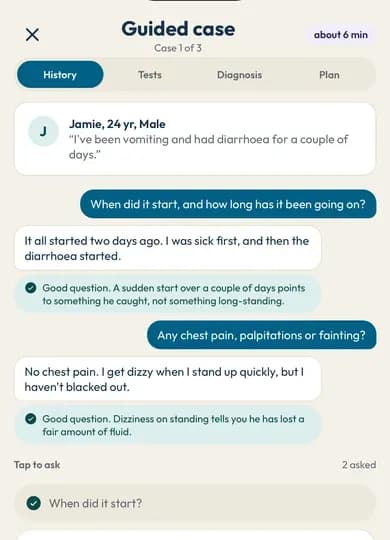
Diagnosica app, guided case history screen, as of October 2026.
- You ask in your own words, voice or text.
- Simulated patient replies in character, with realistic concerns.
- Short note explains why that question mattered.
Simulated patient. Screenshot from Diagnosica, October 2026.
What do you say when a patient asks something you can't answer?
When a patient asks something you can't answer as a medical student, don't guess about diagnosis or recovery. Say you're a medical student, acknowledge that's a good question, and say you'll make sure the doctor looking after them answers it. The GMC says, "You must always be honest about your experience, qualifications, and current role."
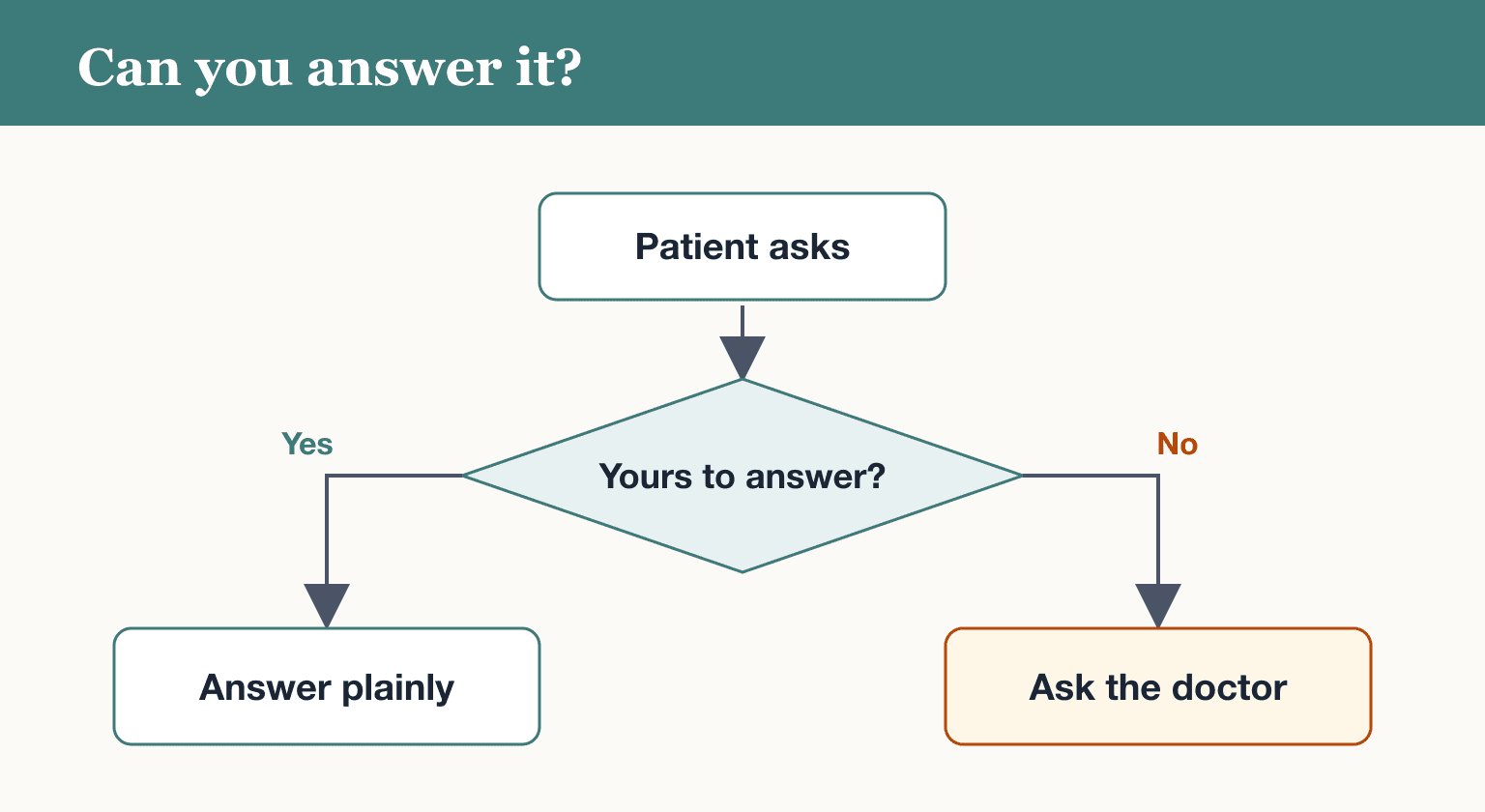
Use plain answers when safe; if not, be clear about your role and escalate.
If Simon asks, "Will my face get better, and how long will it take?" and "And what do I do about my eye?", acknowledge the fear, note the questions, and pass them to the team. Thank him, say you'll get answers, and avoid guessing. A steady handover serves him better than a confident maybe.
Watch out. A reassuring guess like "I'm sure it's nothing" can mislead a frightened patient; say you'll find out instead.
Common first-conversation mistakes
Common first-conversation mistakes are mostly about pace and position, not knowledge. Sit if you can, ask one thing at a time, and be clear what you can't answer. The small fixes here change tomorrow's chat.
Watch for these five traps on a first chat:
- Sit at eye level, not over them.
- Slow down for quiet questions and ask one clear, open prompt first.
- Skip jargon and elderspeak, use plain adult words.
- Ask directly about worries, or you'll miss the fear driving symptoms behind it.
- State role and limits, never guess.
The BMA says poor communication plays a part in the majority of complaints against doctors. For a wider placement playbook, see making a good impression on placement.
Practise the words before the ward
Before placement, say the seven steps out loud to a friend, a mirror or an AI patient, so your opening line is steady. A second-year put it plainly, "I should speak up and be louder".
On Diagnosica, an AI patient answers by voice or text and appears as a video avatar. Use it to practise the words, not to replace real patients. "It doesn't give advice about real patients, and it's not a diagnostic system."
After the first minute, go further with taking a full history and our deeper rapport guide.