Seizure history taking: a first fit OSCE walkthrough
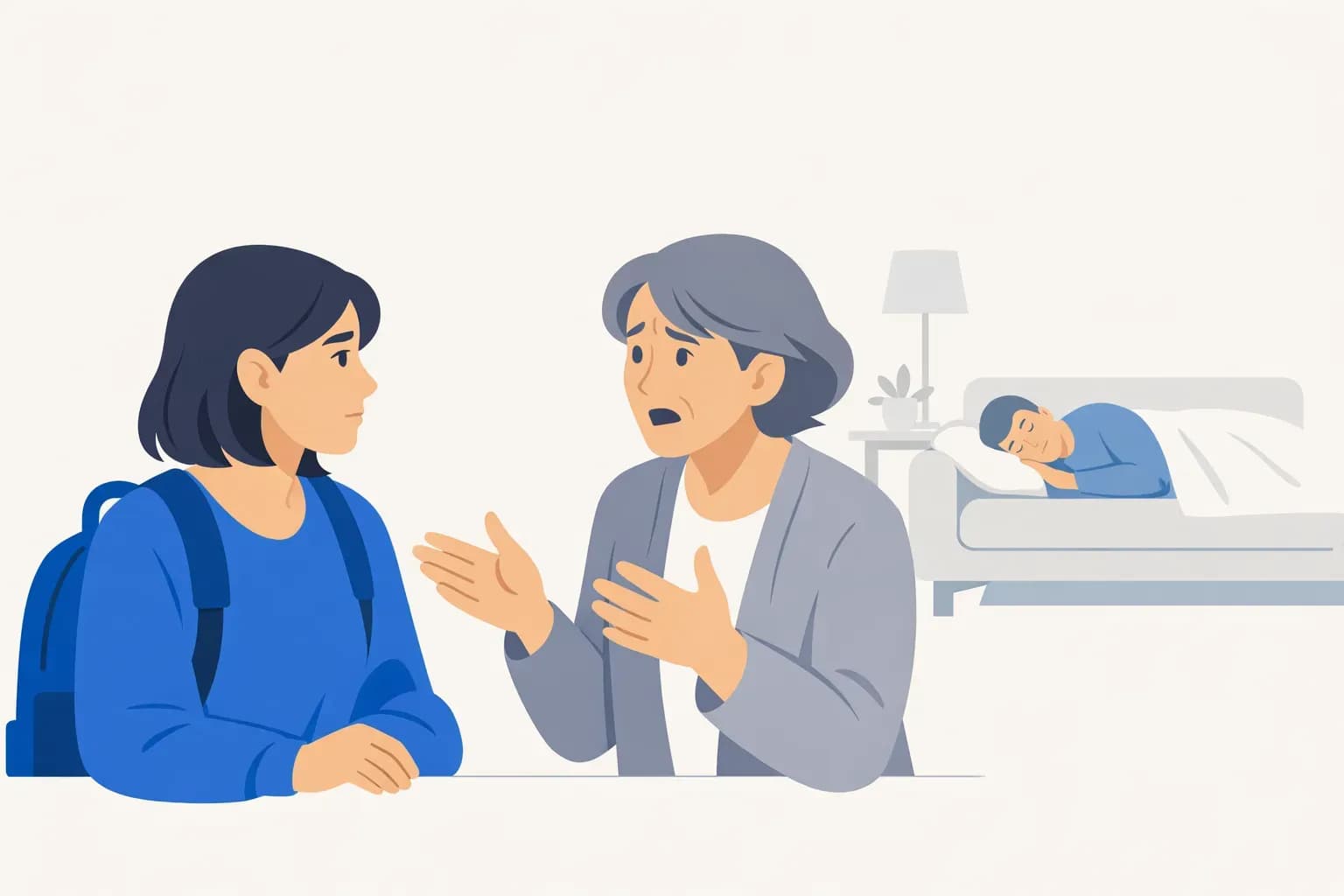
In a first seizure history OSCE station, the witness account carries it. Ask the witness what happened before, during and after, and know that NICE NG217 says refer urgently, for an appointment within 2 weeks.
If you think someone is having a seizure and "it's the first time it's happened", call 999. Read NHS seizure advice. This post is exam and ward practice only, for simulated histories and reasoning, not care decisions.
Key takeaways
- 11 of 18 facts need specific questions, so ask cough, weight loss and alcohol intake.
- Witness questions: tongue bite, head-turning, prolonged jerking, post-event confusion, per NICE CG109.
- DVLA next step: "You must stop driving straight away."
The case in one line: Sidney, 66, and a first fit
In this station, the witness account matters more than the patient's recall. Sidney, 66, is a simulated AI patient. Your task is to structure the event from what a witness reports.
At the station door he says he has become confused over a couple of weeks, and "this morning I had some sort of a fit". His son saw a single episode, shaking all over, with a bitten tongue afterwards, and it came out of nowhere.
He's had two weeks of growing confusion, nausea, dull headache and near-falls. Another hospital said water infection and he worsened. His recall is weak, so Neil, his son, carries this history. The station follows the history taking framework with wider questions in a full neurological history.
Before you read on, take this history from a video patient in Diagnosica, a simulated AI patient on video, by voice or text.
What to ask the witness: before, during and after
NICE NG217 says, "If possible, use eyewitness accounts and video footage of the seizure". NICE CG109 structures first-fit history questioning before, during and after, including phoning witnesses who are not present when needed.
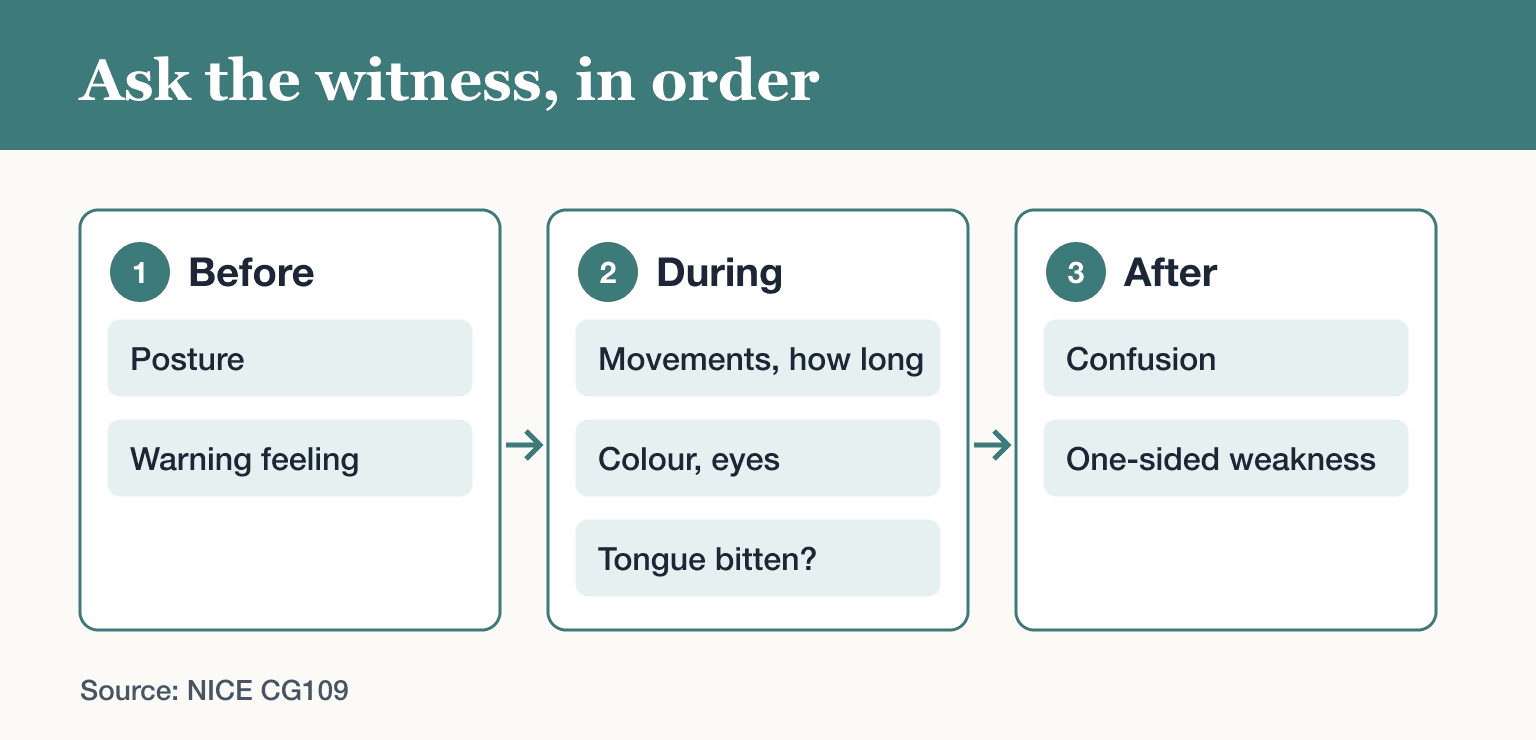
From NICE CG109: ask witnesses about before, during and after the event.
Use the NICE CG109 recommendations before, during and after frame, and apply NICE guideline NG217 to seek eyewitness detail and video. Telephone anyone not present:
- Ask the circumstances, posture immediately before, and prodromal feelings like sweating or feeling hot.
- Ask about appearance during the event, eyes open or shut, skin colour, and movements with their duration. Ask about video.
- Record any tongue-biting, whether the side or the tip was bitten, and any injury site and severity.
- Record the duration from onset to regaining consciousness, as best the witness can estimate.
- Ask about confusion during recovery, and any weakness down one side that the witness noticed.
- Phone any witness not present and gather before, during and after details, including whether anyone filmed it.
For Sidney, his son saw the fit, so ask Neil in the station or phone him, as in a witness history from family.
Seizure or faint? The witness clues that separate them
Seizure versus faint is usually decided by the witness. NICE CG109 lists features that point to an epileptic seizure and others that suggest the episode may not be epilepsy. Ask for specifics and chart them against both columns.
Ask the witness | Points to a seizure | Points to a faint |
|---|---|---|
What were they doing just before? | Not listed | Prolonged standing that appeared to precipitate it |
Any warning feeling? | Prodromal deja vu or jamais vu | Prodromal symptoms that on other occasions were abolished by sitting or lying down; Sweating before the episode |
What colour were they? | Not listed | Pallor during the episode |
How did they move? | Prolonged limb-jerking; Unusual posturing; Head-turning to 1 side | Not listed |
Did they bite their tongue? | A bitten tongue | Not listed |
How were they afterwards? | Confusion following the event | Not listed |
Watch out. Brief jerking happens in faints. NICE CG109: "brief seizure-like activity can often occur during uncomplicated faints". Do not call a seizure on jerking alone.
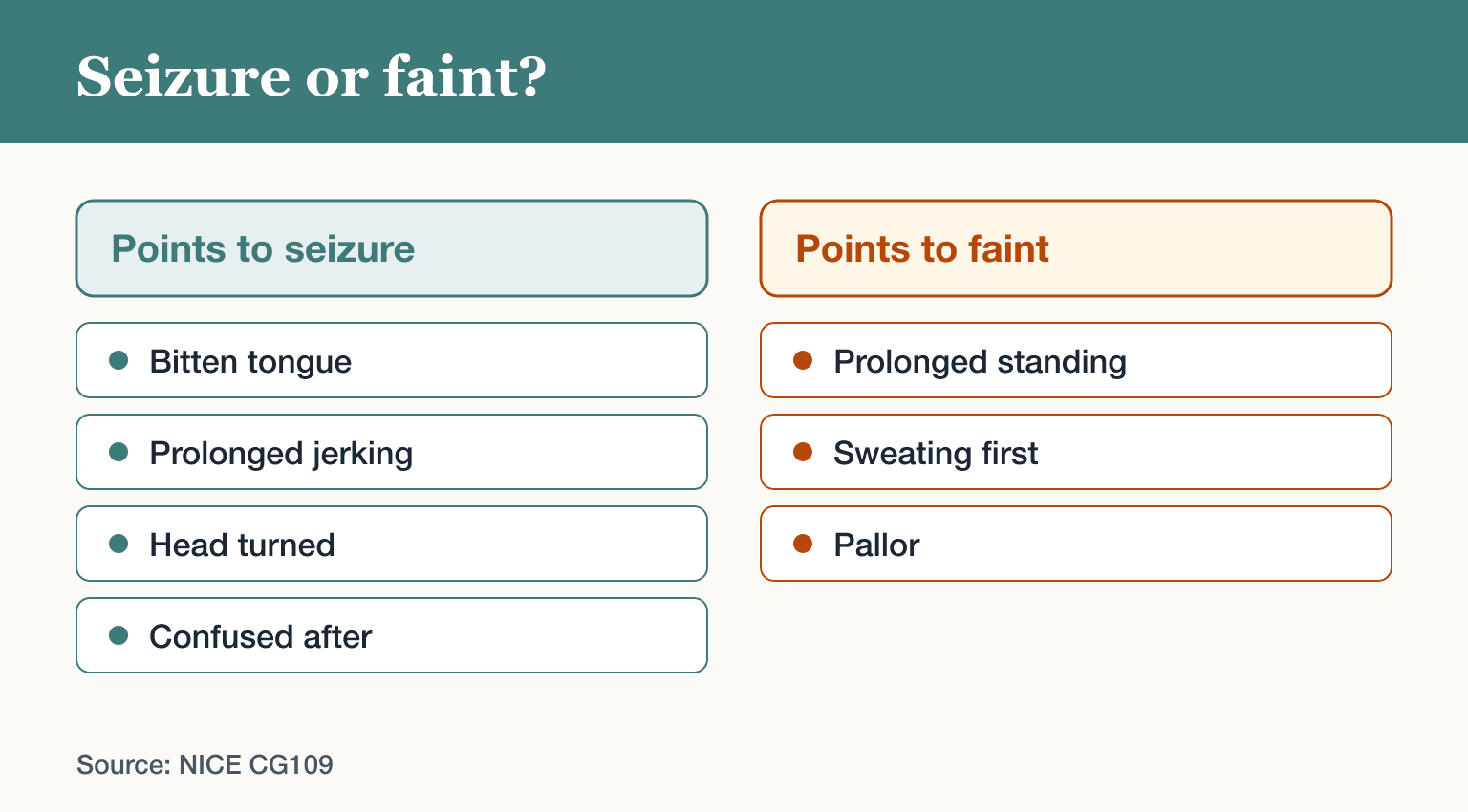
From NICE CG109: features suggest seizure versus clues that suggest a faint.
Sidney's son saw shaking and a bitten tongue. He's also had two weeks of growing confusion. The faint column stays mostly empty here; see the syncope station breakdown for the cardiac side of blackouts.
How Diagnosica helps with this
Take a first-fit history from a simulated video patient by voice or text.
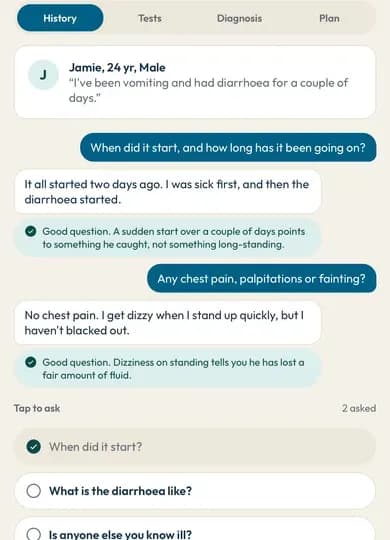
Diagnosica app, history screen, as of November 2026.
- You ask a question by voice or text, the simulated patient replies.
- Feedback note under the reply explains why the question helped.
- See which specific question uncovered a key fact for the case.
Simulated patient. Screenshot from Diagnosica, November 2026.
Sidney's history, question by question
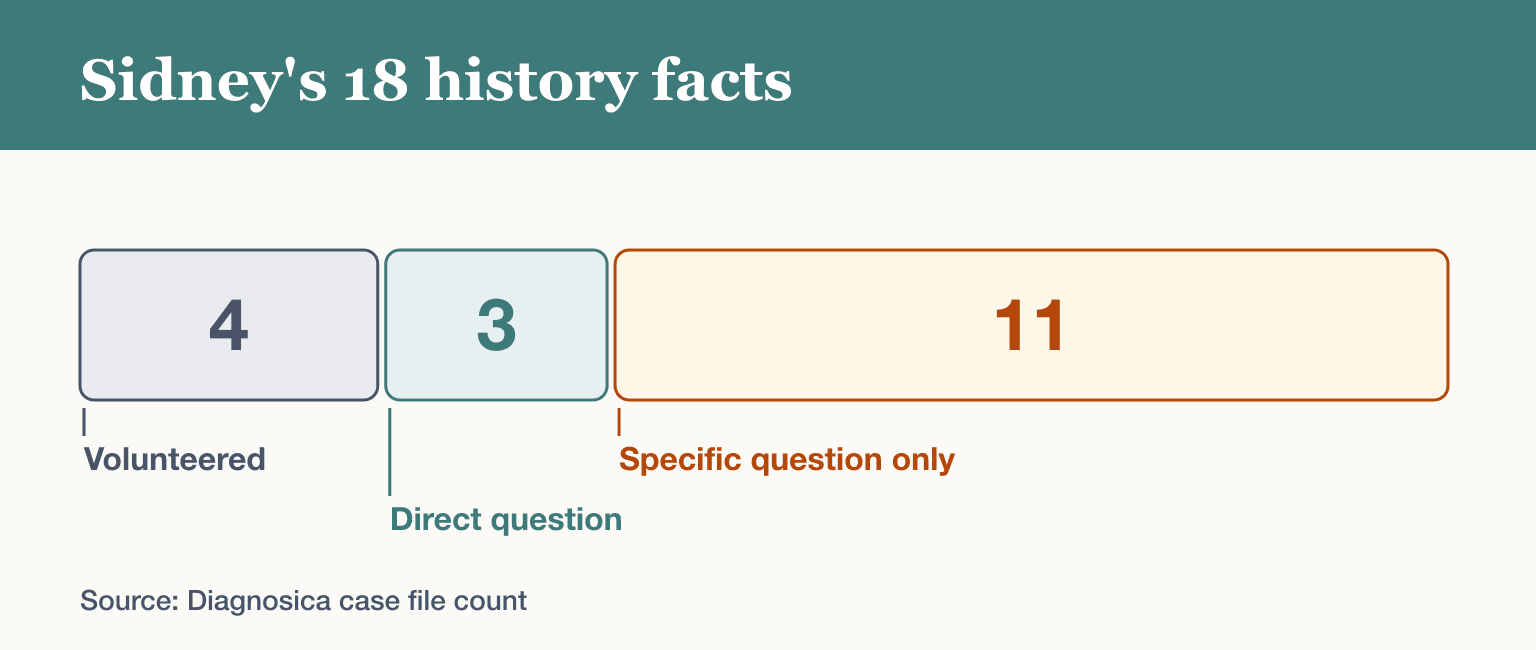
From Sidney Dunmore's simulated case file: 18 facts, most need specific questions.
Sidney's history starts with a volunteered morning fit. The key facts emerge only when asked: 4 volunteered, 3 on direct prompts, and 11 only on specific questions from 18 facts. Systems questions change decisions.
Sidney, 66 (simulated): what he said, and what you had to ask
Chip | Question | Answer | Why it mattered |
|---|---|---|---|
Volunteered | Tell me what happened this morning | I had a fit, shook all over, my son saw, and I bit my tongue. | Ask his son; NICE wants eyewitness accounts and video |
Asked | Have you ever had a fit before? | No, this was my first ever fit. | First fit, NICE NG217 says refer urgently within 2 weeks |
Volunteered | What happened at the other hospital? | They said it was a water infection, and I got worse, not better. | He got worse, so keep looking for a cause |
Only if asked specifically | Any cough or weight loss? | Dry cough six months, lost about 8 kilos without trying. I blamed the cigarettes. | NICE NG217, metabolic disturbance can cause seizures |
Only if asked specifically | How much do you drink? | About 6 units a week. Never had withdrawal fits or blackouts from drink. | NICE lists alcohol as a modifiable risk factor |
Only if asked specifically | Do you drive at the moment? | Retired truck driver, still drive. Nobody told me to stop. I planned to drive home. | He doesn't know the DVLA rule applies to him |
Eleven of his eighteen facts came only on a specific question, so a first fit history still needs the systems questions.
Simulated patient. Case file small-cell-lung-cancer-66m. Questions written by us as a model, not a learner session.
The cough and weight questions are the same ones used when chasing a chronic cough. Saying no head injury and no withdrawal fits out loud are negatives that rule things out.
Closing the station: referral, driving and what to tell him
Close by referring urgently to a clinician with expertise in first seizures. NICE NG217 says appointment within 2 weeks after a first suspected seizure. Give who to contact if another fit happens while waiting.
GOV.UK is blunt: "You must tell DVLA if you've had any epileptic seizures or blackouts." and "You must stop driving straight away." See DVLA epilepsy and driving rules.
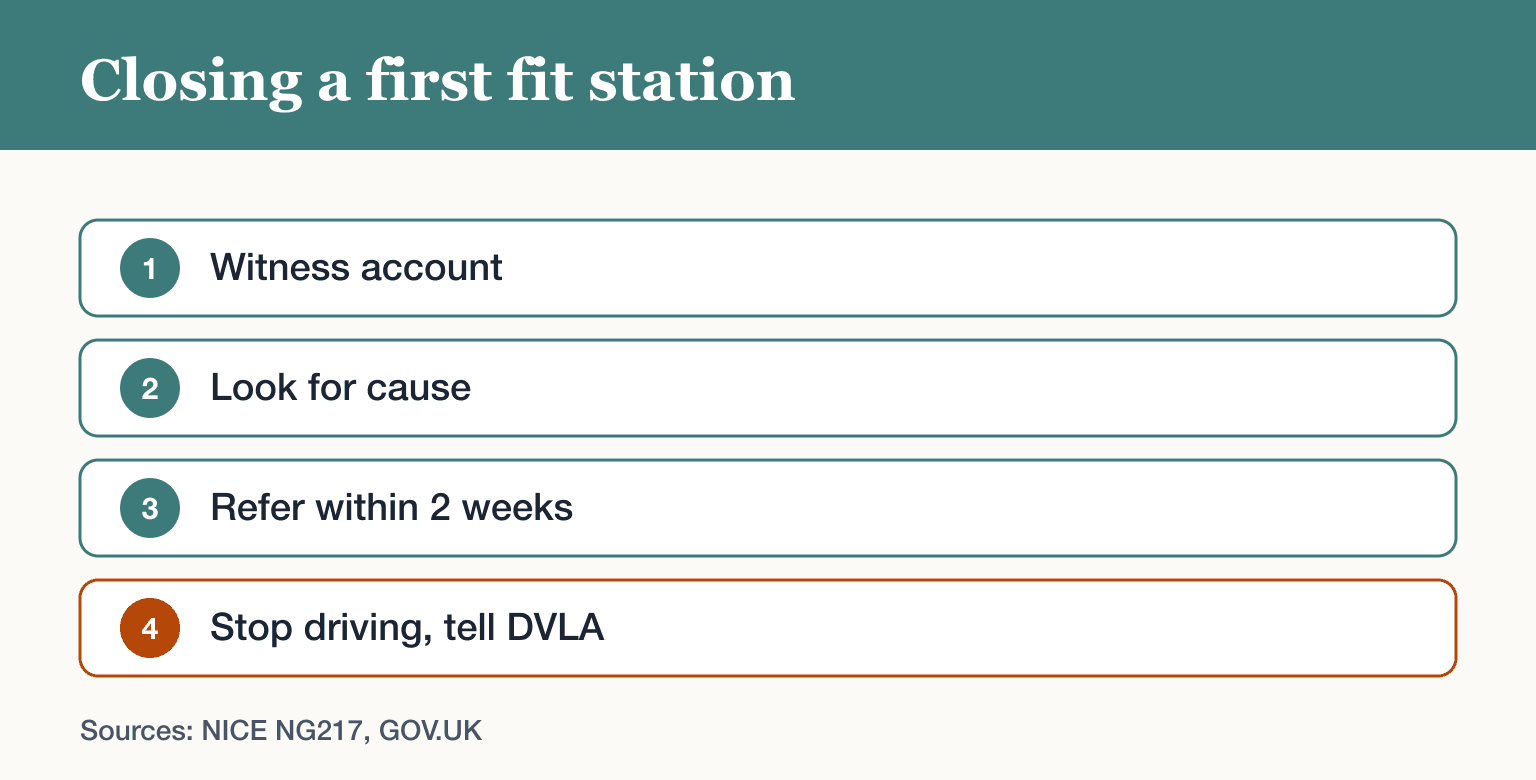
From NICE NG217 and GOV.UK: urgent 2 week referral and stop driving straight away.
Sidney still drives and nobody has told him to stop, so in a station you'd tell him, document it, and follow local trust guidance.
Finish the last minute like this:
- Summarise to Sidney and Neil, check concerns, and confirm shared understanding of what happened and next steps.
- State you'll refer urgently to an expert in first seizures, appointment within 2 weeks.
- Explain DVLA rules, stopping driving straight away, and who to contact if another fit happens.
What to take away from a first fit history
This station goes better if you hold three anchors. Take a full witness history, separate faint from fit using named signs, and consider a cause in an unwell first presentation.
Use these under pressure:
- Treat the witness as a full second history.
- Jerking can occur in uncomplicated faints per NICE CG109; use named features.
- In unwell first-fit patients, search for causes, for example metabolic disturbance, per NICE NG217.
No physical examination practice here. You can run the full station on any device, with apps on iPhone and Android, plus the web app.