Joint pain OSCE station: one hot joint, worked through
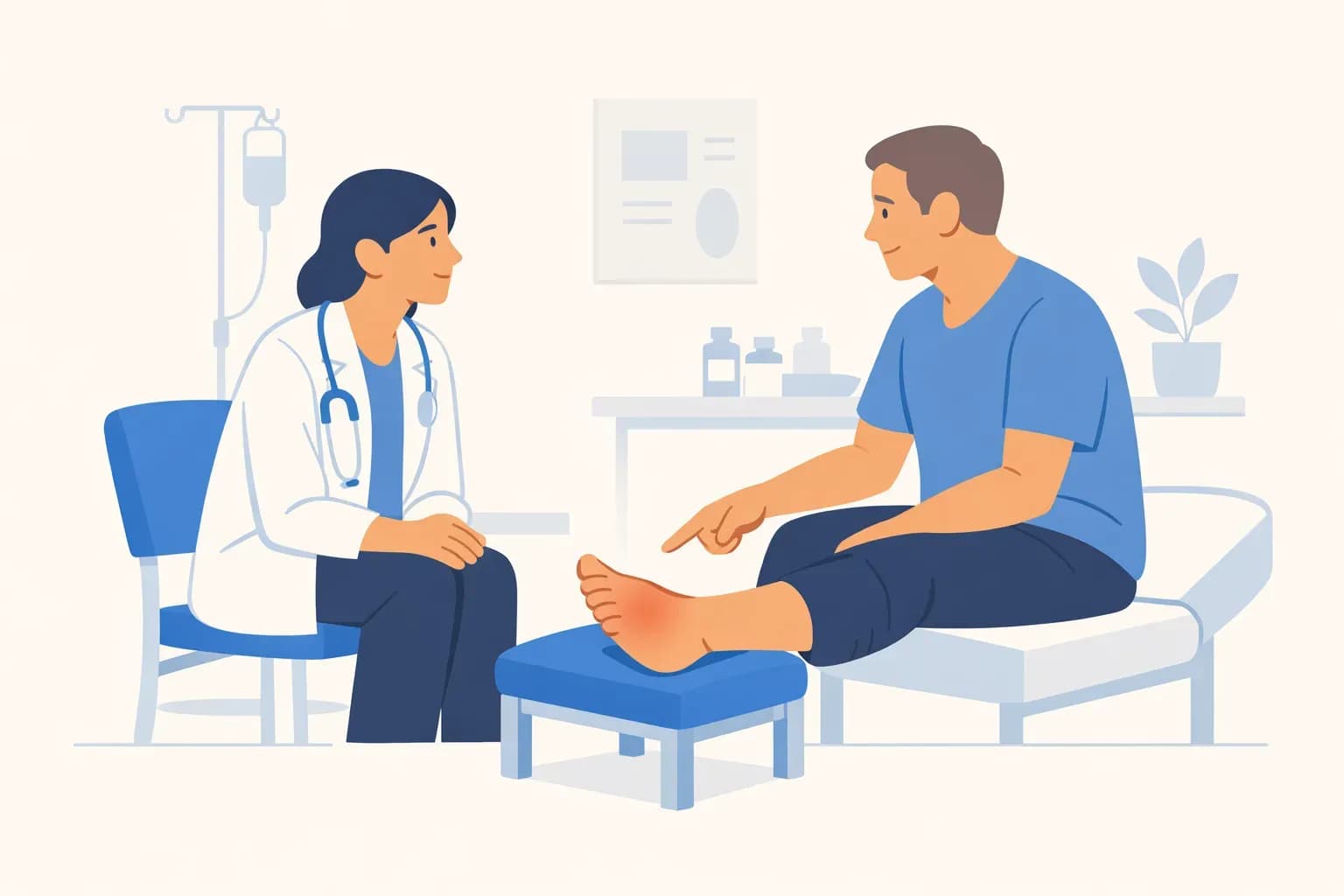
Treat a short history of a hot, swollen, tender joint as septic arthritis until proven otherwise, as the 2006 BSR guideline says. In a joint pain history OSCE, ask questions that lean towards gout or infection.
If someone has a sudden hot, swollen, painful joint and feels unwell or feverish, ask for an urgent GP appointment. Or contact NHS 111. See NHS septic arthritis. Exam practice, not advice for a real patient.
Key takeaways
- 10 of Gareth's 16 scripted history facts need a specific question.
- Ask about fever, but don't let a normal temperature reassure you, per BSR 2006.
- Ask about previous attacks, alcohol and tablets to lean towards gout.
Gareth's case in one line
Gareth, a simulated 52-year-old, opens with, "I woke up overnight with a really painful, swollen big toe." That line makes gout guessable, and the station hinges on you not stopping there.
He volunteers that it came on suddenly overnight and was worst within a few hours. The joint is red, hot, shiny, and so tender he can't bear a bedsheet on it; everything else waits for your question.
Now, take this history yourself.
For negatives in a joint history, he has no cut or injury over the joint, no other joints, no back or eye symptoms.
What should you ask in a joint pain history OSCE?
A joint pain history OSCE starts with onset and first joint. Then screen for fever and feeling unwell, and whether they can move or bear weight. Ask about previous attacks, alcohol, diet and tablets. Finish with infection risks, including recent joint surgery, an artificial joint, a weakened immune system, or injecting drugs.
Use this order:
- When did it start, and which joint?
- Have you had a fever or shivers, or felt generally unwell?
- Can you move the joint, and can you put weight on it?
- Have you had this before, any alcohol or diet triggers, or do you take a water tablet?
- Any joint surgery, artificial joint, weak immunity, diabetes, injecting drugs, or a cut or injury over the joint?
The NHS gout page lists being overweight, alcohol, water tablets and kidney problems among gout risks. Mind The Bleep's joint swelling guide does the full structure well, with a septic arthritis red-flags section and a differentials table covering gout and pseudogout. For the whole method see a full history method. Finish with a quick systems sweep.
Gareth's history, question by question
In a joint pain history OSCE, Gareth volunteers the onset and where it hurts. He also volunteers how the joint looks. Most other detail waits for a clear question. These questions are our own model wording.
Gareth, 52 (simulated): what he said, and what we had to ask
Chip | Question | Answer | Why it mattered |
|---|---|---|---|
Volunteered | What he told you first | Came on suddenly overnight, worst within a few hours, base of his right big toe | NHS: gout pain is usually in the big toe |
Asked | Has this happened before? | Third attack like this in two years, each settling over about a week | NHS: a gout attack usually lasts 1 to 2 weeks untreated |
Asked | What do you drink and eat day to day? | Beer most days, lots of red meat and shellfish | NHS lists alcohol among gout risks |
Only if asked specifically | Are you on any regular tablets? | Takes a water tablet for high blood pressure | NHS lists water tablets among gout risks |
Only if asked specifically | Have you had fever? | Feels a bit feverish and warm with this attack | One of two must-elicit flags; fever can fit gout or infection |
Only if asked specifically | Any lumps near joints? | A small, firm, chalky lump on his ear, and another near the toe | The case file's marking notes reward finding the chalky lumps |
Simulated patient. Case file gout-52m. Questions written by us as a model, not a learner session.
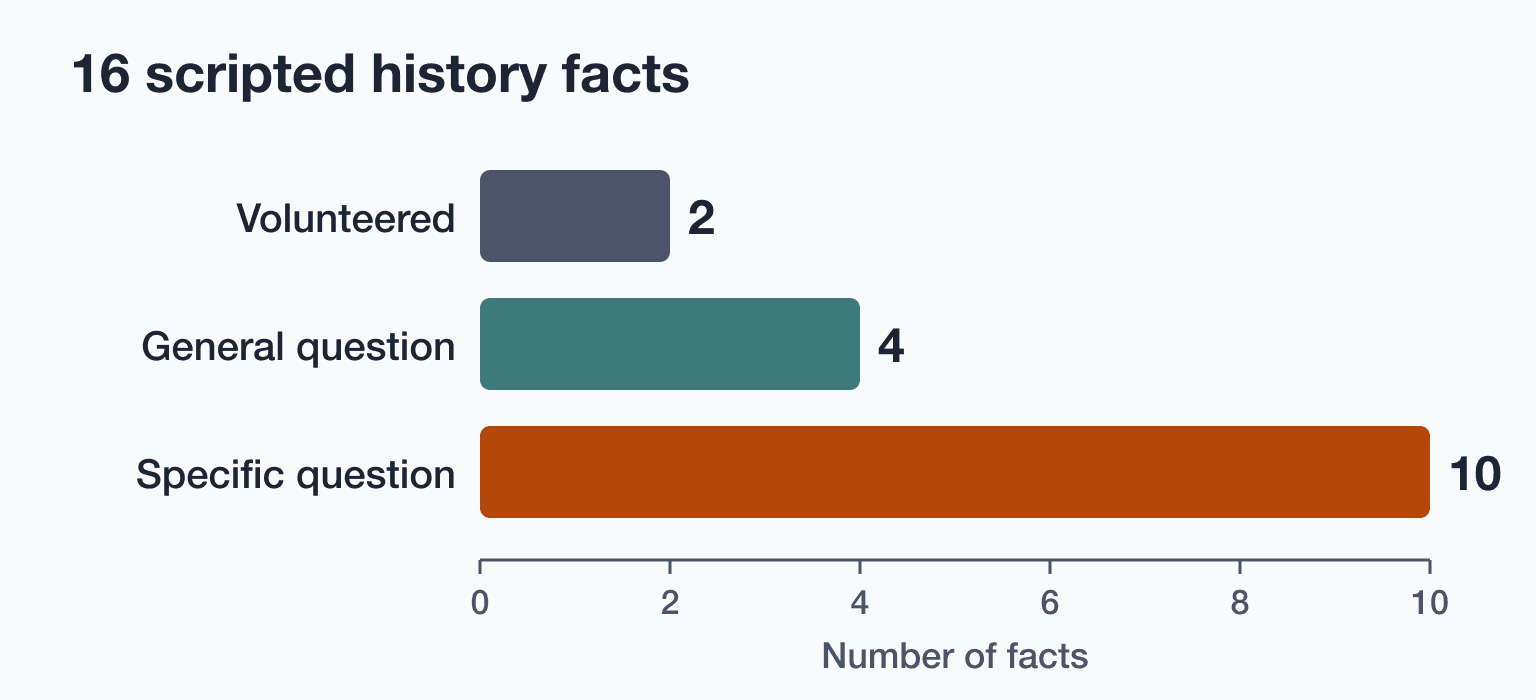
Our count of disclosure tags in the simulated case file.
Of 16 scripted history facts, 2 are volunteered, 4 come with a general question and 10 only with a specific one.
Why a hot joint is septic until proven otherwise
The 2006 BSR hot joint guideline says a short history of a hot, swollen, tender joint with restricted movement should be regarded as septic arthritis until proven otherwise.
The same guideline adds that the great toe joint is the commonest hot joint in primary care, almost always gout and diagnosable on clinical grounds. So Gareth’s big toe leans gout, but the history still has to look for infection in a joint pain history OSCE.
On fever, Gareth says he feels a bit feverish. That is one of two must-elicit flags in his case file. The other is that he’s wary of anyone touching or moving the joint.
Watch out. Fever doesn’t settle it either way. The NHS septic arthritis page says not everyone has a high temperature. BSR says manage as septic arthritis when suspicion is high, even without fever.
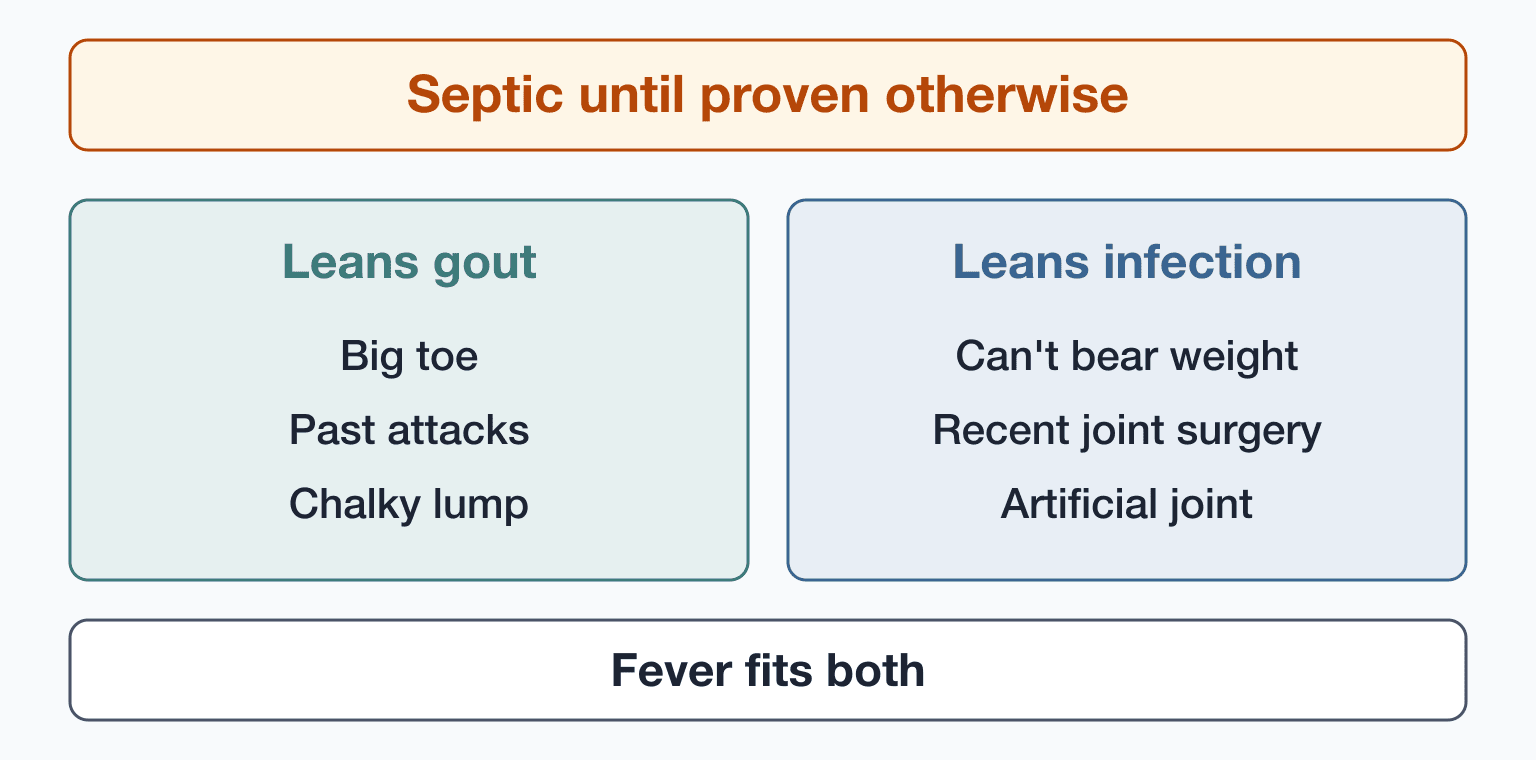
History clues from the NHS gout and septic arthritis pages; neither column rules anything out.
Big toe, past attacks and chalky lumps lean gout; not bearing weight, recent joint surgery and an artificial joint lean infection; fever fits both.
BSR says GPs and emergency doctors should refer suspected septic arthritis to a hospital specialist who can aspirate the joint. Local trust guidance applies. See telling a senior early. Diagnosica doesn’t let you practise examining the joint, so rehearse that on a partner.
How Diagnosica helps with this
Ask a video patient by voice or text, answers change with your questions.
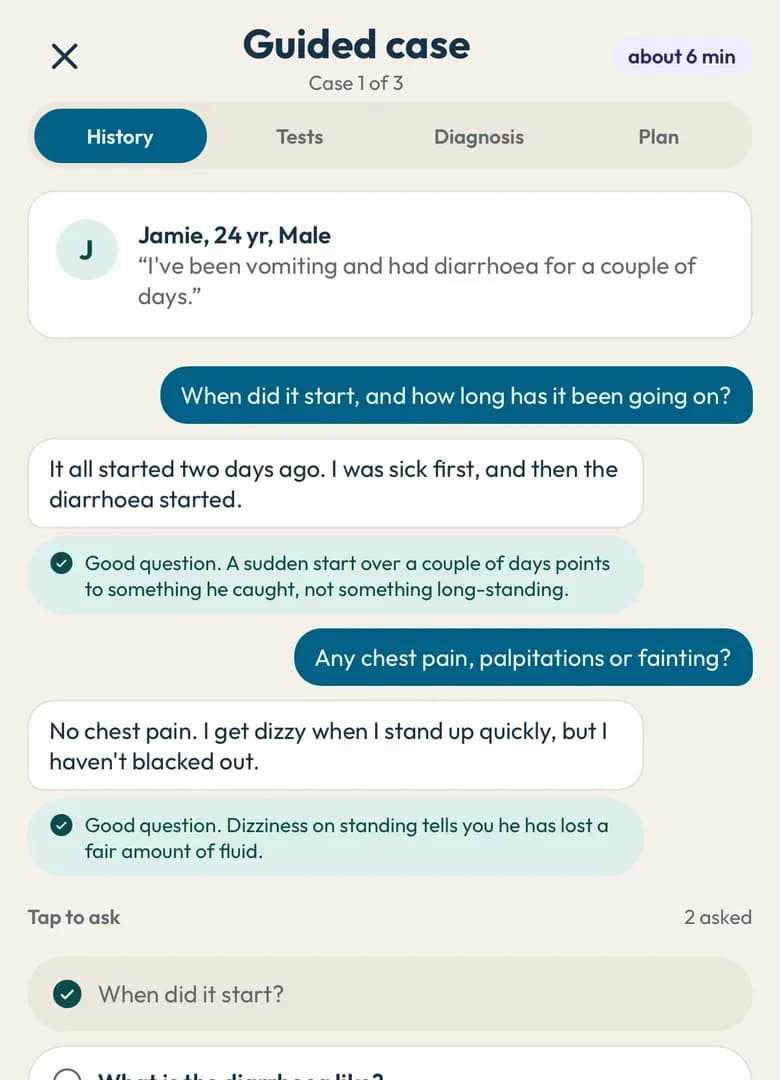
Diagnosica app, guided case history, as of October 2026; a different simulated patient.
- The patient's reply appears under your question in the history view.
- A note says why that question counted.
- In real cases, ask anything by voice or by typing.
Simulated patient. Screenshot from Diagnosica, October 2026.
What the scorecard rewards in this case
The case file's own marking notes for this joint pain history OSCE give history points. They reward the rapid overnight onset, the recurrence, and the diet, alcohol and water-tablet drivers. They also reward the chalky lumps. They take 5 marks off for no drug or lifestyle history. Ask about both every time.
The same notes call missing septic arthritis the dangerous error, with 15 marks off for not excluding infection. Escalate early if you’re unsure.
The Diagnosica result screen shows a score out of 100 with four section bars: History, Tests, Diagnosis and Plan. The pictured screen is a guided case with a different simulated patient, scoring 78 out of 100. We aren't printing Gareth's marks, because this isn't a learner session.
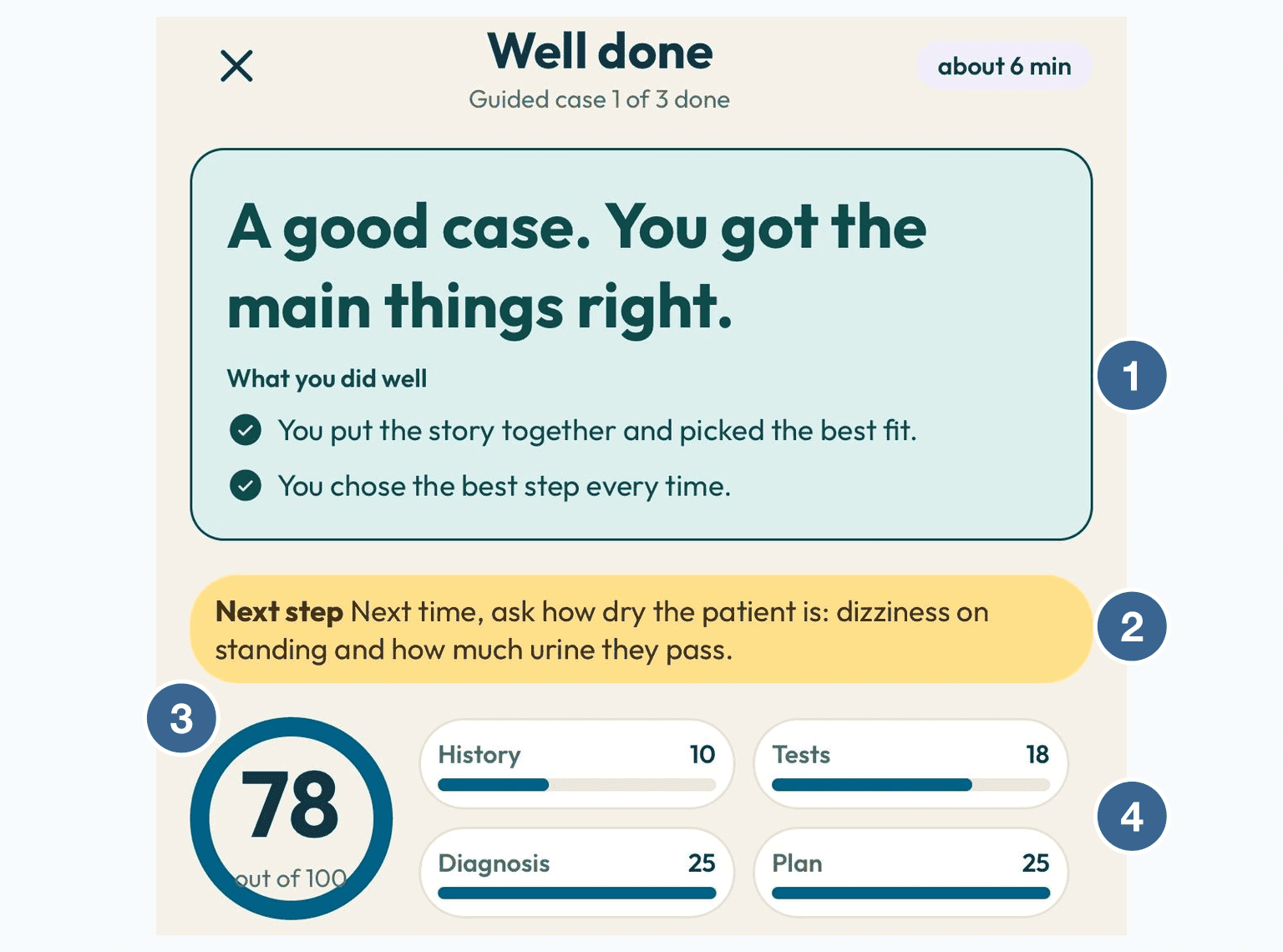
Diagnosica app, guided case result, as of October 2026; a different simulated patient; numbers mark what to read.
1 is what you did well, 2 is one next step, 3 is the overall score (78 out of 100 here), 4 is the section bars (History 10, Tests 18, Diagnosis 25, Plan 25 here).
Say the two lines (gout likely, infection not yet excluded) out loud when summing up the station.
What to take away
In a joint pain history OSCE, the opening line points at gout and the marks sit in unprompted details: fever, past attacks, alcohol, tablets, the chalky lump. The details matter.
Say septic until proven otherwise aloud before your differential, per BSR 2006 guidance. Try the same habit on the back pain station and the headache history station.
In Gareth’s case file, 10 of 16 facts surfaced only with specific probes.
When you are ready, try another case.